


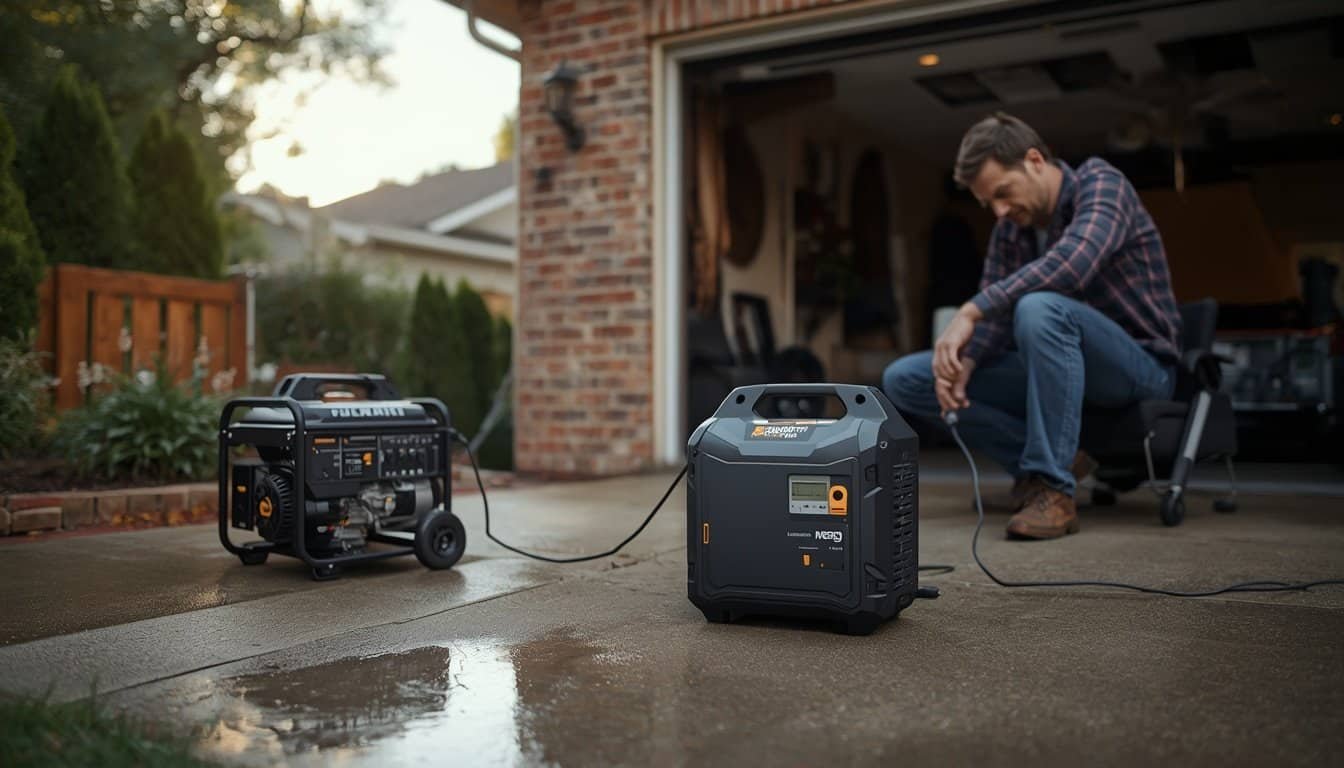
Yes, many portable power stations can be charged from a generator during an outage, and the combination can be useful when you want to run the generator for shorter periods while storing energy for quieter battery-powered use later. But the setup only works safely when the power station accepts the generator’s AC output, the charging load stays within the generator’s limits, and the generator remains outdoors in a safe operating location.
The simplest approach is usually to use the power station’s normal AC charger exactly as the manufacturer intends, plugged into an appropriate generator receptacle. Do not improvise with homemade DC cables, modified plugs, or adapters just because the generator has another outlet that appears convenient.
Why Charge a Power Station From a Generator?
A generator and a portable power station solve different outage problems. A fuel generator can provide substantial power for as long as fuel is available, but it creates exhaust, noise, maintenance needs, and operating restrictions. A power station is quiet and can be used indoors, but its stored battery energy eventually runs out.
Using the generator to recharge the battery can combine those strengths. You might run the generator for a controlled period to operate larger loads and recharge the power station, then shut the generator down and use stored battery power for lighting, phones, internet equipment, fans, or other lower-draw needs.
If you are still deciding how the two technologies fit into your outage plan, our Portable Power Station vs Generator guide explains the broader tradeoffs between fuel-based and battery-based backup power.
Use the Power Station’s Normal AC Charger When Possible
For most homeowners, the safest charging path is the same one used at home: connect the manufacturer’s normal AC charger or charging cable to an appropriate AC receptacle on the generator.
This keeps the power conversion inside equipment designed for that purpose. The charger controls how much power is delivered to the battery and works with the power station’s internal battery-management system.
Do not assume a generator’s 12-volt DC outlet, automotive-style socket, RV receptacle, or other connector can be used directly with the power station. Only use a charging input and cable combination the power station manufacturer specifically supports.
Check the Power Station’s AC Charging Demand
Fast-charging power stations can draw a surprisingly large amount of power from the generator. A battery unit may be small enough to carry with one hand but still use several hundred watts or more while charging.
That charger load counts against the generator’s available output just like a refrigerator, microwave, pump, or other appliance. If the generator is already heavily loaded, adding a high-speed power station charger can cause voltage sag, breaker trips, overload warnings, or unstable operation.
Check the power station’s charging specifications and the generator’s rated output before combining loads. If the power station allows the user to reduce AC charging speed through a normal manufacturer setting, a slower charging rate may sometimes make the overall outage setup easier to manage.
Leave Headroom for Motor Startup and Other Changing Loads
A generator that appears to have enough capacity on paper can still struggle when several loads change at the same time. Refrigerators, freezers, sump pumps, furnace blowers, and other motors can briefly require much more power when they start.
If the power station charger is already using a large share of the generator’s output, there may not be enough remaining headroom for a motor startup surge.
One practical strategy is to recharge the power station while fewer large appliances are operating, then pause or reduce charging when another major load needs to run. Our Generator Load Rotation Plan explains how rotating larger loads can help avoid trying to power everything at once.
Generator Power Quality Can Affect Charging
Some power stations are more tolerant of generator output than others. If the AC voltage or frequency is outside the charger’s acceptable range, the charger may slow down, cycle on and off, display a fault, or refuse to charge.
This does not automatically mean the power station is defective. The charger may simply be protecting itself from input power it does not consider acceptable.
Generator type, engine speed, load changes, voltage regulation, and overall condition can all influence output quality. If the power station charges normally from utility power but repeatedly rejects one generator, use our Generator Power Quality Explained guide to understand the generator-side issue before repeatedly reconnecting the charger.
Inverter Generators May Be Easier for Some Chargers, But Compatibility Still Matters
Inverter generators are often chosen for electronics because they are designed to produce tightly controlled AC output across changing engine speeds. That can make them a good match for many battery chargers, but it is not a guarantee that every power station will accept every inverter generator.
Conventional generators can also charge compatible power stations when their voltage and frequency remain within the charger’s required range. The important question is not the label on the generator alone; it is whether the actual output stays acceptable while the generator is carrying the combined load.
Keep the Generator Outdoors Even If the Power Station Can Be Used Indoors
The power station and generator have completely different placement rules. A battery power station can generally be used indoors when operated according to its instructions because it does not create combustion exhaust. A fuel-burning generator cannot.
Keep the generator outdoors and well away from doors, windows, vents, garages, and other openings. Never move it into a garage, basement, porch, shed, carport, or enclosed space to make charging more convenient.
Route the charging cord so the power station can remain dry and protected without bringing the generator closer to the house. Carbon monoxide safety always takes priority over cord length or charging convenience.
Use a Properly Rated Extension Cord
If the power station cannot be placed close enough to the outdoor generator for its normal charging cable to reach safely, use an extension cord only when the charging equipment and manufacturer instructions allow it.
The cord should be grounded when required, rated for the charging load, suitable for outdoor use where exposed outdoors, and long enough to reach without multiple connected extensions. Larger charging loads and longer distances may require a heavier-gauge cord to limit voltage drop and heating.
Do not use damaged cords, loose receptacles, indoor-only cords in wet conditions, or daisy-chained extension cords. Keep plug connections dry and off wet ground.
Can You Use the Power Station While It Is Charging From the Generator?
Some power stations support pass-through or simultaneous charging and discharging, while others place limits on that behavior. The answer depends on the specific model.
If simultaneous operation is allowed, remember that the generator may effectively be supplying both the battery charger and at least part of the connected load. That can increase generator demand and reduce how quickly the battery actually gains charge.
For example, if the power station is taking in significant charging power while also running a refrigerator or another substantial load, the net battery recharge may be much slower than the charger rating suggests.
Follow the manufacturer’s guidance for simultaneous charging and output. Do not assume that because the unit allows pass-through operation, doing so at maximum input and maximum output is the best long-duration outage strategy.
Watch for Repeated Cycling or Charging Interruptions
A healthy setup should not repeatedly connect, disconnect, reconnect, and fault every few seconds or minutes. Cycling may indicate unstable generator output, excessive generator load, an overheated charger, poor cord connections, or an incompatibility between the generator and the power station’s AC charging system.
If charging repeatedly starts and stops, reduce other generator loads and check the simple external factors first. If the generator itself is showing unstable voltage, surging engine speed, breaker trips, abnormal sound, or other warning signs, stop treating the charging problem as a power station issue.
For generator symptoms that are not clearly explained by load management, use the Generator Troubleshooting Hub to choose the appropriate generator-specific troubleshooting path.
Do Not Charge a Damaged or Overheated Power Station
Before charging, inspect the power station externally. Do not recharge a unit that is swollen, cracked, leaking, unusually hot, wet, giving off a chemical or burning odor, or showing other signs of battery damage.
Allow equipment that has been stored in unusually hot or cold conditions to return to the temperature range specified by its manufacturer before charging. Lithium battery systems use protective controls, but those protections are not a reason to ignore visible damage or temperature warnings.
A Practical Generator-to-Power-Station Charging Sequence
For a normal outage setup, use a deliberate order rather than connecting everything at once:
- Place and operate the generator safely outdoors. Keep it away from the home and follow its normal startup procedure.
- Let the generator stabilize. Do not immediately add every household load.
- Confirm the power station is safe to charge. Check for heat, swelling, moisture, damage, or active faults.
- Connect the approved AC charger. Use a properly rated, dry cord and receptacle.
- Watch the initial charging behavior. Make sure the charger remains connected and the generator does not begin surging or overloading.
- Add other generator loads cautiously. Leave room for startup surges.
- Reduce charging speed if the power station provides an approved setting and generator capacity is tight.
- Stop if either device behaves abnormally.
Mistakes to Avoid
- Do not run the generator indoors or in a garage to keep the charger close.
- Do not use homemade DC charging cables or modified plugs.
- Do not assume every generator outlet is suitable for the power station.
- Do not exceed the generator’s available capacity just to maximize charging speed.
- Do not ignore repeated charger disconnects, overloads, or unstable generator behavior.
- Do not place the power station or charging connections in rain, standing water, or the generator’s hot exhaust path.
- Do not use the charging setup as a way to backfeed household wiring.
When to Stop Charging
Disconnect the charging setup if you smell burning or fuel, see smoke or sparks, notice hot or melting plugs, experience repeated generator breaker trips, see swelling or damage on the power station, or find moisture around electrical connections.
Also stop if the generator cannot maintain stable operation with the charger connected, or if the power station repeatedly rejects generator input after other loads have been removed.
Charging a Power Station From a Generator FAQ
Can any generator charge a portable power station?
Not necessarily. The generator must provide AC power within the power station charger’s acceptable voltage and frequency range, and it must have enough available output for the charger’s demand. Check both manufacturers’ specifications.
Will a power station charge faster from a bigger generator?
Only if the power station itself supports a higher AC charging rate. A larger generator does not force more charging power into the battery; the power station’s charger and battery-management system control the accepted input.
Can I plug the power station into the generator while the generator is running other appliances?
Yes, if the combined loads remain within the generator’s capabilities and enough headroom remains for startup surges. High-speed battery charging can consume substantial generator capacity, so load timing matters.
Why does my power station keep stopping and restarting its charge from the generator?
The charger may be reacting to unstable voltage or frequency, generator overload, heat, poor connections, or an input it considers out of range. Reduce other loads and verify generator stability rather than repeatedly forcing the charger to reconnect.
Bottom Line
Charging a portable power station from a generator can be an effective outage strategy because it lets you turn fuel into stored battery energy for later quiet use. The safest setup uses the power station’s approved AC charger, a properly rated cord, adequate generator capacity, and a generator positioned outdoors away from the home.
Leave room for motor startup, pay attention to generator power quality, and do not force a power station to accept an input it repeatedly rejects. If either device begins overheating, faulting, tripping, or behaving unpredictably, stop and correct the cause before continuing to charge.