

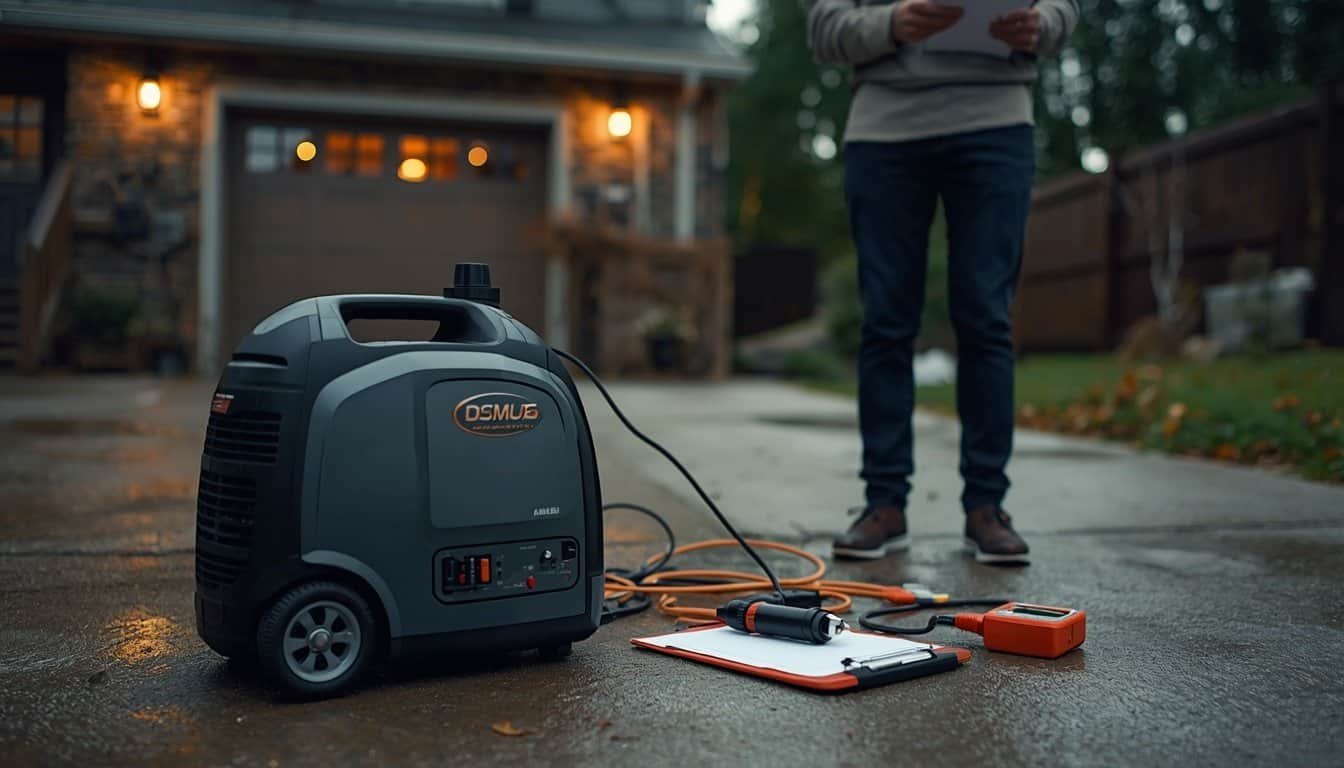
A generator problem during an outage can feel urgent because the household needs power right away. The safest way to troubleshoot is to start with the symptom you can actually see, then choose the right next step without bypassing cords, breakers, transfer equipment, or carbon monoxide safety rules.
A generator problem during an outage can feel urgent because the household needs power right away. The safest way to troubleshoot is to start with the symptom you can actually see, then choose the right next step without bypassing cords, breakers, transfer equipment, or carbon monoxide safety rules.
This generator troubleshooting hub organizes Power Prep Guide’s generator safety and problem-solving resources by situation. Use it to route yourself to the right guide when a generator runs but devices will not work, electronics reset, breakers trip, cords overheat, the house receives no power, or the setup begins to feel unsafe.
Choose the Generator Problem You Are Seeing
Generator troubleshooting is safer when you do not guess. A generator that powers lights but not a refrigerator may have a load or cord problem. A generator that runs but sends no power to the house may have a transfer, inlet, or breaker-sequence problem. Electronics that reset or flicker may point to voltage quality, overload, or cord issues.
Use the sections below to choose the closest match. If more than one symptom applies, start with the safety-related section first.
Generator Runs, But Some Devices Will Not Work
This is one of the most common outage complaints. Small devices may run normally while refrigerators, microwaves, sump pumps, well pumps, furnace blowers, or larger appliances refuse to start. The cause is often startup surge, overload, cord voltage drop, outlet limits, or the load combination being too much for the generator.
- Why a Generator Powers Some Devices but Not Others
- Generator Load Rotation Plan
- Generator Outlet Types Explained
- Extension Cord Sizing for Generators
If you need a rough planning check before deciding which loads to run, use the Generator Sizing Calculator. Treat it as a planning aid, not permission to ignore appliance startup demand, cord ratings, or generator warning signs.
Generator Runs, But the House Has No Power
When a generator runs but the home does not receive power, the problem may be in the connection path rather than the generator itself. The issue could involve the inlet box, transfer switch, interlock sequence, selected circuits, breaker positions, cord type, or generator outlet selection.
Do not bypass the transfer switch, use a dryer outlet, connect the generator to a wall outlet, or improvise with adapters. The safe goal is to find why the approved connection path is not working.
- Generator Runs but House Has No Power — Safety Setup Flowchart
- Generator Runs but House Has No Power
- Transfer Switch Clicks but No Circuits Get Power
- Interlock Kit Installed but Generator Power Still Does Not Work
Electronics Reset, Flicker, Buzz, or Behave Strangely
Electronics can reveal generator power-quality problems before larger appliances fail. Routers may reboot, UPS units may click or alarm, chargers may disconnect, LED lights may pulse, televisions may flicker, and computers may restart. These symptoms can point to overload, unstable voltage, frequency problems, cord voltage drop, or voltage-regulator trouble.
- Why Generator Power Problems Can Damage Electronics
- Generator AVR Problems Explained
- Generator Power Quality Explained
- Generator Voltage Too High or Too Low
- Inverter Generator vs Conventional Generator for Electronics
Lights Dim When Appliances Start
A brief light dim when a refrigerator, pump, microwave, air conditioner, or other high-load device starts may be normal. Severe dimming, repeated flicker, whole-home brightness changes, or electronics resetting at the same time can point to overload, weak voltage, cord problems, or wiring issues.
- Why Lights Dim When High-Load Devices Start
- Generator Load Rotation Plan
- Generator AVR Problems Explained
- Circuit Load Calculator
The safer approach is to avoid starting several motor or heating loads together. Rotate larger loads and watch for warning signs before adding more devices.
Breakers Trip, Cords Get Hot, or the Generator Overloads
A tripped breaker, hot plug, warm cord end, burning smell, or repeated overload light is a warning sign. It may mean too many loads are connected, the cord is undersized, moisture is involved, an appliance is faulty, or the generator is being pushed beyond its practical limit.
- When to Stop Using a Generator
- Generator Breaker Keeps Tripping
- Extension Cord Sizing for Generators
- Generator Extension Cord Safety
- Generator Troubleshooting Tools
Do not keep resetting a breaker or touching cords to “see if it happens again.” Reduce the load, shut down when needed, and correct the cause before continuing.
Outlet, Plug, Adapter, and Cord Confusion
Generator outlet types can be confusing because plug shape, voltage, amperage, and intended use do not all mean the same thing. A standard 120-volt outlet, 30-amp twist-lock outlet, 120/240-volt outlet, and RV-style outlet are not interchangeable just because adapters exist.
- Generator Outlet Types Explained
- Extension Cord Sizing for Generators
- Generator Runs but House Has No Power
- Floating Neutral vs Bonded Neutral Generators
Transfer Switch, Interlock, Neutral Bonding, and Backfeeding Risks
Generator-to-house connections require more caution than ordinary extension-cord use. Transfer switches, interlocks, inlet boxes, neutral bonding, grounding, and GFCI protection all affect how generator power safely reaches selected circuits.
If the house connection behaves unexpectedly, do not bypass safety equipment. Do not use dryer outlets, wall outlets, homemade cords, modified plugs, or unapproved adapters.
- Backfeeding Symptoms Homeowners Miss
- Floating Neutral vs Bonded Neutral Generators
- Generator Backfeeding Explained
- Generator Runs but House Has No Power — Safety Setup Flowchart
Backfeeding risk belongs in the stop-and-call category. If generator power may be reaching the home through an unapproved path, stop using the setup and call a qualified electrician.
Fuel, Weather, Rain, and Outdoor Placement Problems
A generator problem is not always electrical. Fuel condition, fuel storage, rain exposure, cold weather, poor ventilation, unsafe covers, and carbon monoxide hazards can all turn a useful generator into a dangerous one.
- Generator Covers and Tents Safety
- Can You Run a Generator in the Rain?
- How Far Should a Generator Be From the House?
- Generator Carbon Monoxide Safety
- Gasoline vs Propane Storage Risks
- Propane vs Natural Gas Generators
- Refueling a Generator Safely
Do not solve a rain, cord-length, or convenience problem by moving the generator into a garage, porch, shed, basement, carport, or near a window or door. Safe placement comes before power restoration.
Medical Devices and Essential Loads
When medical equipment, refrigerated medications, phone charging, medical alerts, oxygen equipment, or mobility devices depend on backup power, generator decisions should be made earlier and more cautiously. The goal is to protect essential needs without creating carbon monoxide, overload, unstable-power, or cord hazards.
- Backup Power for Medical Devices at Home
- Oxygen Concentrator Backup Power
- Backup Charging Plan for Phones and Medical Alerts
- Refrigerated Medications Outage Guide
- Battery Backup Runtime Calculator
If a medically necessary device behaves strangely on generator power, do not keep testing it. Follow the supplier or healthcare provider’s guidance and move to the next approved backup layer or emergency plan.
Safe First-Check Order
If you are standing in the middle of an outage and do not know where to start, use this simple order:
- Check safety first: generator location, carbon monoxide risk, fuel smell, weather exposure, water, hot cords, shock risk, and backfeeding risk.
- Simplify the load: disconnect nonessential devices and avoid starting large loads together.
- Check cords and outlet match: confirm cord rating, cord length, outlet type, and plug compatibility.
- Separate generator-side from house-side symptoms: direct-plug problems are different from transfer-switch or inlet problems.
- Protect sensitive equipment: disconnect electronics and medical devices if power quality seems unstable.
- Stop when the symptom is unsafe: do not keep testing around smoke, fuel, shock, water, backfeeding, unstable power, or repeated trips.
When to Stop Troubleshooting and Call for Help
Stop using the generator and get qualified help if the problem involves carbon monoxide symptoms, unsafe placement, fuel leaks, smoke, sparks, burning smells, shock or tingling, wet electrical equipment, hot cords, repeated breaker trips, suspected backfeeding, transfer equipment confusion, or house wiring you do not understand.
A generator is only useful if it restores power without creating a larger hazard. If the setup no longer feels explainable or safe, stop and escalate early.
Generator Troubleshooting FAQ
Where should I start if my generator is running but not powering everything?
Start by reducing the load and identifying which devices work and which do not. If small loads work but refrigerators, pumps, or larger appliances fail, the problem may involve startup surge, overload, cord voltage drop, or outlet limits.
Why do electronics reset on generator power?
Electronics may reset because of unstable voltage, frequency variation, overload, cord voltage drop, or generator regulation problems. Disconnect sensitive electronics until the generator setup is stable.
Is it safe to use adapters with generator outlets?
Only use adapters that are properly rated and specifically appropriate for the voltage, amperage, grounding, neutral, cord, and load. Do not use homemade adapters or adapters that bypass generator or transfer safety features.
What should I do if the generator breaker keeps tripping?
Stop adding loads, disconnect nonessential devices, and identify what changed before the trip. Do not keep resetting the breaker without correcting the cause, especially if cords are warm, wet, damaged, or overloaded.
When is generator troubleshooting no longer a DIY task?
It is no longer a DIY task when the issue involves house wiring, transfer equipment, backfeeding risk, repeated breaker trips, shock, fuel leaks, wet electrical equipment, unstable voltage, or anything that requires opening panels or modifying cords.
Conclusion
Generator troubleshooting works best when you start with the symptom and follow the safest route from there. A generator that powers some devices but not others may need better load rotation, cord sizing, or outlet matching. Electronics that reset may point to power-quality trouble. A house connection that does not work may involve the inlet, transfer switch, interlock, or neutral configuration.
The most important rule is to stop before troubleshooting becomes unsafe. Do not bypass transfer equipment, force adapters, ignore hot cords, keep resetting breakers, or keep testing sensitive electronics on unstable power. Use this hub to choose the right next guide, simplify the setup, and know when the next step should be qualified help.