


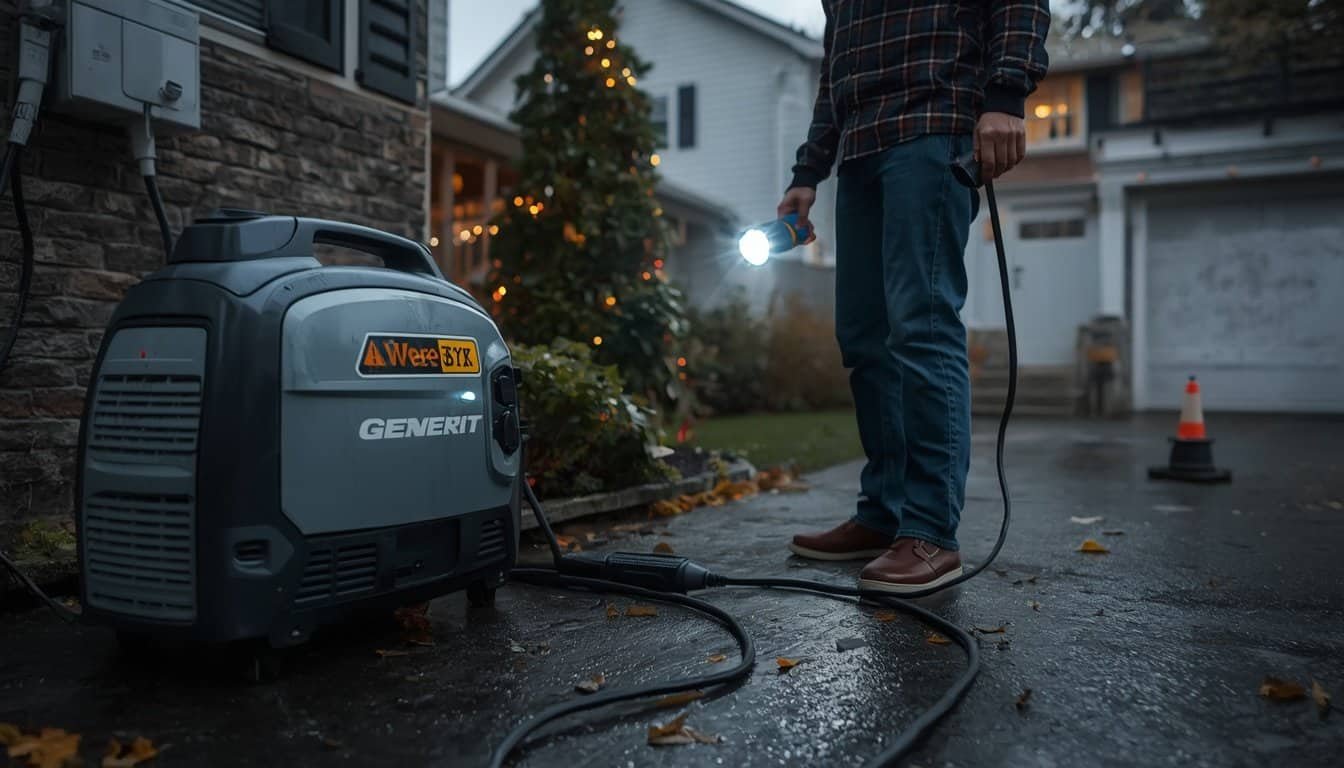
A generator can solve one outage problem while creating another if warning signs are ignored. A hot cord, strange smell, repeated breaker trip, unstable power, fuel leak, or questionable location is not something to “watch for a while.” It is a signal to stop, reassess, and protect the household before the problem becomes dangerous.
You should stop using a generator when there is any sign of carbon monoxide risk, fuel leakage, smoke, sparking, shock, hot cords, melting plugs, repeated overloads, backfeeding, water near electrical equipment, unstable voltage, or appliances behaving in ways that suggest unsafe power. The safest generator plan includes knowing when to shut it down, not just how to start it.
Stop If the Generator Is in the Wrong Location
The clearest reason to stop using a generator is unsafe placement. A portable generator should never run inside a home, garage, basement, shed, crawlspace, porch, enclosed patio, or partly enclosed area. It should also not sit near windows, doors, vents, or openings where exhaust can enter the home.
Carbon monoxide is especially dangerous because it cannot be seen or smelled. A generator can seem to be running normally while exhaust is drifting into the house. If the generator is too close to the home, under an overhang, beside a window, or inside a garage with the door open, the correct move is to stop using it and move people to safety.
Do not solve a cord-length problem by moving the generator closer to the house. If the generator cannot be placed safely outdoors, the outage plan needs to change. Losing refrigerator food, lights, or fan power is less dangerous than carbon monoxide exposure.
Stop If Anyone Has Possible Carbon Monoxide Symptoms
If anyone develops headache, dizziness, nausea, weakness, confusion, chest discomfort, shortness of breath, or unusual sleepiness while a generator is running, treat it as a possible carbon monoxide emergency. Do not keep troubleshooting appliances while people may be exposed.
Move people to fresh air immediately if it is safe to do so, call emergency services, and do not restart the generator until the placement and ventilation problem is understood. Carbon monoxide alarms are important, but symptoms should be taken seriously even if an alarm has not sounded.
If a carbon monoxide alarm goes off, leave the area and follow the alarm and emergency instructions. Do not silence the alarm and keep using the generator because the outage is inconvenient.
Stop If Cords, Plugs, or Outlets Feel Hot
A warm or hot plug is a warning sign. It may mean the cord is undersized, the load is too high, the connection is loose, the cord is damaged, or the generator setup is being pushed beyond what it should handle. Heat at a cord end or outlet can lead to melting, arcing, or fire.
Stop using the load if you can do so safely, unplug after shutting down or reducing the load as appropriate, and inspect from a safe position. Do not keep using a cord because it “only feels a little warm,” especially if the generator is powering a refrigerator, pump, heater, or other higher-demand appliance.
If cord size, distance, or overheating may be part of the problem, use Extension Cord Sizing for Generators before setting the system back up. A correct cord is not a small detail during an outage; it is part of the safety system.
Stop If Breakers Keep Tripping
A tripped breaker is not just an annoyance. It is information. The generator may be overloaded, a connected appliance may be faulty, a cord may be damaged, water may be involved, or a startup surge may be too large for the generator to handle.
Resetting once after removing a clear overload may be reasonable if the manual allows it and the setup is otherwise safe. Repeatedly resetting the same breaker without changing the cause is not safe troubleshooting. It can hide a serious fault long enough for heat, damage, or shock risk to build.
If the breaker trips with no obvious overload, trips immediately, trips after rain reaches a cord connection, or trips when a specific appliance starts, stop and simplify the setup. Disconnect loads, check cords, and get qualified help if the cause is not clear.
Stop If You Smell Fuel or See a Leak
Fuel smell, visible leakage, wet fuel lines, dripping gasoline, leaking propane fittings, or fuel spilled near a hot engine are reasons to stop using the generator. Fuel problems can turn a power outage into a fire or explosion risk.
Shut the generator down if it is safe, keep ignition sources away, let hot surfaces cool before refueling or inspection, and follow the generator manual. Do not refill a running generator or pour fuel near a hot engine. Do not keep running the generator because the leak looks small.
Propane and gasoline behave differently, but both deserve caution. If you suspect a propane leak, close the cylinder valve if safe, move away, and follow appropriate emergency guidance. If gasoline has spilled, clean it only after the generator is off, cool, and the area is safe.
Stop If Electronics Start Acting Strange
Electronics can be early warning signs of generator power problems. If routers reboot, UPS units click or alarm, LED lights pulse, chargers repeatedly connect and disconnect, televisions flicker, or computers restart, the generator may be producing unstable power or the setup may be overloaded.
Do not keep testing expensive electronics to see whether the problem repeats. Disconnect sensitive devices and stabilize the generator setup first. The problem may be load swings, poor voltage regulation, frequency instability, cord voltage drop, or a generator operating too close to its limit.
For a deeper explanation of this risk, review Why Generator Power Problems Can Damage Electronics. The short version during an outage is simple: if electronics behave strangely, stop risking them until the cause is understood.
Stop If Appliances Sound Weak, Slow, or Labored
Some warning signs are not dramatic. A refrigerator compressor that struggles, a fan that runs slowly, a pump that hums, lights that dim heavily, or a motor that fails to start cleanly may all point to low voltage, overload, cord problems, or startup surge issues.
These symptoms can damage motors and appliances if ignored. A generator setup that barely starts a motor may not be a safe long-term setup, especially if other loads are connected at the same time or the cord run is long.
Stop and reduce the load. Try to understand whether the problem appears with one appliance, one cord, one outlet, or the whole generator. If a motor hums without starting, turn it off rather than letting it sit and overheat.
Stop If You Suspect Backfeeding
Backfeeding is one of the most dangerous generator mistakes. It can happen when someone connects a generator to a home outlet or uses an unapproved connection to energize house wiring. This can send power where it does not belong, including back toward utility lines.
Warning signs can include unusual power behavior in the home, unexpected energized circuits, unsafe cord arrangements, a generator connected through a dryer outlet or wall outlet, or confusion around transfer equipment. If you suspect backfeeding, stop using the generator and do not experiment with breakers to “figure it out.”
Use Backfeeding Symptoms Homeowners Miss as the deeper safety guide. If a home connection, inlet, transfer switch, or panel behaves unexpectedly, contact a qualified electrician.
Stop If Water Is Near Cords or Electrical Equipment
Storm outages often involve rain, wet grass, puddles, sump pump problems, basement water, or dripping extension cords. Water and temporary generator power do not mix well. If water is near cord connections, generator outlets, appliances, basement circuits, or the electrical panel, stop and reassess from a dry location.
Do not run cords through puddles, across wet basement floors, under doors where insulation can be damaged, or into areas where water may rise. Do not handle plugs, cords, or appliances while standing on wet ground or touching wet surfaces.
If water is already near outlets, cords, appliances, or the panel, stay out of the area and seek appropriate help. A generator may be useful in a storm, but it should never become a shock hazard because the household is rushing.
Stop If the Generator Sounds or Runs Differently
Changes in engine behavior can be warning signs. Surging, sputtering, rough running, unusual vibration, metal noises, sudden speed changes, repeated shutdowns, or a generator that sounds strained under normal loads should not be ignored.
Some engine issues are maintenance-related, such as old fuel, dirty filters, low oil, or fuel-flow problems. Others may point to overload or mechanical trouble. During an outage, avoid major repair attempts unless you are qualified and the manual clearly supports the check.
Shut down and check the basics only when safe: oil level, fuel supply, ventilation, load level, and visible damage. If the sound is unusual or the generator keeps shutting down, do not force it to run.
Stop If You Are Guessing Around Transfer Equipment
Transfer switches, interlocks, inlet boxes, and selected-circuit panels are designed to make generator use safer, but they can also create confusion when something does not work. If the generator runs but house circuits do not behave as expected, do not bypass the equipment.
Do not remove panel covers, alter cords, defeat an interlock, or connect the generator through an unapproved path. The outage is not the time to experiment with house wiring. If the procedure is not clear from the installed equipment instructions, stop and get help.
This is especially important if only part of the house works, a breaker will not reset, a transfer switch feels wrong, or utility power returns while the generator is still connected. The safest approach is to follow the installed system’s instructions exactly or call the installer or electrician.
Use a Calm Shutdown Sequence
When a warning sign appears, shutdown should be calm and deliberate. Turn off or unplug sensitive loads first if it is safe. Reduce major loads. Follow the generator manual for stopping the engine. Let the generator cool before refueling, moving, or inspecting parts near hot surfaces.
Do not yank cords, pull plugs under heavy load, or reach into wet areas to disconnect equipment. If the unsafe condition involves water, shock, smoke, fire, fuel, or carbon monoxide, the priority may be getting people away and calling for help rather than preserving the equipment.
After shutdown, write down what happened: the load that was running, whether a breaker tripped, whether cords were hot, what appliance started, what the weather conditions were, and whether any alarms sounded. That record helps avoid repeating the same unsafe setup later.
Decide Whether to Restart or Call for Help
Not every shutdown means the generator is finished for the outage. If the issue was a clear overload, and you corrected it by removing loads and using the correct cords, restarting may be reasonable if the manual supports it and no safety hazards remain.
Do not restart if the warning sign involved carbon monoxide symptoms, unsafe placement, suspected backfeeding, fuel leaks, shock, repeated breaker trips, wet electrical equipment, damaged cords, burning smells, smoke, or electronics instability that you cannot explain. Those issues need a safer setup or qualified help.
If you need a broader troubleshooting route after stopping, use Generator Problems Explained. That hub can help you sort the symptom without turning every warning sign into a risky test.
FAQ
When should I stop using a portable generator?
Stop using it if there are signs of carbon monoxide risk, fuel leaks, smoke, sparking, shock, hot cords, melting plugs, repeated breaker trips, backfeeding, water near electrical equipment, or unstable power.
Is a hot generator extension cord dangerous?
Yes. A hot plug or cord can signal overload, loose connection, undersized cord, damage, or voltage problems. Stop using the setup and correct the cause before continuing.
Should I keep resetting a generator breaker?
No. A breaker that keeps tripping is warning you about overload or a fault. Remove loads and find the cause. If it trips repeatedly or with no clear reason, stop and get qualified help.
Can strange electronics behavior mean I should shut the generator down?
Yes. Flickering, rebooting, clicking UPS units, charger failures, or repeated resets can point to unstable power. Disconnect sensitive electronics and stop using the setup until the cause is understood.
Conclusion
Knowing when to stop using a generator is just as important as knowing how to start one. Carbon monoxide risk, hot cords, fuel leaks, repeated breaker trips, strange electronics behavior, wet electrical equipment, backfeeding, and unstable appliance performance are not normal outage inconveniences. They are warning signs.
The safest generator user is not the one who keeps testing until something works. It is the one who recognizes when a setup has crossed from useful backup power into unsafe territory. Shut down when the signs point to fire, shock, carbon monoxide, fuel, water, backfeeding, or unstable power, then correct the problem before restarting.