


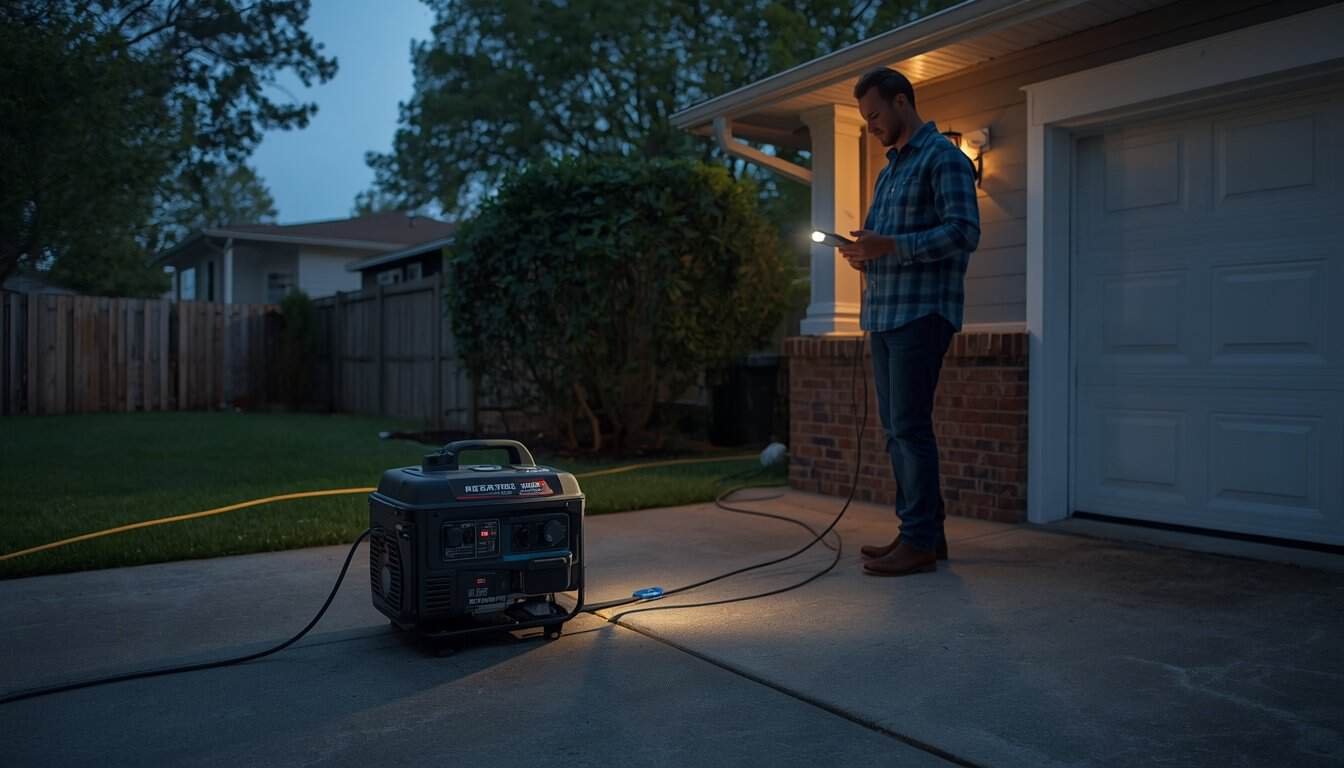
A generator problem during an outage can mean several different things. Sometimes the issue is simple, such as too many loads, a weak extension cord, old fuel, or a tripped breaker. Other times the symptoms point to a condition that can damage electronics, create shock risk, or make the generator unsafe to keep using.
The safest way to think about generator problems is to start with symptoms, not guesses. Notice what changed, shut the generator down if something feels unsafe, separate generator-side problems from house-side problems, and avoid testing anything that involves wet cords, backfeeding, carbon monoxide risk, electrical panels, or unstable power.
If you are trying to choose the right guide for a specific generator symptom, use our Generator Troubleshooting Hub to jump to common problems such as overloads, outlet confusion, unstable electronics, transfer switch issues, backfeeding risks, and safe shutdown signs.
Start With the Symptom You Can Actually See
Generator troubleshooting works best when you describe the symptom clearly. “The generator is bad” is too broad. A better starting point is whether the generator will not start, starts then quits, runs but produces no power, powers some devices but not others, makes lights flicker, trips a breaker, overloads under certain appliances, or causes electronics to reset.
This matters because different symptoms point in different directions. A starting problem may involve fuel, oil level, choke position, battery condition, or maintenance. A power-output problem may involve breakers, outlets, voltage regulation, load, cords, or the generator head. A house-power problem may involve the transfer switch, inlet box, selected circuits, or the way the generator is connected.
Do not start by opening covers, removing parts, or touching wiring. Start by writing down what the generator was powering, what changed, whether the problem began after a new appliance was plugged in, whether cords were hot, and whether any alarms, breakers, lights, or displays changed.
Know When to Stop Before You Troubleshoot
Some symptoms mean the next step is not another test. The next step is stopping. Shut the generator down if there is a burning smell, smoke, fuel leak, hot plug, melted cord end, repeated breaker trip, unstable engine speed, severe voltage behavior, visible damage, water exposure, or any sign that power is reaching places it should not.
Also stop if the generator is in an unsafe location. A generator should never be operated indoors, in a garage, in a basement, on a porch, near a window, or near doors and vents. Moving a generator closer to the house because cords are too short creates a carbon monoxide risk that is more serious than losing appliance power.
If the generator has been running in a questionable location, do not focus on the appliances first. Turn it off if safe, move people away from possible exhaust exposure, open the situation to fresh air only when it can be done safely, and follow emergency guidance if anyone has headache, dizziness, nausea, confusion, weakness, or other possible carbon monoxide symptoms.
Separate Generator Problems From Load Problems
Many generator problems are really load problems. The generator may run normally with a few lights and chargers, then struggle when a refrigerator, sump pump, microwave, heater, well pump, or air conditioner starts. Motors and compressors often need extra power for a brief moment at startup, which can make a setup fail even if the running wattage seems reasonable.
Common load-related symptoms include engine bogging, overload lights, tripped breakers, dimming lights, stalled appliances, cycling appliances, and devices that work only when other loads are unplugged. If the problem appears when a specific appliance starts, that appliance may be too large for the generator, may be starting at the same time as another load, or may need a different power plan.
For rough planning, the Generator Sizing Calculator can help estimate whether your essential loads are in the right range. Treat it as a planning aid, not permission to ignore the generator manual, appliance startup demand, cord ratings, or transfer-switch limits.
Watch for Cord and Distance Problems
A generator can appear weak when the real problem is the cord. Long, thin, indoor-rated, damaged, or overloaded extension cords can create voltage drop, heat, poor appliance performance, and fire risk. The farther power travels through an undersized cord, the more likely problems become.
Cord-related symptoms can include a refrigerator that struggles to start, lights that dim more than expected, a fan that runs slowly, a plug that feels warm, a cord end that smells hot, or a device that works near the generator but not at the end of a long cord. These are not symptoms to ignore.
If cord length, gauge, or heat may be part of the problem, review Extension Cord Sizing for Generators before continuing. Do not solve a distance problem by moving the generator closer to a window, door, garage, porch, or vent.
Do Not Ignore Electronics Acting Strange
Electronics can reveal power-quality problems before heavier appliances do. Warning signs include routers rebooting, UPS units clicking or alarming, televisions flickering, chargers disconnecting, computers restarting, LED lights pulsing, or sensitive devices refusing to charge. These symptoms may involve load swings, poor regulation, frequency instability, cord issues, or a generator operating outside its comfort range.
Do not keep testing expensive electronics to “see if it happens again.” Unstable generator power can stress power supplies and sensitive equipment. If the same electronics behave normally on utility power but reset or flicker on generator power, treat that as a generator setup problem until proven otherwise.
For deeper guidance on this specific risk, use Why Generator Power Problems Can Damage Electronics. The safest short-term move is often to disconnect sensitive electronics until the generator setup is stable and the load is better controlled.
Understand the “Some Devices Work, Others Do Not” Pattern
One of the most confusing generator symptoms is partial success. A lamp may work, a phone charger may work, but a refrigerator, microwave, furnace, well pump, or selected house circuit does not. That does not automatically mean the generator is broken.
This pattern can happen because some devices need more startup power, some circuits are not connected through the transfer setup, some outlets are 120V while others need 240V, some cords are undersized, or some loads are too sensitive to the generator’s output. The key is to avoid guessing based only on which device happens to turn on.
If this is your main symptom, use Why a Generator Powers Some Devices but Not Others as the deeper step-by-step route. That guide is a better place to follow the specific branch between load size, cord limits, circuit selection, and equipment requirements.
Be Careful With House-Connection Symptoms
Problems become more serious when the generator is connected to the home through an inlet, transfer switch, interlock, or selected-circuit panel. If the generator runs but the house does not receive power, or only certain circuits work, the issue may be in the connection path rather than the generator itself.
Do not bypass safety equipment, connect a generator to a wall outlet, modify cords, or improvise with dryer outlets. Backfeeding can energize utility lines, injure workers, damage equipment, and create fire or shock hazards. A transfer switch or interlock is designed to keep generator power and utility power separated.
Signs of backfeeding or unsafe connection deserve immediate caution. If anything about the setup suggests power is being sent into the home in an unapproved way, stop and review Backfeeding Symptoms Homeowners Miss. If a panel, inlet, or transfer setup behaves unexpectedly, contact a qualified electrician rather than experimenting during an outage.
Check Fuel and Engine Behavior Without Overfocusing on It
Fuel and engine issues are common, but they are not the only generator problems. Old gasoline, stale fuel, low oil, clogged air filters, dirty spark plugs, blocked fuel flow, bad propane supply, cold-weather issues, and poor maintenance can all cause starting, surging, rough running, or shutdown problems.
The important distinction is whether the engine problem appears before any loads are connected or only after loads are added. A generator that surges with no load may have a fuel, air, governor, or maintenance problem. A generator that runs smoothly with no load but struggles under a refrigerator or pump may be dealing with overload, startup surge, cord limits, or appliance demand.
Do only the basic checks described in the owner’s manual unless you are qualified to service the equipment. During an outage, poor lighting, heat, rain, fatigue, and urgency make mechanical repairs more error-prone.
Use a Simple First-Check Order
A calm first-check order prevents random troubleshooting. Start with safety: generator location, carbon monoxide risk, fuel smell, weather exposure, hot cords, water, smoke, and electrical hazards. If anything is unsafe, stop there.
Next, simplify the load. Turn off or unplug nonessential devices, then try one known simple load according to the manual. If the generator behaves normally with a small load but fails when a larger appliance starts, the problem is likely related to load, surge demand, cord size, or load timing.
Then check the connection path. If direct-plug devices work but house circuits do not, the issue may be the inlet, transfer switch, interlock position, selected circuits, or breaker arrangement. If no outlets work at the generator, the issue may be the generator breaker, outlet, voltage output, or internal problem that needs qualified service.
Do Not Keep Resetting Breakers
A tripped breaker is information. Repeatedly resetting it without changing the cause can create more risk. A breaker may trip because of overload, a short, a damaged cord, water, a faulty appliance, or a generator problem. If it trips again, stop and reduce the risk instead of forcing it to stay on.
Unplug loads, inspect cords from a dry and safe position, and think about what changed just before the trip. Did a pump start? Did a refrigerator compressor kick on? Did rain reach a cord connection? Did someone add a heater, microwave, or tool? The timing often tells you more than the breaker itself.
If the breaker trips with no loads connected, or if there is burning smell, buzzing, visible damage, or water exposure, stop using the generator and seek qualified help.
Know When the Next Step Is a Professional
Some generator problems should not be solved by a homeowner during an outage. Call a qualified electrician, generator technician, utility, or emergency service when the problem involves house wiring, transfer equipment, repeated breaker trips, suspected backfeeding, wet electrical equipment, shock or tingling, unstable voltage, damaged outlets, fuel leaks, or carbon monoxide symptoms.
It can be frustrating to stop when the household needs power, but unsafe testing can make the outage worse. A generator is useful only when it protects the home without creating a bigger hazard.
The safest mindset is simple: if the symptom points to carbon monoxide, fire, shock, backfeeding, water, or unstable power, stop using the generator until the risk is understood. If the symptom points to ordinary load management, cord sizing, or appliance priority, simplify the setup and work through the problem calmly.
FAQ
What is the most common generator problem during an outage?
Many outage generator problems come from load, fuel, cords, or unsafe setup rather than a completely failed generator. The first step is to identify the symptom and remove unsafe conditions before testing further.
Why does my generator run but appliances do not work correctly?
The generator may be overloaded, the appliance may need more startup power, the extension cord may be undersized, or the generator output may be unstable. Sensitive electronics and motor loads often reveal these problems first.
When should I stop using a generator?
Stop using it if you see smoke, smell fuel, notice hot cords, feel shock or tingling, hear sparking, see repeated breaker trips, suspect backfeeding, or cannot place the generator safely outdoors away from the home.
Can a generator problem damage electronics?
Yes. Unstable voltage, poor frequency, overload, long cords, and load changes can stress sensitive electronics. If electronics flicker, reset, alarm, or refuse to charge, disconnect them and fix the generator setup before continuing.
Conclusion
Generator problems are easier to handle when you start with the symptom, not the assumption. Notice what changed, simplify the load, check cords and connection paths, and stop immediately when the signs point to carbon monoxide, fire, shock, water, backfeeding, or unstable power.
The safest generator troubleshooting plan is a routing plan. Simple load or cord issues can often be corrected with better planning, but house wiring, transfer equipment, repeated trips, electronics instability, fuel leaks, and unsafe placement require more caution. During an outage, the goal is not to keep testing until something works; it is to restore useful power without creating a bigger hazard.