


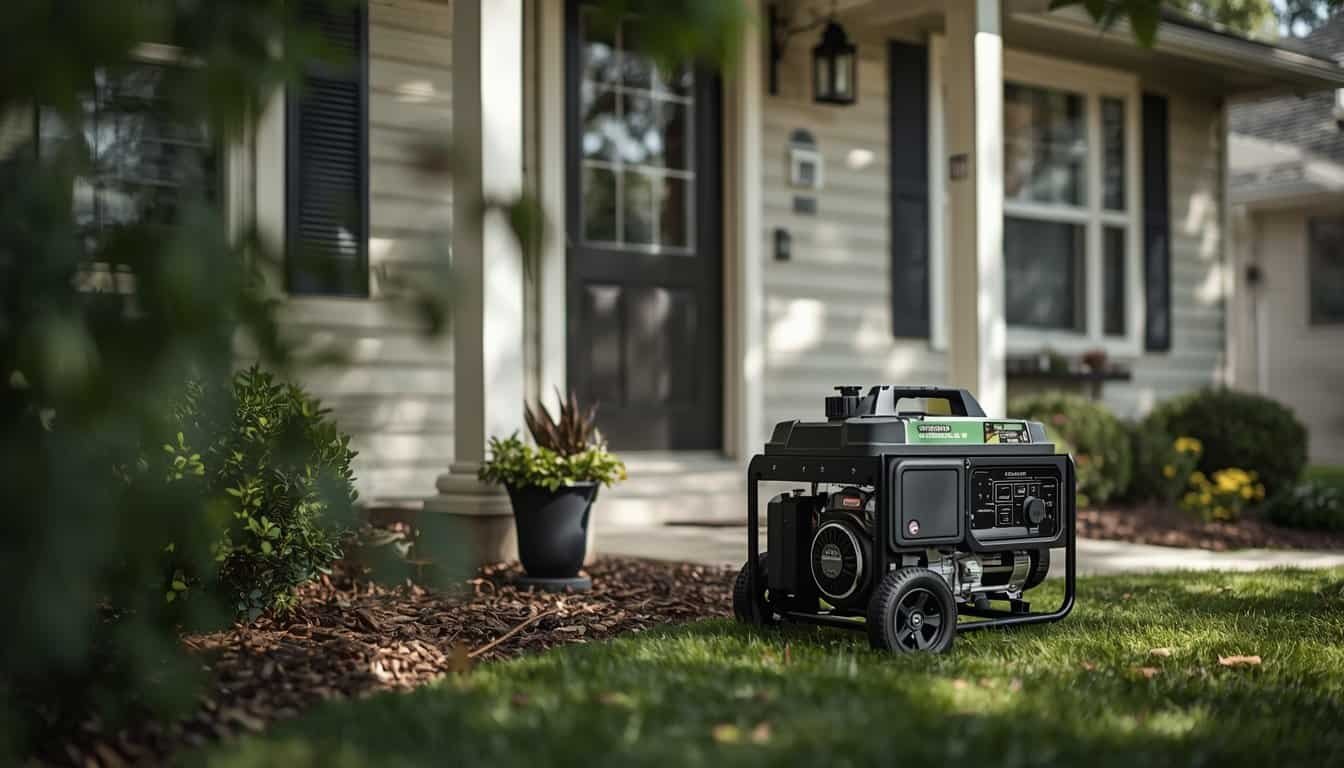
Portable generators solve one problem during an outage, but they can create a much more serious one if they are placed too close to the home. The biggest danger is not usually the generator itself. It is the exhaust. Carbon monoxide can move in ways homeowners do not expect, especially when a machine is operating near windows, doors, garages, crawlspace vents, or other openings that allow air to move into the house.
That is why generator safety is about more than just putting the unit outdoors. Outdoors is necessary, but it is not enough by itself. A generator can still be outside and still be too close to the home, too close to an open window, or positioned where wind and air movement carry exhaust back toward occupied spaces. A safer setup depends on distance, direction, and a willingness to treat exhaust drift as a serious risk instead of a minor detail.
A generator should never be near open windows or doors, but even closed openings can become part of the risk if the machine is placed too close and wind pushes exhaust toward the house. Safer placement means combining distance with open-air positioning and attention to how exhaust might travel.
Why windows and doors matter so much with generator exhaust
Many people think of windows and doors only as places where air obviously enters the home, but generator safety is broader than that. Exhaust does not need a wide-open front door to become dangerous. It can drift toward partially open windows, side doors, attached garage entries, and other areas where air movement changes from minute to minute. Once the exhaust reaches the house, the problem is not always visible or easy to judge from smell alone.
This is what makes generator placement so deceptive. A setup may look reasonable because the machine is technically outdoors and not directly touching the home. But if it is operating near the structure, especially near commonly used doors or windows, the actual risk can be much higher than it appears. Air does not move in neat straight lines, and homes create corners, overhangs, alcoves, and wind patterns that can trap or redirect exhaust in ways people do not anticipate.
That is why homeowners should think less in terms of “Is it outside?” and more in terms of “Could exhaust still move toward the home?” That question leads to much better placement decisions than relying on appearance alone.
Why wind direction and air movement can change a setup quickly
One of the hardest parts of generator safety is that the setup can feel stable at one moment and become riskier the next. Wind shifts, passing weather, fences, walls, neighboring structures, and even the layout of the yard can influence where exhaust ends up. A location that feels open enough when the air is calm may become more dangerous if the wind starts carrying fumes toward the house or if a storm pattern changes during a long outage.
This matters during severe weather because homeowners are often tired, rushed, and eager to get backup power running. They may choose a spot that seems convenient rather than one that stays safest over time. If the generator is near the house because the cord run is easier or because the location feels sheltered, that convenience can hide the real issue: exhaust needs room to dissipate away from the home, not near it.
That is also why generator placement should be reviewed as part of broader storm planning rather than improvised after the outage starts. Families preparing for prolonged weather events can connect this article with hurricane power outage preparation so the backup-power location is thought through before stress and bad weather make judgment worse.
What safer placement usually looks like
Safer generator placement is usually simple in principle even if every property is a little different. The machine should be in an open outdoor area with meaningful separation from the home, not tucked beside a doorway, not positioned under a window, and not placed where exhaust is likely to be trapped and redirected toward living spaces. A setup that gives exhaust room to move away from the house is almost always better than one that relies on wishful thinking about airflow.
Homeowners should also think about the direction the exhaust is pointing, not just where the generator body sits. A machine that is technically several feet from a wall can still create a serious problem if its exhaust path is aimed toward the house or toward an area where air circulates back into openings. The safer mindset is to assume that exhaust needs distance and clear space, not a semi-sheltered corner near the building.
That same logic applies to convenience areas around doors. People are often tempted to place generators near entry points because that makes fueling, monitoring, or cable routing feel easier. But doors are exactly the areas that tend to be opened repeatedly during an outage. Safer placement means resisting that convenience and prioritizing open-air separation instead.
Do not let “temporary” placement become risky placement
One common mistake is telling yourself that a risky location is acceptable because it is only for a short period of time. But many outages last longer than expected, and even shorter generator operation can be dangerous if exhaust is allowed to collect near the home. Temporary use does not make poor placement safe.
This is especially important in overnight or bad-weather situations, when people are more likely to leave the setup alone once it is running. If the location is not safe enough to trust over time, it is not safe enough to use just because the outage is inconvenient.
Never place a generator beside a door, under or near open windows, inside a garage, or in a partially enclosed area because you want it closer to the house or more protected from weather. If the safest location feels less convenient, choose safety over convenience.
Why bad weather makes placement judgment worse, not better
Storms, rain, darkness, and stress make people more likely to choose poor locations. They want the generator easier to reach, more shielded, or closer to where the extension cord enters the home. Those goals are understandable, but they push people toward overhangs, doorways, garages, breezeways, and corners near the structure — exactly the kinds of spaces that can make exhaust behavior less predictable and more dangerous.
The safer approach is to make the placement decision ahead of time, while the weather is calm and the property can be evaluated without pressure. That gives homeowners a chance to think about openings, airflow, walking paths, and how the location may behave if the wind changes. During a live outage, especially in severe weather, people are much less likely to make their best decisions.
This is also one reason families should connect generator placement planning with a broader tornado preparedness plan or other severe-weather readiness routine. Backup power is helpful, but only if the equipment can be used in a way that does not create a second hazard next to the home.
How generator placement fits into overall outage safety
A generator should not be thought of as a standalone machine with one simple rule attached to it. It is part of a larger outage system. The location interacts with cords, refueling habits, weather, household movement, noise, and how long the outage is likely to last. A placement that seems “good enough” for ten minutes may become much worse once people start opening doors, moving around the house, or operating for several hours at a time.
That is why homeowners who rely on portable generators benefit from reviewing broader generator operation safety during multi-day power outages. Safe use is not just about getting power on. It is about keeping the household protected while the generator is in service, especially when fatigue and changing conditions make shortcuts feel tempting.
The placement decision also affects recovery. If the generator setup is poorly managed during the outage, the home may come out of the event with more confusion about equipment, cords, and system restart than necessary. A safer, cleaner operating setup tends to make the overall outage much easier to close out once utility power returns and the household begins following a safe restart checklist after a power outage.
The safest generator setup is usually the one that feels less convenient
Homeowners often know a risky spot when they look at it. It is closer to the house, easier to check, easier to fuel, easier to connect, or more sheltered from weather. Those are exactly the reasons risky spots are so tempting. But a safer generator setup usually demands more separation, more planning, and more willingness to accept inconvenience in exchange for open-air safety.
That tradeoff is worth it. Exhaust risk is not something to bargain with based on comfort or convenience. When a generator is kept well away from windows, doors, and the general airflow of the home, the whole outage setup becomes safer and less likely to create a hidden danger while everyone is focused on restoring power.
Good generator placement is simple, deliberate, and non-negotiable
You do not need an advanced technical background to make better generator placement decisions. You need a clear rule: keep the machine far from the home, far from windows and doors, and in open outdoor air where exhaust is less likely to drift back toward occupied spaces. Then you need the discipline to keep following that rule even when the weather is bad and the easier option is right next to the house.
That is what good generator safety looks like. It is not dramatic. It is not complicated. It is simply deliberate enough to keep a helpful backup-power tool from becoming one of the most dangerous things on the property during an outage.