


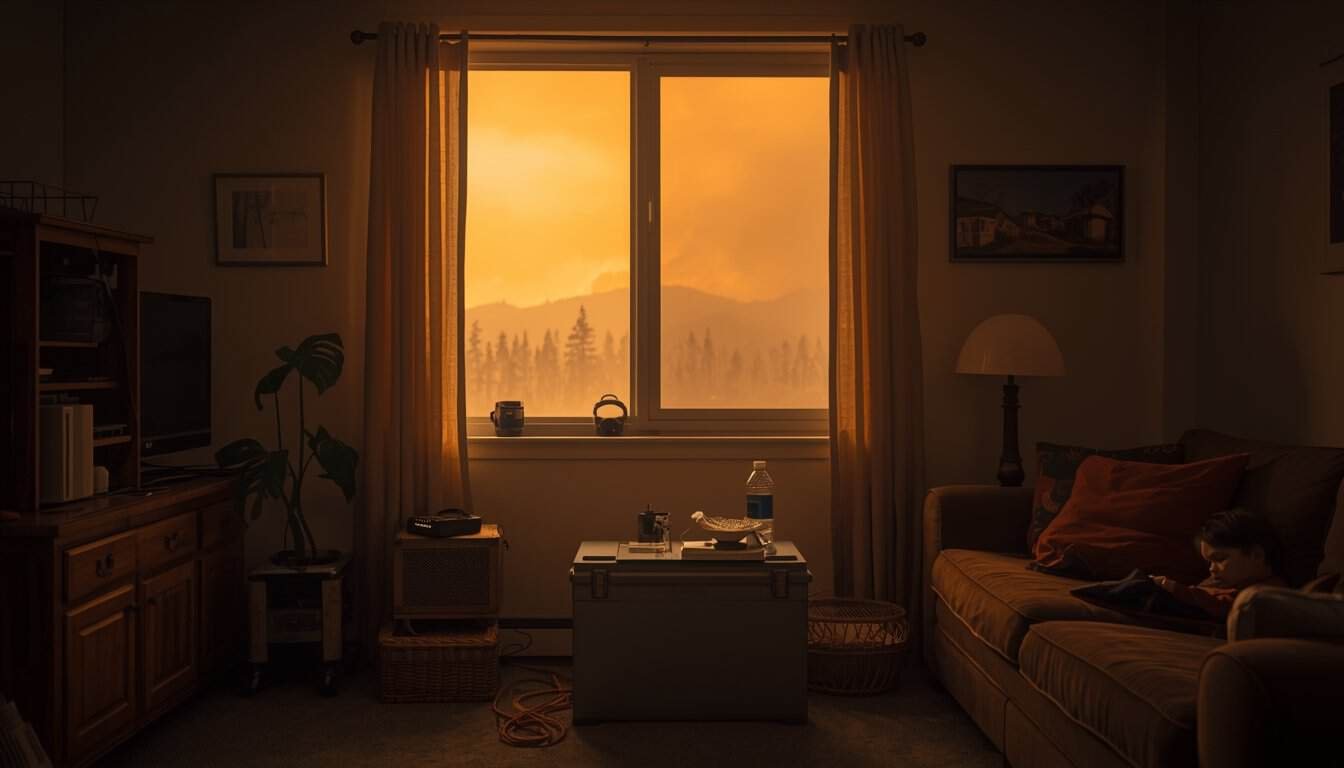
Wildfire smoke changes the way households think about power outages because the problem is no longer only about lights, food, and device charging. It also becomes an air-quality problem. When smoke levels are high, the usual advice to open windows, increase airflow, or rely on outdoor air for relief may not be the safest choice. If the power is also out, families may be forced to balance heat, stale air, battery life, and smoke exposure all at the same time.
Good wildfire smoke outage planning is about making those tradeoffs before conditions become stressful. It means deciding how to protect the cleanest indoor air you can, which devices or spaces matter most if power becomes limited, and how to avoid turning one problem into another through rushed decisions. The goal is not to create a perfect indoor environment. The goal is to reduce smoke exposure and keep household choices calm, deliberate, and realistic.
During a typical outage, fresh outdoor air may help a home feel more livable. During a smoke event, that same instinct can make indoor air worse. Wildfire smoke readiness works best when households stop assuming that more airflow is always better and start planning around cleaner indoor air instead.
Why wildfire smoke makes a power outage harder to manage
Most outage plans assume the house itself is the safest place to settle in and wait things out. During heavy wildfire smoke, the house may still be the right place, but only if you treat indoor air as something worth protecting. Smoke can enter through open doors, windows, poorly sealed areas, and repeated traffic in and out of the house. Once indoor air quality starts getting worse, the home can feel stuffy, uncomfortable, and difficult to manage, especially when the power is out and normal cooling or filtration is limited.
That pressure leads to bad tradeoffs. People open windows because the house feels hot, use power without a plan because one room feels stale, or move around more than necessary while trying to improve comfort. Those reactions are understandable, but they can increase smoke exposure or waste limited battery resources. Wildfire smoke planning is strongest when families accept early that the home may need a smaller, more controlled routine until the event improves.
This is especially important for children, older adults, people with asthma or other respiratory concerns, and anyone who already struggles during poor-air-quality days. Even a household with no diagnosed medical issues can feel the effects of smoke sooner than expected if indoor air quality is allowed to degrade while the power is down.
What to do before smoke and outage conditions get worse
The most useful decisions happen before the indoor environment starts feeling stressful. Pick the room or small group of rooms you would most likely use if smoke intensifies and the power goes out. In many homes, the best space is not the biggest room. It is the room that can be closed off most effectively, kept relatively dark and cool, and managed with the least amount of unnecessary traffic.
Once that space is chosen, think about the basics that need to support it. That includes water, chargers, flashlights, light food that does not add extra indoor heat, and any small devices you may want to preserve battery power for. If your household is still building that base, this 72-hour emergency kit for power outages is a practical starting point because the same readiness items that help during a general outage also support a smoke-constrained indoor routine.
It also helps to prepare emotionally for a more limited household pattern. Smoke events often require fewer open windows, less movement in and out of the home, and more deliberate energy use. Families that expect those constraints ahead of time usually handle them better once the outage actually begins.
Create one controlled indoor space instead of trying to manage the whole house
One common mistake is trying to make every room equally comfortable during a smoke event. That usually wastes effort and makes indoor air harder to manage. A better approach is to identify the room where the household can spend the most important hours with the least disruption and then support that space intentionally.
This room does not need to be perfect. It needs to be practical. The more concentrated your plan is, the easier it becomes to protect air quality, conserve battery power, and reduce repeated decisions about where people should be and what should stay running.
How to think about ventilation when smoke is outside
During wildfire smoke, ventilation decisions become less intuitive. In a normal outage, opening windows may seem like the easiest way to improve comfort. In a smoke event, it can bring the main hazard indoors. That does not mean homes should always stay completely sealed no matter what. It means ventilation choices should be based on whether outdoor air is actually helping or worsening the situation.
For many households, the safer default during active smoke is to keep windows and doors closed as much as possible and avoid unnecessary indoor activities that add heat or particles to the air. If smoke conditions ease temporarily, some homes may benefit from a brief adjustment in airflow, but that kind of decision should be made carefully, not automatically. Wildfire smoke readiness depends on resisting the urge to solve discomfort by opening the house without thinking through the air-quality cost.
That tradeoff becomes harder if the house is also getting warm. Families in hot regions should understand that smoke events can overlap with heat-related outage stress, which is why it may help to pair this plan with heat wave power outage planning when building a more complete warm-season readiness strategy. The key is to think in tradeoffs, not defaults.
Do not assume that making the house feel less stuffy is automatically safer. During a smoke event, the action that improves comfort in the moment can also worsen air quality. Make ventilation decisions deliberately, and do not burn through limited power or open the home up widely just because the indoor environment feels unpleasant.
How to use limited power wisely during a smoke outage
When backup power is limited, households need priorities. That usually means supporting the room, device, or function that provides the most meaningful protection rather than trying to power every convenience item in the house. Wildfire smoke outages reward selective power use. A small amount of battery capacity can be much more useful when it is directed intentionally than when it is scattered across too many small wants.
In practical terms, that means deciding what matters most before battery levels become stressful. Communication devices, limited lighting, and any targeted indoor-air strategy you are using may deserve priority over less important comforts. A broader power outage checklist for the first 15 minutes, first 4 hours, and first 24 hours can help the household move into that kind of structured decision-making instead of using power reactively.
For longer events, daily rhythm matters too. The household should preserve energy where possible, reduce unnecessary movement, and avoid wasting battery life on equipment that does not meaningfully improve safety or livability. During smoke events, disciplined use of limited power often matters more than having a large number of devices available.
How longer smoke events change the household routine
A short smoke event with a brief outage may feel manageable. A multi-day event changes the equation. The house may feel more stale, people may get restless, sleep may become harder, and decision fatigue can build. That is when households benefit most from a routine that is intentionally smaller and more repeatable than normal life.
Use a limited set of rooms, keep food choices simple, protect battery life, and reduce activities that force repeated trips outside or frequent opening of doors and windows. This is also where a broader 7-day power outage plan becomes useful, because long smoke-related outages still create the familiar strain of food, water, charging, communication, and household fatigue even though the air-quality challenge is what makes the event feel different.
Families usually do better when they stop trying to recreate ordinary comfort and instead switch to a temporary smoke-event routine. The simpler that routine is, the easier it becomes to maintain for as long as the event lasts.
Know when the plan at home may no longer be enough
Some smoke-and-outage events can be managed at home with good preparation. Others may push the limits of what a household can safely tolerate, especially if indoor air quality keeps worsening, the home cannot be managed effectively, or someone in the household is struggling. That threshold will not look the same for every family, which is why it helps to talk through your decision points ahead of time.
The strongest plans do not assume staying home is always the best answer. They recognize that sometimes the better decision is to leave for a safer environment rather than continue trying to improvise in a house that is no longer functioning well enough for the people inside it.
Good wildfire smoke outage planning is about choosing the cleaner, simpler path
When wildfire smoke and power loss happen together, households usually do best with a smaller plan, not a bigger one. Protect the cleanest indoor air you can, use limited power with intention, keep routines simple, and resist the urge to solve discomfort with quick actions that make smoke exposure worse. The more calmly those tradeoffs are handled, the more useful the plan becomes.
You do not need a perfect filtered environment to make meaningful improvements. You need a controlled indoor space, realistic priorities, and the willingness to think carefully about air quality instead of reacting only to heat or discomfort. In a smoke event, that difference often matters more than people expect.