


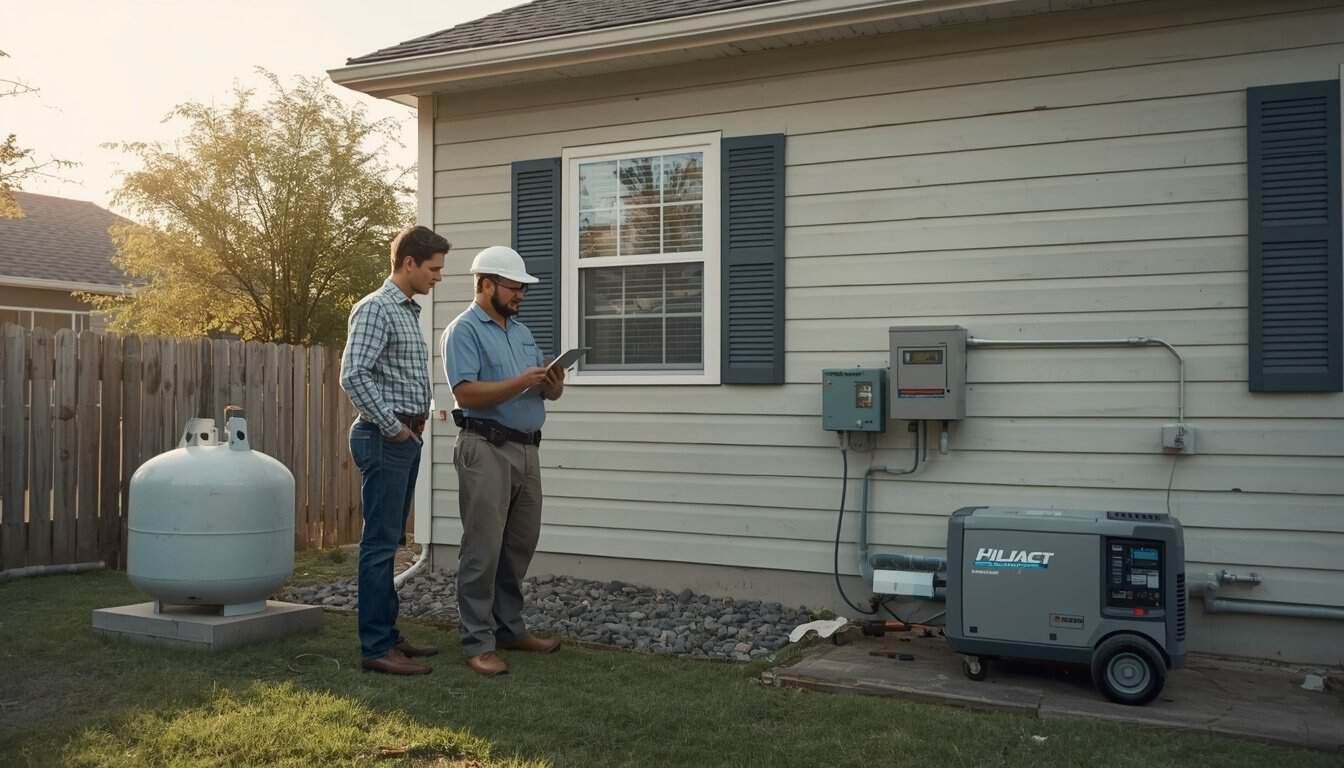
Propane and natural gas generators can both be useful for home backup power, but they solve different outage problems. Propane gives you fuel stored on-site. Natural gas can offer a continuous fuel supply when the gas utility is working. The better choice depends on your home, outage risks, local fuel access, generator type, and how much control you want over fuel storage.
The simplest way to compare propane vs natural gas generators is this: propane is better when you want stored fuel that is not tied to a gas utility line, while natural gas is better when you want convenience and longer runtime without managing portable fuel containers. Neither fuel makes a generator safe by itself. Placement, carbon monoxide protection, load planning, installation, and maintenance still matter.
Start With the Difference That Matters During an Outage
The biggest practical difference is where the fuel comes from. Propane is stored on your property in cylinders or a larger tank. Natural gas usually comes through a utility gas line. That means propane gives you a known amount of fuel on-site, while natural gas may provide continuous fuel as long as gas service remains available and the generator is connected correctly.
This difference becomes important during storms. If roads are blocked, propane delivery or cylinder exchange may be difficult. If the natural gas system is interrupted, a natural gas generator may not have a backup supply unless it is designed for another fuel. The best choice depends on which fuel is more reliable in your area.
If you already compared gasoline and propane for storage risks, use Gasoline vs Propane Storage Risks as the related fuel-safety guide. This article focuses specifically on propane and natural gas as generator fuel choices for outage readiness.
Propane Gives You Fuel Stored On-Site
Propane’s main preparedness advantage is control. If your tank is filled before storm season, you know roughly how much fuel is available on your property. That can be useful in rural areas, private-well homes, storm-prone regions, and places where gasoline stations may lose power or run out of fuel after a major event.
Propane also stores differently from gasoline. It does not go stale in the same way gasoline does, and it is commonly used for standby generators, grills, heating, and other household systems. For generator planning, that makes propane attractive when you want a cleaner long-term storage option than gasoline cans.
The tradeoff is that the tank still has a limit. A small cylinder may not support a large generator for long. A larger tank may require professional installation, safe location, delivery access, and local-code compliance. Propane is on-site fuel, but it still needs planning.
Natural Gas Offers Convenience When the Utility Is Working
Natural gas is attractive because it can remove the need to refill portable tanks during a long outage. If the home has natural gas service and the generator is installed for that fuel, the generator may run for extended periods without someone carrying fuel, waiting for delivery, or managing cylinders.
That convenience is one reason many permanently installed standby generators use natural gas when it is available. The generator can start automatically in some systems and draw from the gas line without the homeowner handling fuel in bad weather.
The tradeoff is dependence on the gas utility. Natural gas service is often reliable, but it is not the same as having a full tank on your property. Earthquakes, utility shutoffs, damaged gas infrastructure, pressure issues, emergency work, or local disruptions can affect availability. Natural gas reduces fuel-handling work, but it does not eliminate outage planning.
Runtime Depends on Fuel Supply and Load
Runtime is not just a fuel-type question. It depends on generator size, load, fuel supply, temperature, elevation, maintenance condition, and whether the generator is running continuously or only during planned windows. A lightly loaded generator uses less fuel than one running near its limit.
For propane, runtime is tied to tank size and how much fuel is actually available. For natural gas, runtime is tied more to gas service availability and whether the generator is allowed and designed to run for long periods. Either way, the more loads you connect, the faster you stress the system.
A load plan helps with both fuels. Use Generator Load Rotation Plan to decide what gets powered first, what can wait, and which loads should not start together. Fuel choice matters, but load discipline often determines whether the generator remains useful through the outage.
Generator Output May Differ by Fuel
Some dual-fuel or tri-fuel generators produce different output depending on whether they are running on gasoline, propane, or natural gas. Natural gas and propane may produce less rated power than gasoline on some portable models. The exact difference depends on the generator design and manufacturer specifications.
This matters if you are close to the generator’s limit. A generator that can handle a refrigerator, sump pump, and chargers on one fuel may have less margin on another. Do not assume the highest advertised wattage applies equally to every fuel setting.
Before choosing fuel, check the generator’s rated running watts and starting watts for that specific fuel. If you are using the generator for well pumps, sump pumps, refrigerators, medical equipment, or transfer-switch circuits, leave extra margin instead of planning at the edge.
Propane Storage Has Rules and Limits
Propane should be stored and handled according to cylinder, tank, supplier, and local safety requirements. Portable cylinders should remain upright, protected from damage, and kept away from heat, ignition sources, and living spaces. Larger tanks require proper placement, clearance, delivery access, and professional installation.
Do not store propane cylinders indoors, in basements, or in living areas. Do not bring cylinders inside during storms. If you smell gas, suspect a leak, hear hissing, or see damage to a cylinder, move away and follow supplier or emergency guidance rather than trying to keep the generator running.
For preparedness, the key question is whether your propane supply matches your outage plan. One small cylinder may be fine for short use with a smaller generator. A larger home-backup plan may require a much larger tank and professional fuel planning.
Natural Gas Requires Proper Installation
A natural gas generator is not something to connect casually with a random hose or improvised fitting. The gas line must be sized, installed, and approved for the generator’s fuel demand. A generator that starves for fuel may run poorly, produce unstable power, or shut down under load.
Gas work should be handled by qualified professionals and must follow local code, utility requirements, and manufacturer instructions. The installer should confirm pressure, pipe sizing, shutoff valves, connection method, generator location, and clearances.
Do not use grill hoses, appliance connectors, or homemade adapters to feed a generator unless the equipment is specifically designed and approved for that use. Natural gas convenience only helps when the installation is correct.
Maintenance Is Different From Fuel Storage
Propane and natural gas are often described as cleaner-burning than gasoline, but that does not mean the generator is maintenance-free. Oil changes, air filters, spark plugs, battery checks, exercise runs, cooling airflow, and inspection still matter.
Standby generators may have scheduled maintenance intervals based on hours or calendar time. Portable dual-fuel generators still need testing, fuel-system checks, and storage preparation. A generator that sits untouched for years may fail when the outage finally arrives, even if the fuel itself stored well.
Run and maintain the generator according to the manual. During each test, confirm that the generator starts, carries a simple load, runs smoothly, and shuts down properly. If it surges, stalls, trips, leaks, or produces strange power behavior, use Generator Problems Explained before relying on it for the next storm.
Outage Readiness Depends on Local Risks
Propane may be more attractive where fuel delivery can happen before storm season, where gasoline access is unreliable, or where natural gas service is not available. Natural gas may be more attractive where utility gas service is reliable, longer runtime is important, and the home already has a suitable gas supply.
Think about the outages you actually face. Summer storms may affect roads, trees, and power lines while gas service continues. Flooding may limit access to tanks or equipment. Earthquake-prone areas may have different gas-shutoff concerns. Rural areas may have propane but no natural gas. Urban homes may have gas service but limited space for propane storage.
Your fuel choice should match the hazard pattern. The “best” generator fuel for one home may be the wrong choice for another home across town. For longer outages, connect generator fuel planning with your broader 7-Day Power Outage Plan so fuel, water, refrigeration, medical needs, charging, and relocation decisions are planned together.
Fuel Choice Should Match Essential Loads
Before choosing propane or natural gas, list the loads that matter most. A refrigerator, freezer, sump pump, well pump, medical device, furnace blower, router, phone chargers, and a few lights are very different from a whole-home comfort plan with air conditioning and multiple appliances.
For a rough planning check, the Generator Sizing Calculator can help estimate the generator capacity needed for your intended loads. Then compare that plan with the generator’s fuel-specific ratings and your actual propane tank size or natural gas supply.
Do not choose fuel only by convenience. Choose it based on the loads you need, the runtime you expect, the fuel you can keep available, and the safety of the installation.
Propane vs Natural Gas for Portable Generators
Portable generators are commonly available in gasoline, dual-fuel, and tri-fuel configurations. Propane is often supported on dual-fuel models. Natural gas may be supported on tri-fuel models or through specific approved kits and designs. The generator manual should clearly state what fuels are allowed.
For portable use, propane is often easier to store ahead of time than gasoline, but cylinders still need safe handling and realistic runtime expectations. Natural gas may be convenient if the generator is specifically designed for it and the home has a safe outdoor connection installed for that purpose.
Do not convert a generator to natural gas or propane with an unapproved kit and assume it is safe. Fuel conversions can affect output, emissions, warranty, engine behavior, and safety. Use equipment and parts supported by the manufacturer or a qualified conversion professional.
Propane vs Natural Gas for Standby Generators
Permanently installed standby generators are often fueled by either propane from a tank or natural gas from a utility line. In this category, the decision is usually less about moving cylinders and more about long-term reliability, tank sizing, installation cost, local fuel availability, and automatic operation.
A propane standby generator can keep fuel on-site, but the tank must be large enough for the expected loads and outage duration. A natural gas standby generator can avoid refueling logistics during many outages, but it depends on gas service remaining available and the line being sized correctly.
For either fuel, standby generator installation should include electrical transfer equipment, fuel-line work, permitting where required, placement, exhaust clearance, maintenance schedule, and carbon monoxide protection. Fuel type is only one part of the system.
Cost Is More Than Fuel Price
Propane and natural gas cost comparisons can be misleading if you look only at the fuel price. You also need to consider generator purchase price, installation, tank rental or purchase, gas-line work, delivery fees, maintenance, fuel availability, and how often outages actually happen.
Natural gas may have lower day-to-day fuel-handling effort if the line is already available. Propane may require tank planning but can give you stored fuel independence. A portable tri-fuel generator may cost more than a simpler model but offer flexibility. A standby system costs more upfront but may provide automatic operation and a cleaner long-term setup.
The right value depends on the household’s risk. A home with frequent long outages may justify more infrastructure. A home with rare short outages may prefer a simpler portable setup and stored emergency essentials.
When One Fuel Is Clearly Better
Propane is often the better fit when natural gas is not available, when you want on-site stored fuel, when gasoline storage is a concern, or when the generator is only one part of a broader rural outage plan. It can also be a good option for homes that already use propane for heating, cooking, or other appliances.
Natural gas is often the better fit when the home already has reliable gas service, long runtime convenience matters, fuel delivery during storms is a concern, and a properly installed generator connection is part of the plan. It can be especially appealing for permanently installed standby generators.
Neither fuel is automatically better for every homeowner. The best choice is the one that matches your outage duration, fuel access, load needs, installation options, and safety plan.
Warning Signs That Fuel Planning Is Not Ready
Your propane or natural gas generator plan is not ready if you do not know the generator’s fuel-specific wattage, do not know how long the fuel supply will last, have not tested the generator under a safe load, are using an improvised fuel connection, lack carbon monoxide alarms, or have no plan for what to power first.
It is also not ready if the generator location is unsafe, if fuel containers are stored incorrectly, if the gas line was not professionally sized, or if the generator has not been maintained. Fuel choice cannot compensate for poor setup.
If any of those gaps exist, fix them before storm season. A generator plan should be boring before the storm so it is not confusing during the outage.
FAQ
Is propane better than natural gas for a generator?
Propane is often better when you want stored fuel on-site or do not have natural gas service. Natural gas is often better when you want convenience and longer runtime from a utility gas line. The better choice depends on fuel access, outage risk, generator type, and installation.
Do natural gas generators run as long as the power is out?
They may run for extended periods if gas service remains available and the generator is installed and maintained correctly. However, they still depend on the gas utility, generator maintenance, load limits, and safe operation.
Does a propane generator need less maintenance?
Propane may avoid some gasoline storage problems, but the generator still needs maintenance such as oil changes, air filter checks, spark plug service, battery checks, test runs, and inspection according to the manual.
Can I convert a generator from propane to natural gas?
Only if the generator and conversion method are approved for that use. Fuel conversions can affect output and safety. Use manufacturer-supported equipment or qualified professional guidance instead of unapproved kits or homemade fittings.
Conclusion
Propane and natural gas generators are both useful backup-power options, but they serve different preparedness goals. Propane gives you stored fuel on-site. Natural gas gives you convenience when utility gas service remains available. Both require safe placement, carbon monoxide protection, proper installation, load planning, and regular maintenance.
The best choice is the one that fits your home’s real outage pattern. Know what you need to power, how long you need to run, where the fuel comes from, who maintains the system, and what happens if the primary fuel plan fails. Fuel type matters, but a safe and realistic outage plan matters more.