


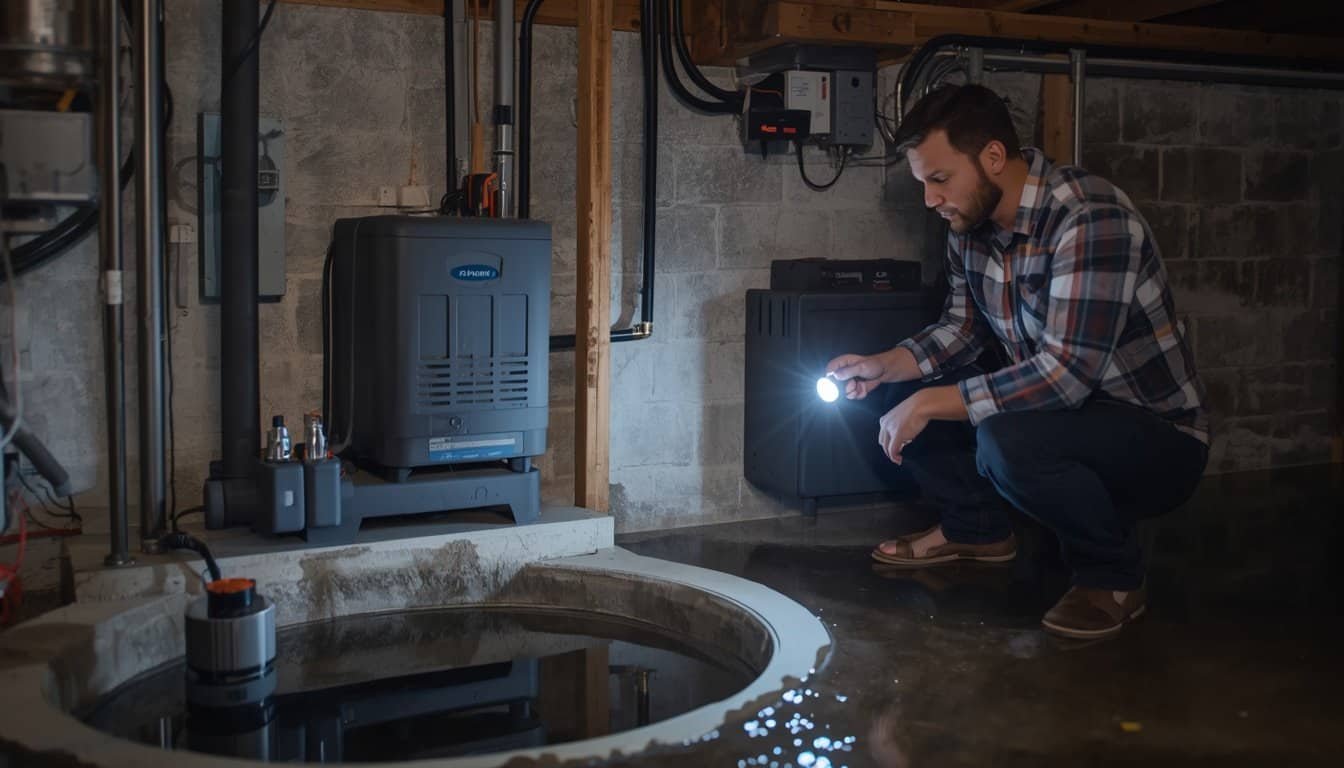
A sump pump is easy to forget until a summer storm knocks out power and water starts rising in the pit. The problem is that the same heavy rain that fills the sump basin can also create the outage that stops the pump. A good plan is built before the storm, not after the basement floor is already wet.
A practical sump pump power outage plan should include a working primary pump, a battery backup or secondary pump, a safe generator option for longer outages, a water alarm, clear load priorities, and a decision point for when rising water becomes an electrical or flood hazard. The goal is to prevent small seepage from becoming basement damage while avoiding unsafe shortcuts around water and electricity.
Start With the Pump You Already Have
The first step is to confirm that the existing sump pump actually works before storm season. Pour water into the sump pit until the float rises and the pump turns on. Watch whether the pump starts smoothly, moves water out, and shuts off correctly. A pump that hums, short-cycles, sticks, or struggles to empty the pit should be serviced or replaced before the next major storm.
Check the discharge line outside the home. It should direct water away from the foundation, not dump it back near the basement wall where it can return to the sump pit. Make sure the discharge outlet is not blocked by leaves, mulch, landscaping, nests, debris, or frozen material in colder seasons.
This article focuses on prevention and backup power. If water is already entering the basement and the situation is becoming active, use What to Do If Your Basement Starts Flooding During a Power Outage for the emergency-response side of the problem.
Add a Battery Backup Before You Need It
A battery backup sump pump is often the most useful first backup layer because it can start automatically when utility power fails. It does not require going outside in a storm, starting a generator, or running extension cords through a wet area. For short outages and moderate water inflow, that automatic bridge can make a major difference.
There are two common approaches: a dedicated battery backup pump installed with the main sump system, or a backup power system that supports a compatible pump. The right option depends on the pump, pit layout, water inflow rate, battery capacity, and installer recommendations. A plumber, waterproofing contractor, or qualified installer can help size the backup to the home’s real flood risk.
Do not treat a battery backup as unlimited protection. Batteries age, runtime depends heavily on how often the pump cycles, and heavy inflow can drain a backup much faster than expected.
For a sump-specific planning estimate, use the Sump Pump Backup Runtime Estimator. It lets you enter battery capacity, pump wattage, cycle length, and cycles per hour so you can compare current conditions with more demanding pumping scenarios.
Use a Water Alarm as an Early Warning
A water alarm is a simple device that can alert you when water reaches a certain level near the sump pit, floor drain, appliance area, or low spot in the basement. It does not stop flooding, but it can tell you that the pump is not keeping up, the backup failed, or water is entering from another location.
Place water alarms where they will warn you early without sitting in a spot that gets nuisance moisture all the time. Common locations include near the sump pit, near a basement door, near a water heater, near a floor drain, or near a known seepage area. If the alarm uses batteries, replace or test them before storm season.
An alarm is especially helpful at night. Many basement floods become expensive because no one notices water rising until the next morning. A loud local alarm or connected alert can give the household time to act while the problem is still small.
Plan Generator Support for Longer Outages
A generator can support a sump pump during a longer outage, but it needs to be planned carefully. The pump may have a higher startup demand than its normal running load, and it may cycle frequently during heavy rain. A generator that is already running a refrigerator, freezer, fans, chargers, and other loads may struggle when the pump starts.
Write down the sump pump’s electrical requirements before a storm. Check the pump label, manual, or installer documentation for horsepower, amps, volts, or watts. If you are unsure how much generator capacity is needed, the Generator Sizing Calculator can help with a rough planning estimate. Treat it as a starting point, then follow the pump and generator manuals.
If the same generator will also support food storage, compare priorities with Running a Refrigerator on a Generator During an Outage. A refrigerator can often be cycled or delayed for a period of time, while a sump pump may need power immediately during heavy rain.
Do Not Bring the Generator Closer Because It Is Raining
Generator placement is one of the biggest safety risks during storm outages. The generator must stay outdoors and away from windows, doors, garages, vents, crawlspaces, and enclosed or partly enclosed areas. Do not place it in the basement, garage, porch, or near an open door because rain is falling or the sump pump cord is too short.
Carbon monoxide can enter the home even when people think the generator is “mostly outside.” Use battery-powered carbon monoxide alarms in the home, but do not treat alarms as permission to use unsafe placement. The generator should be outdoors, ventilated, and positioned according to the manufacturer’s instructions and safety guidance.
The generator also needs to stay dry without being enclosed in a way that traps exhaust. Use only covers or shelters designed for safe generator operation if the manufacturer allows them. If you cannot run the generator safely in the weather, do not improvise around carbon monoxide, shock, or fire hazards.
Use Extension Cords Carefully Around Water
If a portable generator will power the sump pump directly, the extension cord must be outdoor-rated, heavy-duty, properly sized, and routed away from standing water. A long, thin, undersized cord can overheat or reduce voltage to the pump, which can make the pump run poorly when you need it most.
Keep cords off wet basement floors whenever possible. Do not run cords through puddles, under rugs, through tight door pinch points, or across walking paths in a dark basement. If the sump area is already wet, think carefully before adding more plugged-in equipment to the area.
For more detail on gauge, length, and overheating risk, review Extension Cord Sizing for Generators. Cord safety matters more around a sump pump because water, stress, darkness, and urgency are often present at the same time.
Know What Your Backup System Can Actually Handle
A backup system should match the water problem. Some homes have occasional seepage and a pump that runs only during major storms. Other homes have a high water table and a pump that cycles often during heavy rain. A small battery backup that works well for one home may be overwhelmed in another.
Pay attention to how often the primary pump runs during storms. If the pump cycles constantly, the backup battery may drain quickly during an outage. If the pump barely keeps up when utility power is available, a backup pump may need more capacity, better discharge planning, or professional waterproofing improvements.
Also consider whether the sump pit, check valve, discharge line, drainage around the foundation, gutters, and downspouts are all working together. Backup power helps the pump run, but it does not fix poor grading, clogged gutters, a blocked discharge line, or water being directed back toward the foundation.
Reduce Water Before It Reaches the Sump Pump
The best sump pump plan is not only about power. It is also about reducing how much water reaches the basement in the first place. Clean gutters, extend downspouts away from the foundation, keep window wells clear, and make sure soil slopes away from the house where possible.
Look for simple water pathways before storms: clogged downspouts, splash blocks pointing toward the house, low spots near the foundation, missing window-well covers, and basement stairwell drains that clog with leaves. These problems can overload a sump system even when the pump itself works.
If your basement has flooded before, document where water entered and what conditions caused it. Water coming up through the floor, entering through walls, backing up through drains, or flowing in through a door may require different fixes. A sump pump is important, but it is not a complete waterproofing system by itself.
Set Load Priorities During the Outage
During a storm outage, the sump pump may need to outrank comfort loads. If the generator can only handle a few items, the pump, communication devices, medical needs, and essential lighting may matter more than entertainment, cooking appliances, or extra room fans.
Make a simple rotation plan. For example, the generator may support the sump pump whenever rain is heavy, then charge phones or cool the refrigerator when pump cycling slows. The exact plan depends on your generator, pump, weather, food-safety timeline, and household needs.
This is where a written household plan helps. Your 7-Day Power Outage Plan should include sump pump power, generator fuel, basement checks, food safety, medical needs, charging, and when to leave if flooding or heat makes the home unsafe.
When to Stop Trying to Save the Basement
There is a point where the safest move is to step back. If water is rising near outlets, cords, appliances, the electrical panel, or plugged-in equipment, do not wade in to adjust the pump. If the water may be contaminated, moving quickly, or entering from outside flooding, the risk is higher than ordinary seepage.
Call for help early if the basement is flooding faster than the pump can remove water, if the pump loses power and the battery backup is drained, if you smell burning, if breakers trip repeatedly, or if water is approaching electrical equipment. If local flooding is involved, follow emergency management guidance and do not drive or walk through floodwater.
Property damage is frustrating, but electrocution, carbon monoxide exposure, contaminated water, and structural hazards are more serious. A good sump pump plan should include the moment when the household stops improvising and protects people first.
Maintain the System Before Every Storm Season
A sump pump backup plan needs regular maintenance. Test the pump, clean debris from the pit, confirm the float moves freely, check the discharge outlet, test the water alarm, and inspect the backup battery or charger according to instructions. Replace aging batteries before they become unreliable.
Keep a flashlight near the basement entrance, not only near the sump pit. If the lights go out, you need to assess the basement safely before stepping into the area. Keep the generator manual, pump documentation, cord ratings, and backup pump instructions in a dry location where someone else can find them.
After each major storm, make one improvement. If the water alarm was hard to hear, move or replace it. If the cord route was awkward, plan a safer setup. If the pump barely kept up, schedule a professional evaluation before the next storm.
FAQ
Will a sump pump work during a power outage?
A standard electric sump pump will not work during a power outage unless it has backup power. That backup may come from a battery backup pump, a compatible backup power system, or a generator used safely outdoors.
Is a battery backup sump pump worth it?
For many homes with basement water risk, a battery backup is worth considering because storms can cause both heavy water inflow and power outages. It provides an automatic short-term layer, but runtime and capacity must match the home’s risk.
How long will a sump pump battery backup last?
There is no universal runtime. Battery size, battery condition, pump wattage, cycle length, and especially how often the pump runs all affect the result. A system that lasts many hours under light cycling may drain much faster during heavy rain.
Can I run a sump pump with a generator?
Yes, if the generator has enough capacity for the pump’s startup and running demand, is placed safely outdoors, and uses a properly rated outdoor extension cord or approved transfer setup. Never run the generator indoors or in a garage.
What should I do if water is already near electrical outlets?
Do not enter the water. Keep people away from the area and contact emergency, utility, or qualified electrical support. Standing water near electrical equipment is a serious shock hazard.
Conclusion
A sump pump power outage plan should have more than one layer: a tested primary pump, battery backup, water alarm, safe generator option, correct cords, and a plan for reducing water before it reaches the basement. The best system is prepared before the storm, not assembled in the dark while water is rising.
Use the Sump Pump Backup Runtime Estimator before storm season—and again during an outage if cycling changes—to understand how much battery protection you may realistically have. Most importantly, know when the situation has shifted from property protection to personal safety. If water reaches electrical hazards, the generator cannot be used safely, or the pump cannot keep up, step back and protect the household first.