


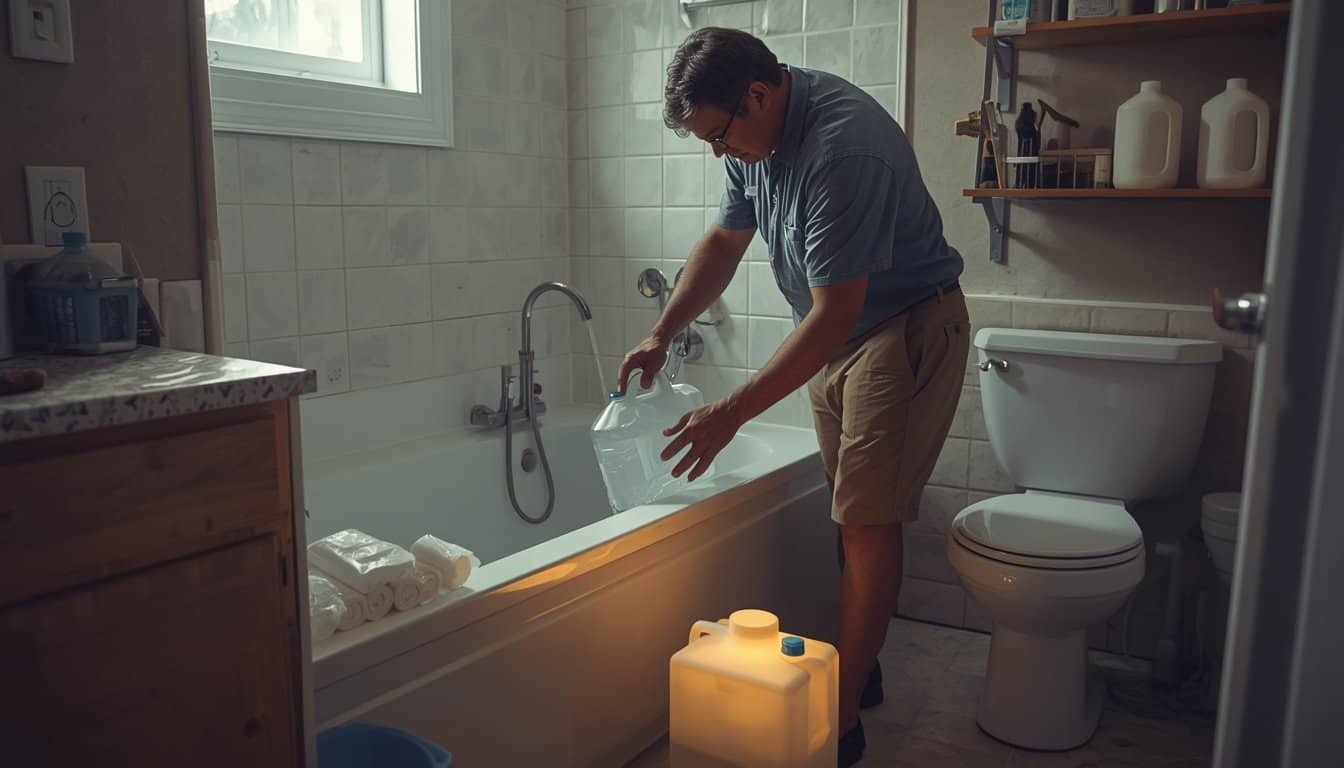
Water and sanitation can become a power-outage problem faster than many households expect. Lights and Wi-Fi are obvious losses, but toilets, well pumps, water heaters, sewer pumps, sump pumps, handwashing, drinking water, and boil-water advisories can all affect whether a home stays livable during a long outage.
A safe water and sanitation plan starts with stored drinking water, a realistic toilet plan, clear rules for private wells and sewer systems, basic hygiene supplies, and a way to respond if local officials issue a boil-water, do-not-drink, or do-not-use advisory. The goal is to protect health and comfort without assuming the tap, toilet, or pump will keep working normally.
Start With Drinking Water First
Drinking water should be the first priority because everything else becomes harder when people are thirsty, overheated, sick, or caring for children, older adults, pets, or medical needs. Store clean water before storm season instead of waiting until an outage begins and the tap may already be unreliable.
A practical emergency baseline is 1 gallon of water per person per day for drinking and basic sanitation. For very warm conditions, planning for 2 gallons per person per day gives the household more margin. Illness, pregnancy, nursing, pets, medical needs, caregiving routines, and longer outages can increase that requirement further.
Use the Emergency Water Storage Calculator to estimate a household target based on the number of people, outage duration, very warm conditions, pets, and an optional reserve. The goal is not to predict every gallon you might use normally, but to establish a realistic emergency supply before water access becomes uncertain.
Store water in food-grade containers when possible and keep it in a cool, dark place. Keep drinking water separate from water intended for toilets, cleaning, or outdoor use. Your 72-Hour Emergency Kit for Power Outages should include water, cups, sanitation supplies, hand hygiene supplies, and a way to open or pour containers safely.
Know Whether Your Tap Water Depends on Electricity
Some homes continue to have tap water during a power outage because they use a municipal water system with pressure that may remain available. Other homes lose water quickly because they rely on an electric private well pump. Some buildings may also depend on booster pumps, pressure pumps, or building systems that can fail when power is out.
If you have a private well, assume that running water may stop when the pump loses power. The pressure tank may provide a limited amount of water for a short period, but once that pressure is used, faucets may slow or stop until power returns or the pump is supported safely.
For private-well homes, connect this article with your Well Pump Power Outage Plan. Water storage, generator sizing, pressure tank limits, sanitation, and drinking-water safety should be treated as one plan rather than separate problems.
Fill Containers Before the Outage Gets Worse
If severe weather is forecast and your tap water is still safe, fill clean containers before the outage begins. Use food-grade jugs, pitchers, bottles, covered pots, and other clean containers for drinking water. Label or separate anything that is not intended for drinking.
You can also fill a bathtub, bucket, or large container for non-drinking uses such as toilet flushing or basic cleaning. That water should not be treated as drinking water unless it was stored in a clean drinking-water container and handled properly. Keep containers covered where practical, especially around children and pets.
Make this an early action, not a last-minute panic task. The Power Outage Checklist: First 15 Minutes, First 4 Hours, First 24 Hours can help you remember water, phones, lighting, food, medical needs, and sanitation while the outage is still manageable.
Understand How Toilets Work Without Power
In many homes, a standard gravity-flush toilet can still flush during a power outage if water is available to refill the tank or bowl. The problem is not always the toilet itself. The problem is whether you still have water pressure, whether the sewer or septic system can accept wastewater, and whether any pumps in the system require electricity.
If you are on municipal water and sewer, toilets may keep working normally for a while, but local conditions can vary. If you are on a private well, the toilet may flush only until the pressure tank is depleted unless you manually add water to the tank or bowl. If your home uses a sewage ejector pump, grinder pump, basement bathroom pump, or septic pump, flushing may create problems when that equipment has no power.
Do not keep flushing normally if you are unsure whether wastewater can move safely away from the home. Repeated flushing into a system that cannot pump or drain can lead to backups, odors, basement problems, or unsanitary conditions.
Use Stored Non-Drinking Water for Flushing
If the toilet system is safe to use and the only problem is lack of incoming water, stored non-drinking water can often be used for flushing. Some toilets can be flushed by pouring water into the bowl with enough force to trigger the siphon, while others can be flushed by refilling the tank and using the handle normally.
Use non-drinking water for this purpose when possible. Water from a filled bathtub, rain barrel, utility bucket, or other non-potable source may help with flushing, but keep it clearly separate from drinking water. Do not use water that may be contaminated with sewage, fuel, chemicals, floodwater, or unknown hazards for indoor handling unless appropriate precautions are in place.
Be careful with buckets and bathtubs around children, pets, and people with mobility limits. Stored water can create drowning, slipping, lifting, and spill hazards. Keep containers stable, covered when possible, and away from walking paths.
Plan for Handwashing and Hygiene
Sanitation is not only about toilets. Handwashing, dish handling, baby care, incontinence supplies, wound care, pet cleanup, and food preparation all become harder when taps stop working. A household that has drinking water but no hygiene plan can still become uncomfortable and unsafe during a long outage.
Keep hand sanitizer, soap, wipes, paper towels, trash bags, gloves, and a small wash station as part of your outage supplies. If water is limited, prioritize hand hygiene after bathroom use, before food preparation, before medication handling, and after contact with pets, floodwater, trash, or cleanup materials.
Avoid creating a pileup of dirty dishes that requires large amounts of water later. During an outage, disposable plates or simple no-cook meals may reduce cleanup needs. If you do wash dishes, make sure the water is safe for that use or follow local advisory instructions.
Know What a Boil-Water Advisory Means
A boil-water advisory means officials believe tap water may contain germs that can make people sick, and the water should be boiled before uses such as drinking, cooking, brushing teeth, making ice, washing some food, or preparing baby formula. Follow the instructions from your local water authority or health department because advisories can vary by situation.
During a boil-water advisory, use bottled water if available, especially for infants, people with weakened immune systems, or anyone with medical concerns. If bottled water is not available, follow official boiling instructions. Do not rely on taste, smell, or appearance to decide that water is safe.
Discard ice made with unsafe water, avoid using questionable water in drink machines or refrigerator dispensers, and follow local instructions after the advisory is lifted. Some situations require flushing lines or cleaning appliances before normal use resumes.
Do Not Treat Chemically Contaminated Water Like Ordinary Germ Risk
Boiling can help with many germ-related water concerns, but it is not the right answer for every type of contamination. If officials say the water may contain chemicals, fuel, toxins, or other non-biological hazards, boiling may not make it safe and could make some hazards worse by concentrating them.
This matters after floods, industrial incidents, fuel spills, wildfire runoff, or local infrastructure problems. If a do-not-drink or do-not-use advisory is issued, follow that guidance instead of assuming boiling solves the problem.
Keep commercially bottled water or properly stored emergency water available so the household is not forced to improvise with questionable sources. This is especially important for baby formula, medications, medical equipment cleaning, and people with immune or medical concerns.
Be Careful With Private Wells After Flooding
Private wells need special attention after storms and flooding. If floodwater reached the wellhead, well cap, nearby plumbing, or area around the well, do not assume the water is safe just because the pump runs again. Floodwater can carry sewage, chemicals, bacteria, and debris into places that affect drinking water.
Contact the local health department, well professional, or appropriate local authority for testing and disinfection guidance. A private well may need inspection, disinfection, and water testing before it is used again for drinking, cooking, brushing teeth, or making formula.
Until the well is confirmed safe, use bottled or properly stored emergency water. Do not rely on clear appearance, normal taste, or lack of odor as proof that well water is safe after flooding.
Think About Septic Systems and Pumped Wastewater
Homes with septic systems, grinder pumps, sewage ejector pumps, or basement bathrooms may have different sanitation limits during an outage. If wastewater depends on electricity to move uphill or out of the house, continued use can create backups when the pump is off.
Reduce water use during outages if your septic or wastewater system may be affected. Limit toilet flushing, laundry, dishwashing, long showers, and other heavy water use until you know the system is working. Watch for slow drains, gurgling, sewage odors, basement drain backup, or alarms from pump systems.
If sewage backs up, avoid contact and call for professional help. Sewage-contaminated water is not a normal household cleanup problem, especially when power is out and ventilation, lighting, and protective equipment may be limited.
Use Generators Safely Around Water Systems
A generator may help power a well pump, sewage pump, sump pump, or other critical equipment, but it must be used safely. Generators belong outdoors and away from windows, doors, garages, vents, porches, and enclosed or partly enclosed spaces. Never move a generator indoors or near an opening because the water system needs power.
Electrical connections matter too. Hardwired pumps often require a transfer switch, interlock, or professional setup. Do not backfeed through outlets or improvise with cords around wet areas. Water systems combine electricity and plumbing, and outage conditions can make mistakes more dangerous.
If you cannot power the system safely, shift to stored water, reduced use, relocation, or professional help. A working toilet or pump is not worth carbon monoxide poisoning, shock, fire, or sewage exposure.
Know When the Home Is No Longer Sanitary Enough to Stay
A home may become unsafe to stay in if drinking water is unavailable, toilets cannot be used safely, sewage is backing up, well water may be contaminated, heat is severe, medical needs require clean water, or communication is failing. The decision to leave should happen before the last bottle is empty or the bathroom situation becomes unmanageable.
Write down relocation triggers in advance. For example: leave if there is no safe drinking water, if toilets cannot be used without backup risk, if sewage enters the home, if the well may be contaminated and no bottled water remains, or if heat and water limits make the home unsafe for children, older adults, pets, or medical needs.
Your broader 7-Day Power Outage Plan should include water, sanitation, cooling, food, medication, generator fuel, transportation, and where the household will go if the home stops being livable.
Prepare a Simple Water and Sanitation Kit
A practical water and sanitation kit does not need to be complicated. Include stored drinking water, non-drinking water containers, hand sanitizer, soap, wipes, toilet paper, trash bags, gloves, paper towels, disinfecting supplies, a manual can opener, and printed local emergency contacts. Add baby, pet, medical, mobility, or caregiving supplies as needed.
For private-well homes, include well contractor information, pump documentation, generator instructions, and notes about how the pressure tank and pump are powered. For homes with septic or pumped wastewater, include alarm information and service contacts.
Keep the kit where people can reach it without going into a flooded basement, hot attic, dark garage, or unsafe utility area. A kit that is easy to find is much more useful than one that is perfectly stocked but inaccessible during a storm.
FAQ
Can I flush the toilet during a power outage?
Sometimes. Gravity toilets may flush if water is available and the sewer or septic system can accept wastewater. If your home uses a well pump, sewage ejector pump, grinder pump, or septic pump, flushing may be limited when power is out.
How much water should I store for a power outage?
A practical baseline is 1 gallon per person per day for drinking and basic sanitation, with more for very warm weather, illness, pets, medical needs, or longer outages. Private-well homes should be especially conservative because taps may stop when the well pump loses power.
What should I do during a boil-water advisory?
Follow local water authority or health department instructions. Use bottled water when possible, or boil water according to official guidance for drinking, cooking, brushing teeth, and other listed uses until the advisory is lifted.
Is private well water safe after flooding?
Not necessarily. If floodwater reached the well or nearby equipment, use bottled or stored water and contact local health officials or a well professional about inspection, disinfection, and testing before drinking the water.
Conclusion
Water and sanitation during a power outage deserve the same attention as lights, food, and generators. Store drinking water, keep non-drinking water for flushing, understand whether your toilets and pumps depend on electricity, and follow local boil-water or do-not-use advisories carefully.
Use the Emergency Water Storage Calculator to turn household size and outage duration into a practical storage target, then build the rest of the plan around toilet use, hand hygiene, private-well precautions, wastewater limits, generator safety, and clear relocation triggers. When safe water or sanitation cannot be maintained, leaving for a cleaner, safer location is a practical preparedness decision.