


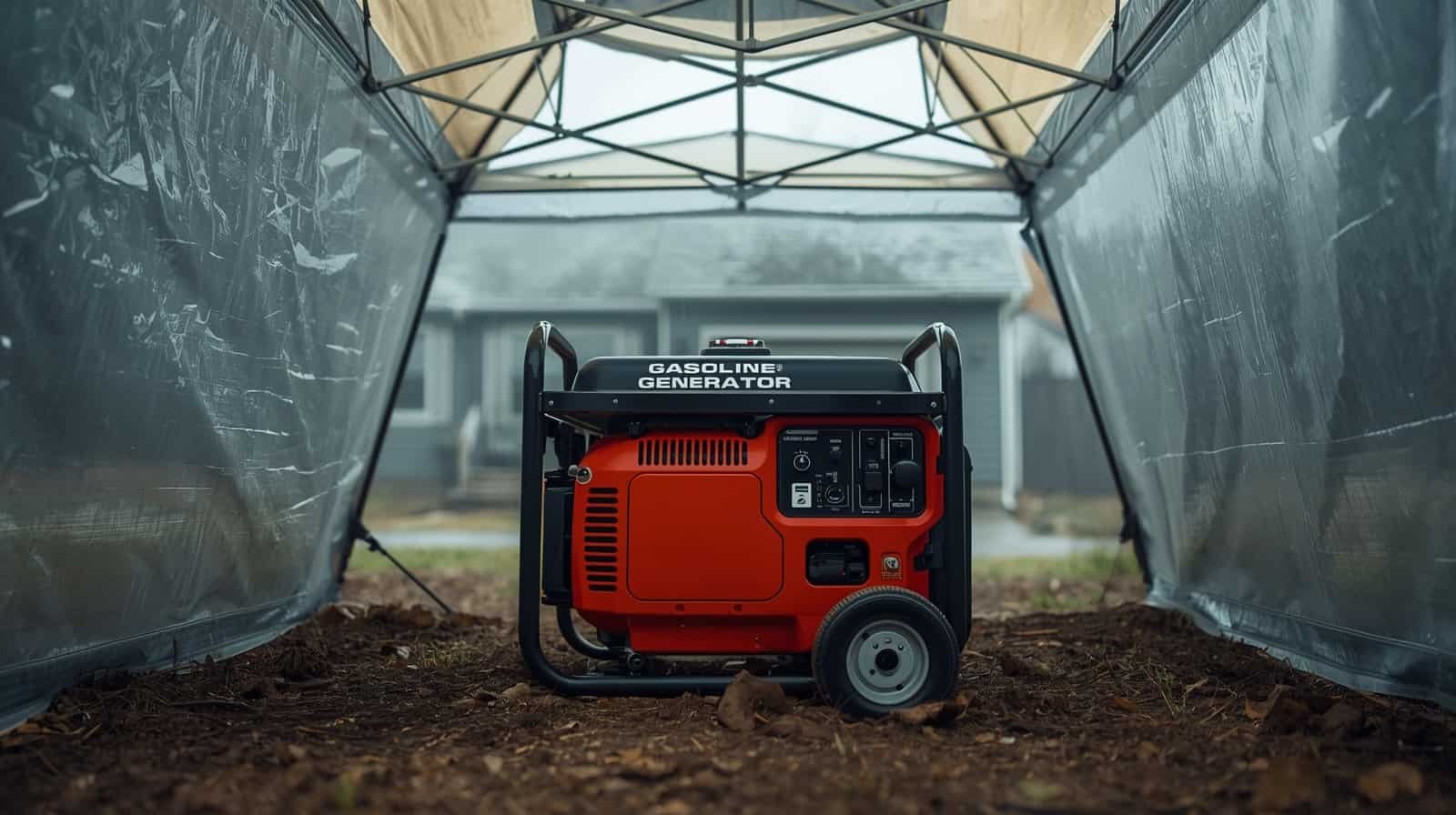
Short answer: Generator covers and tents can be safe — but only if they are specifically designed for operation while the generator is running. Improvised covers such as tarps, plastic sheeting, sheds, garages, or enclosed tents can trap heat and exhaust, increasing the risk of fire, equipment damage, and carbon monoxide poisoning.
When storms cause outages, protecting your generator from rain or snow is important. However, weather protection must never compromise ventilation, airflow, exhaust direction, or safe placement distance from the home. The goal is to keep the generator dry from above while keeping it open to air on all sides.
Why Covering a Running Generator Is Risky
Portable generators produce significant heat, exhaust gases, and vibration during operation. Any cover used while the generator is running must allow unrestricted airflow around the engine and alternator while preventing water from entering electrical components and connection points.
If airflow is restricted, internal temperatures can rise quickly. Overheating increases the risk of fire, component damage, unstable operation, and shortened equipment lifespan — especially during multi-hour operation in storm conditions.
Carbon Monoxide Risk Does Not Decrease With a Cover
Carbon monoxide is colorless and odorless. Even short exposure can be deadly. A cover does not reduce exhaust output — it only blocks precipitation.
Improper covers can actually increase danger if they redirect or trap exhaust gases near the unit, near a wall, under an overhang, or toward the home. For full exhaust safety guidance, review Generator Carbon Monoxide Safety.
If the generator is too close to the home, under a porch, near a window, or in any partly enclosed space, do not keep adjusting the cover. Stop and correct the placement first. For a broader shutdown checklist, see When to Stop Using a Generator.
Safe Generator Covers vs. Dangerous Improvised Solutions
Safe: Purpose-Built Generator Tents
Proper generator tents are designed with elevated canopies and open sides. They shield falling rain while allowing heat and exhaust to escape naturally.
Look for covers that:
- Are rated for use during active operation
- Remain open on multiple sides
- Allow clear exhaust direction away from structures
- Do not contact hot engine components
- Do not block cooling airflow
- Do not interfere with cords, outlets, breakers, or fuel access
Unsafe: Improvised or Fully Enclosed Covers
Improvised solutions introduce serious risk. These include:
- Plastic tarps draped directly over the unit
- Garbage bags or plastic sheeting
- DIY wooden or plastic enclosures
- Fully enclosed camping tents
- Operating inside sheds, garages, or porches
- Any setup that blocks exhaust or cooling airflow
These materials can melt, collapse, trap exhaust, block ventilation, redirect carbon monoxide, or create fire hazards. In some cases, the cover makes the generator more dangerous than rain exposure alone.
Why Garages, Porches, and Sheds Are Never Acceptable
Running a generator inside a garage, shed, porch, carport, or partially enclosed patio is never safe — even if doors are open. Exhaust gases can accumulate quickly and seep into living areas.
Safe placement distance is more important than weather protection. Review How Far a Generator Should Be From the House before deciding where to operate.
If your only way to keep the generator dry is to move it into a garage, porch, or enclosed space, the setup is not ready. Use a purpose-built open-sided generator cover or wait until you can operate the generator safely outdoors.
Weather Protection Without Compromising Placement
The safest weather strategy combines three factors:
- Outdoor placement at least 20 feet from structures where practical
- Open-sided rain protection designed for running generators
- Stable, elevated positioning above pooled water
- Exhaust pointed away from the home and occupied areas
- Dry, visible cord paths and protected connections
Storms often bring wind-driven rain. Make sure the generator cannot tip, shift, or pull on cords during gusts. Also make sure the cover itself cannot collapse onto hot components or block the exhaust path.
Rain creates unique shock and placement mistakes, especially when people try to shelter the generator too close to the home. For the full rule set and common wet-weather errors, read Can You Run a Generator in the Rain? Yes — But Only If You Do This.
Extension Cord Safety Still Applies
Covers protect the generator from falling rain, but connection points must also remain dry. Use only outdoor-rated extension cords and keep connections elevated off wet ground.
Undersized, overheated, or water-exposed cords can overheat, trip breakers, create shock risk, or cause unstable voltage delivery. See Generator Extension Cord Safety for proper sizing and protection guidance.
If cords, plugs, outlets, or generator connections feel warm, smell hot, buzz, crackle, or get wet, stop using the setup. A cover does not make unsafe cords safe. For tool and inspection basics, see Generator Troubleshooting Tools.
Warning Signs the Cover Setup Is Unsafe
Stop using the generator setup if the cover or shelter causes any of these warning signs:
- Exhaust is trapped, redirected, or blowing toward the home
- The generator feels unusually hot or smells like overheating plastic
- The cover touches hot engine or exhaust components
- The generator sounds strained, surges, or runs differently after being covered
- Cords, plugs, or outlet areas are wet or warm
- Breaker trips begin after the weather setup is added
- Anyone reports headache, dizziness, nausea, weakness, or confusion
If the generator begins behaving strangely after adding a cover, do not assume the generator itself is failing. The cover may be restricting airflow, redirecting exhaust, or exposing cords to moisture. For broader symptom sorting, see Generator Problems Explained.
Frequently Asked Questions
Can I use a tarp to cover my generator while it is running?
No. Tarps can trap heat, collapse onto hot components, block airflow, and redirect exhaust gases. They are not designed for safe active generator operation and may increase fire and carbon monoxide risk.
Are generator tents safe?
Only tents specifically rated for use while the generator is running should be considered. They must allow full ventilation, remain open on multiple sides, avoid contact with hot components, and keep exhaust directed away from the home.
Can I build a small enclosure for my generator?
No. Homemade enclosures frequently restrict airflow and create hazardous exhaust buildup. Generators must remain in open-air environments unless the shelter is specifically engineered and approved for safe generator operation.
Do inverter generators need weather protection?
Yes. Inverter generators are not waterproof. Even partially enclosed designs still require open-sided protection during rain, safe placement away from the home, and dry cord connections.
What should I do if the generator gets wet?
Do not touch wet electrical parts or keep testing in unsafe conditions. Shut down if it is safe, let the equipment dry according to the manual, and do not restart if cords, outlets, or internal components may be wet or damaged.
Conclusion: Protect From Rain — Not From Airflow
Generator covers can reduce weather-related damage when used correctly. However, ventilation, placement distance, exhaust direction, dry connections, and carbon monoxide awareness are always the primary safety priorities.
Weather protection should never compromise airflow or turn the generator into an enclosed exhaust source. When in doubt, prioritize open-air operation and proper placement over convenience. A safe cover keeps rain off while still letting heat and exhaust escape freely.