


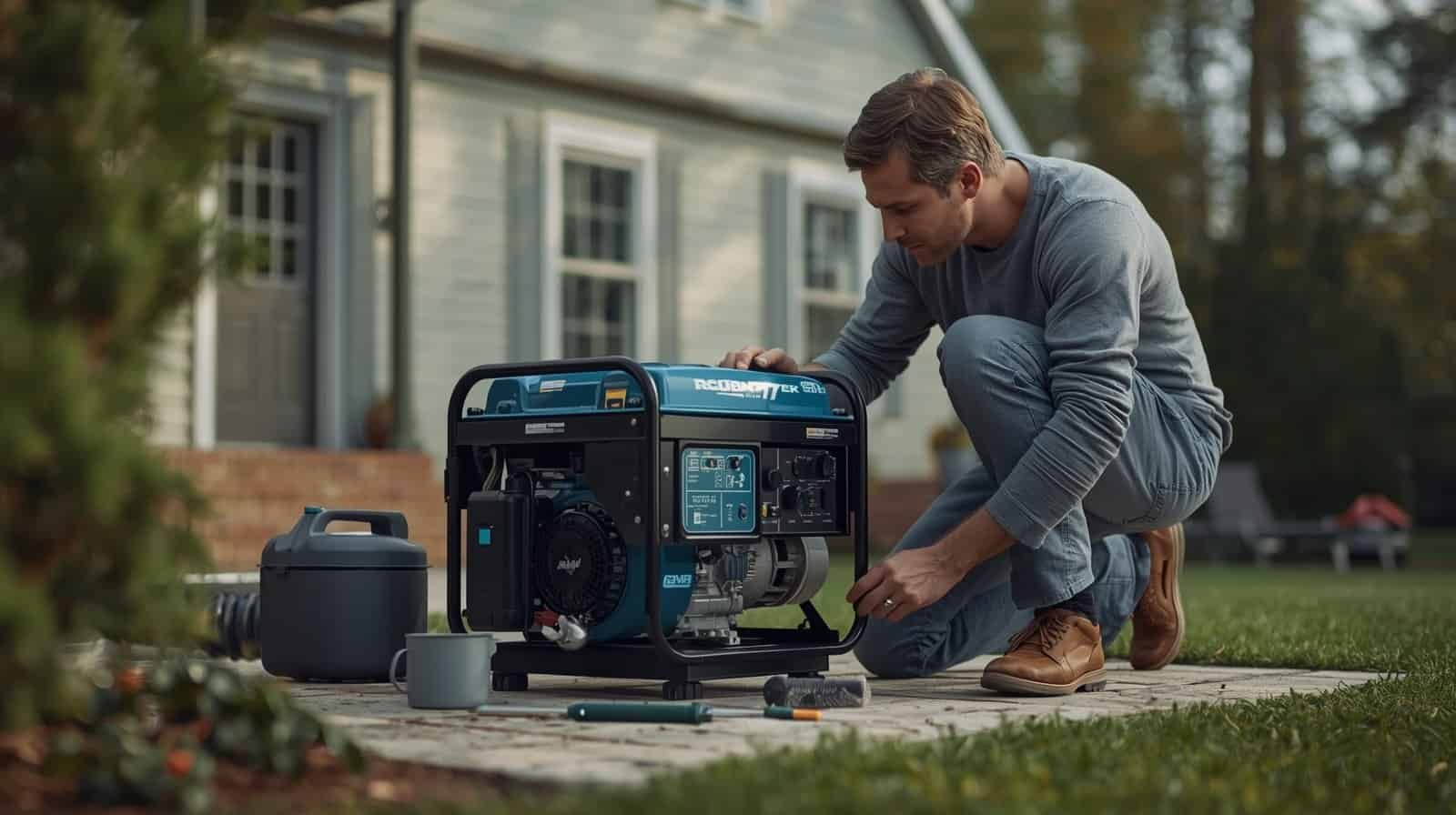
Short answer: A pre-storm generator check should confirm fresh fuel, clean airflow, correct oil level/condition, safe cords/connections, and a successful test run under load. Most “generator failures” during outages come from storage neglect, degraded fuel, or skipped maintenance—not from the generator being defective.
Storm season is when generators are most likely to fail — not because they are poorly built, but because they haven’t been checked in months. A short maintenance review before severe weather arrives can prevent many of the most common breakdowns homeowners experience during outages.
This checklist walks through the key generator maintenance steps to complete before storm season begins.
How to use this checklist: Don’t try to do everything the day before a storm. The best time to test, refuel, and replace items is when stores are stocked and conditions are calm.
Why Pre-Storm Generator Maintenance Matters
Generators often sit unused for long periods. Fuel degradation, oil breakdown, corrosion, dust buildup, and loose connections can develop silently over time.
Completing maintenance before storms ensures problems are discovered under calm conditions rather than during an emergency—when replacement parts, fuel, and help are harder to get.
Step 1: Inspect Oil Condition and Level
Check the oil level and appearance before you need the generator. Oil that appears dark, gritty, unusually thick, or smells strongly of fuel should be replaced.
Oil maintenance is one of the highest-impact reliability factors. If you’re not sure about interval timing or break-in requirements, review Generator Oil Change Intervals.
Step 2: Check Fuel Quality and Supply
Fuel problems are one of the most common “won’t start” causes during storm season. Old gasoline can gum fuel systems and cause starting issues or rough operation.
For propane systems, verify tank level and make sure connections appear secure and undisturbed. Regardless of fuel type, confirm your supply matches realistic outage duration—many outages last longer than expected.
When planning runtime and refueling needs, see How Long Can a Generator Run Safely?.
Step 3: Inspect Air Filter and Cooling Areas
Clogged air filters restrict airflow, reduce engine efficiency, and can contribute to overheating—especially during long runs in hot or humid weather.
Inspect and clean or replace filters as needed. Remove debris around cooling vents and keep airflow pathways clear. Heat management is a reliability issue and a safety issue.
Step 4: Test Run the Generator Under Load
Start the generator and let it run long enough to confirm stable operation. Then test it under a light-to-moderate load so you’re not discovering problems when the outage begins.
Listen for unusual noises, surging, or vibration. Watch for unstable behavior such as lights flickering or devices cycling unexpectedly.
If you’re unsure whether your generator has completed break-in requirements, see Generator Break-In Period Explained.
Step 5: Inspect Cords, Connections, and Safety Devices
Check extension cords, plugs, and connection points for damage, looseness, or heat discoloration. Replace any cords that are frayed, crushed, or show softened insulation.
Confirm that your intended power delivery method is safe and ready. If you use extension cords for appliances, make sure they are outdoor-rated and appropriately sized for your loads.
If you want a quick refresher on safe cord practices and common mistakes, review Generator Extension Cords: What’s Safe, What’s Not, and Why It Matters.
Step 6: Confirm Storage and Placement Readiness
Make sure your generator can be deployed quickly to a safe outdoor location with clear airflow. Identify where cords will route without creating trip hazards or pinching through doors.
Storm conditions often involve rain. If weather protection will be part of your plan, confirm you are not relying on improvised tarps or enclosed spaces. A safe, storm-ready plan should keep the generator dry without trapping exhaust.
Step 7: Review Documentation and Your Outage Plan
Keep the owner’s manual accessible and review startup/shutdown procedures before you need them. Confirm who in the household knows how to operate the generator safely, where cords are stored, and what loads are prioritized.
Storm season is also when people make rushed decisions. A simple plan prevents unsafe improvisation.
Conclusion
A generator maintenance checklist completed before storm season greatly reduces the risk of failure during outages. A few proactive steps can make the difference between reliable backup power and unexpected downtime.
Test early, confirm fuel and oil readiness, and validate safe connections and placement before the weather turns severe.