


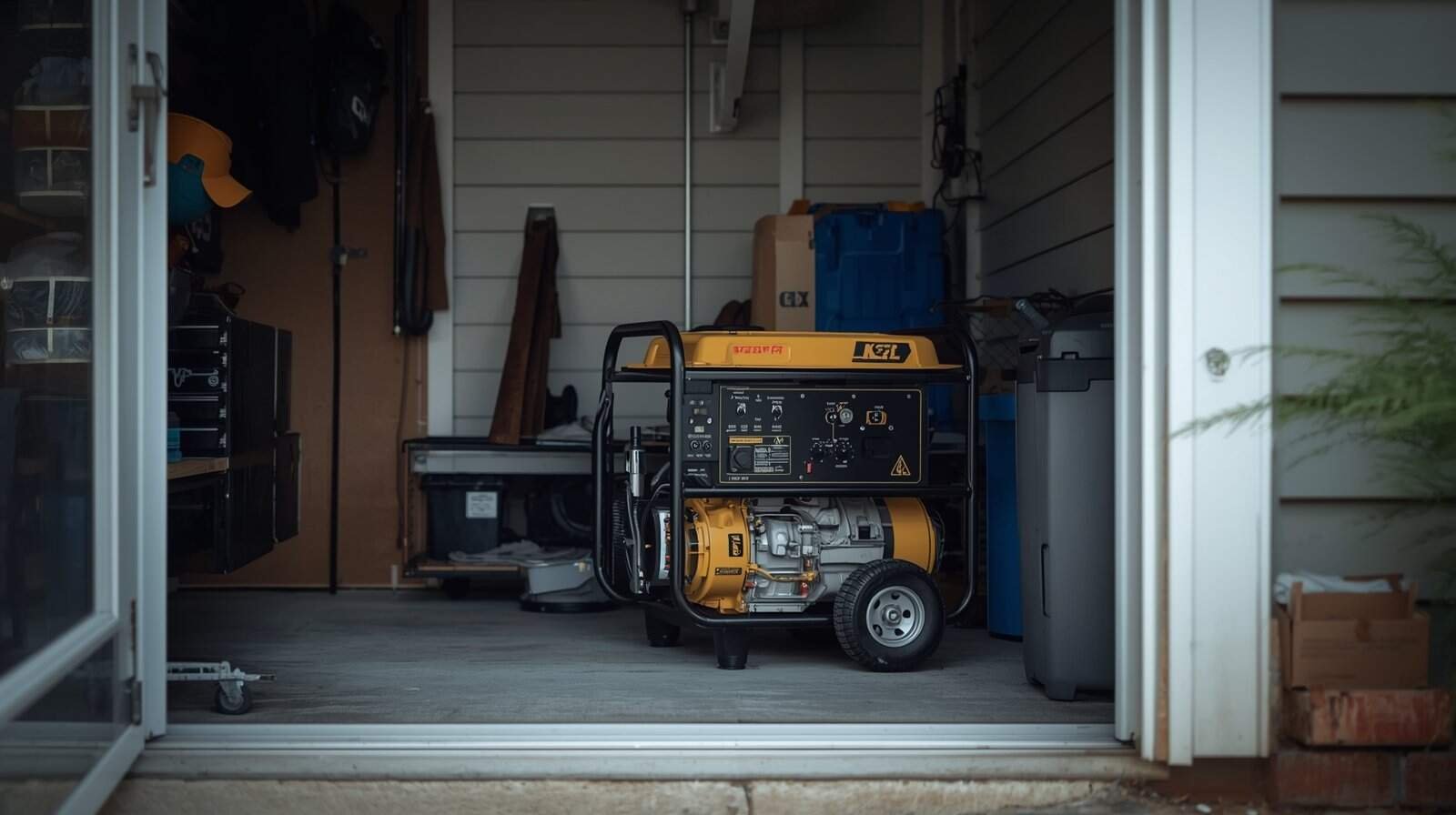
Proper generator storage is not just about keeping the machine out of the weather. Fuel condition, moisture, battery charge, oil service, rodents, dust, and long periods of inactivity can all affect whether the generator starts when the next outage arrives.
The right storage routine depends on how long the generator will sit. If you expect to use it again within days or a few weeks, the goal is usually to keep it ready for quick deployment. If it will sit for months, the fuel system and other maintenance items deserve more attention. In both cases, follow the storage procedure in the generator owner’s manual because fuel-system designs and manufacturer recommendations differ.
Why Generator Storage Matters
A portable generator may spend far more time sitting than running. During storage, gasoline can age, moisture can encourage corrosion, battery charge can fall, dust and pests can enter openings, and rubber components can deteriorate.
Those problems often remain invisible until the next outage, when the generator suddenly becomes hard to start, runs poorly, leaks fuel, has a dead starter battery, or shows corrosion around electrical connections.
A storage routine is really a reliability routine: the goal is to reduce the number of surprises between the last use and the next emergency.
Short-Term Storage vs Long-Term Storage
| Storage period | Main goal | Typical priorities |
|---|---|---|
| Days to a few weeks | Stay ready for another outage | Cool-down, clean-up, dry storage, fuel check, battery readiness |
| Several weeks to a few months | Preserve readiness without letting fuel or battery condition decline | Fuel-management plan, periodic inspection, battery maintenance if equipped |
| Off-season / several months | Prevent storage-related deterioration | Manufacturer long-term fuel procedure, oil review, battery care, corrosion and pest prevention |
These are planning categories, not universal manufacturer intervals. The owner’s manual should control the actual storage procedure.
Let the Generator Cool Before Storing It
Do not move a hot generator directly into a garage, shed, or storage area. The engine, muffler, and exhaust system can remain hot after shutdown.
Follow the manufacturer’s shutdown and cool-down procedure before handling the generator, covering it, or moving it near stored materials. This is especially important after a long outage when the generator has been running under substantial load.
Never place a cover over a hot generator. Trapped heat can damage the cover or nearby materials and can create a fire hazard.
Clean Off Dirt, Dust, and Storm Debris
Before storage, remove loose dirt, leaves, grass, mud, and other debris from exterior surfaces once the generator is cool and shut down.
Pay special attention to cooling-air openings, recoil-start areas, wheel assemblies, and spaces where wet debris can sit against metal. Do not force water into electrical openings, switches, receptacles, or the engine.
If the generator operated in dusty, sandy, smoky, or storm-debris conditions, inspect it more closely before storage because contamination can remain around air inlets and engine components.
Short-Term Storage: Keep It Ready Without Creating New Problems
If another outage is likely within the next several days or weeks, short-term storage usually focuses on readiness rather than a full seasonal shutdown procedure.
After the generator cools:
- Check for fuel, oil, or other fluid leaks.
- Inspect cords, receptacles, controls, and the frame for damage.
- Clean off moisture and debris.
- Store the unit in a dry location protected from rain and standing water.
- Keep the generator accessible enough that it can be moved outdoors safely when needed.
- Check the starting battery if the unit uses electric start.
- Follow the manufacturer’s fuel-storage recommendation for the expected storage period.
Do not store the generator where it must be operated. A garage or shed can be suitable for storage when allowed by the manufacturer and local requirements, but the generator still must be moved to a safe outdoor operating location before it is started.
Gasoline Is Usually the Biggest Storage Variable
Gasoline changes during storage and can create deposits or starting problems if it remains in the fuel system too long. The correct approach depends on the generator manufacturer, storage duration, fuel type, and whether the manual calls for draining, running the carburetor dry, using fuel stabilizer, or another procedure.
Do not assume that adding stabilizer lets gasoline remain usable indefinitely. Stabilizer may extend storage life when used correctly, but it does not reverse already-degraded fuel.
For storage outside the generator, use approved fuel containers and follow How to Store Generator Fuel Safely at Home. Keep reserve gasoline away from living areas, ignition sources, and the generator while it is operating.
Propane and Dual-Fuel Generators Need Different Storage Attention
Propane does not degrade in the same way gasoline does, but the generator’s fuel system still needs inspection. Hoses, regulators, valves, fittings, and cylinder connections can age or become damaged during storage.
Store propane cylinders according to cylinder instructions and applicable local requirements. Do not leave a cylinder connected merely because the generator will be stored for a long period unless the manufacturer specifically instructs that configuration.
For dual-fuel generators, follow the storage procedure for whichever fuel was last used. Some models require specific steps when switching fuels or preparing the carburetor for storage.
Long-Term Storage Requires More Preparation
If the generator will sit for several months, complete the manufacturer’s long-term storage procedure rather than simply parking it and covering it.
That procedure may include:
- Managing or removing gasoline according to the manual
- Servicing engine oil if the maintenance interval is due
- Inspecting or servicing the spark plug
- Checking the air filter
- Maintaining or disconnecting the starter battery as specified
- Cleaning the generator and drying exterior surfaces
- Protecting the unit from dust, moisture, pests, and corrosive environments
Long-term storage is also a good time to check the maintenance log. If the generator accumulated many hours during the last outage, service intervals may already be due even if only a few calendar months have passed.
Review the Oil Before Extended Storage
Engine oil condition matters because the generator may have accumulated significant runtime during the last outage. Long emergency runs can bring the generator to an hour-based oil-change interval much sooner than expected.
Use Generator Oil Change Intervals to understand why runtime hours matter, then follow the oil type, level, and service interval specified by the manufacturer.
Do not overfill the crankcase before storage, and do not assume “fresh-looking” oil means the maintenance interval can be ignored.
Inspect the Spark Plug if the Maintenance Schedule Calls for It
A generator that started hard, misfired, or ran roughly during the last outage deserves a spark-plug check before it disappears into storage for several months.
Use Generator Spark Plug Maintenance for the inspection clues, gap considerations, and replacement boundaries. Follow the exact plug type and specification for your engine.
If the plug repeatedly fouls, looks oily, or the engine still runs poorly after correct plug service, do not assume storage alone will solve the underlying problem.
Electric-Start Batteries Can Go Flat in Storage
Generators with electric start often depend on a small 12-volt battery. That battery can slowly discharge while the generator sits, especially in cold weather or if the generator has electronics that draw standby current.
Follow the manufacturer’s recommendation for battery maintenance during storage. Depending on the model, that may involve periodic charging, a compatible maintenance charger, battery disconnection, or another procedure.
Do not connect an arbitrary automotive charger without confirming that its voltage, charging profile, and connection method are appropriate for the generator battery.
Moisture and Condensation Can Cause Corrosion
A generator should be stored in a dry location protected from direct rain, snow, and standing water. Moisture can corrode fasteners, receptacles, electrical terminals, battery connections, and engine components.
Temperature swings can also create condensation, especially in unconditioned sheds and garages. Air circulation around the stored generator is useful, but do not leave the unit exposed to outdoor weather simply in the name of ventilation.
If you use a storage cover, choose one intended for generator storage and install it only after the generator is fully cool and dry.
Be Careful With the “Store It Off Concrete” Rule
You may hear advice that a generator should never be stored directly on concrete because concrete “pulls moisture into the machine.” That explanation is oversimplified.
The more practical concern is keeping the generator out of standing water, condensation, spills, road salt, and prolonged damp conditions. A clean, dry concrete floor is not automatically harmful.
If the storage area tends to get wet, use a stable raised platform or another manufacturer-appropriate method to keep the generator dry and secure.
Protect Against Rodents and Insects
Generators stored in sheds, barns, garages, and outbuildings can attract rodents and insects. Nesting material can block cooling passages, damage wiring insulation, or clog air intakes.
Inspect around openings, wiring, the air-filter area, and under covers before returning a stored generator to service.
Do not stuff rags, foam, or improvised plugs into cooling or exhaust openings unless the manufacturer specifically recommends a storage plug and you have a reliable way to remove it before startup.
Choose the Storage Location With the Next Outage in Mind
A generator should be stored securely, but not so deeply buried behind vehicles, boxes, or seasonal equipment that retrieving it during a storm becomes difficult.
Choose a location that is:
- Dry and protected from weather
- Away from living and sleeping areas when fuel is involved
- Away from furnaces, water heaters, flames, sparks, and other ignition sources
- Secure from children and unauthorized use
- Accessible enough to move outdoors safely
- Large enough that the generator is not damaged by stored items being placed on or against it
Remember that a safe storage location is not automatically a safe operating location. Portable generators must be moved outdoors and positioned according to current manufacturer and carbon-monoxide safety guidance before startup.
Do Not Store Fuel Containers on or Beside the Generator
Reserve fuel should have its own approved storage location. Do not stack gasoline containers on the generator, hang them from the frame, or leave them next to the machine where they can leak onto electrical or engine components.
Keeping fuel and the generator organized separately also makes pre-use inspection easier because leaks or odors are less likely to be mistaken for normal generator storage.
Should You Start the Generator Periodically During Storage?
Do not assume every portable generator needs to be started on a fixed monthly schedule. Manufacturer recommendations differ.
If the manual specifies periodic exercise, follow the stated procedure, including load, runtime, ventilation, fuel, and battery guidance. If it does not, avoid inventing a schedule that repeatedly adds short run cycles, stale fuel, or unnecessary engine hours.
Whenever the generator is exercised, operate it outdoors in a safe location—not inside the storage area.
Before the Next Outage, Inspect the Generator Before Starting It
Do not pull a generator out of long-term storage and immediately connect critical appliances. Give it a brief inspection first.
Check:
- Oil level and maintenance status
- Fuel condition and fuel-system leaks
- Battery condition if equipped
- Air filter and cooling openings
- Spark-plug condition if due for inspection
- Receptacles, breakers, cords, and controls
- Rodent or insect damage
- Loose hardware, cracked hoses, or damaged wiring
The Generator Maintenance Checklist Before Storm Season provides the broader pre-use review before the generator is needed in an emergency.
Common Generator Storage Mistakes
- Storing the generator while it is still hot
- Leaving untreated or aging gasoline in the system without checking the manual
- Assuming fuel stabilizer makes gasoline last indefinitely
- Ignoring the electric-start battery for months
- Covering the generator while it is damp
- Using the same storage routine for gasoline and propane systems
- Ignoring hour-based oil and spark-plug service after a long outage
- Storing reserve fuel directly beside the generator
- Blocking vents with improvised pest-control materials
- Starting the generator inside the garage or shed just because that is where it was stored
When Storage Reveals a Problem That Needs Service
Do not put the generator back into emergency service if storage inspection reveals fuel leaks, cracked fuel lines, damaged propane hoses or regulators, corroded electrical parts, chewed wiring, severe rust, a swollen battery, damaged receptacles, or a strong unexplained fuel odor.
Likewise, repeated hard starting, fuel leakage, abnormal smoke, surging, or misfiring after storage can point to a maintenance or repair issue that deserves attention before the next outage.
Generator Storage FAQ
Can I store a generator with gasoline in the tank?
Sometimes, depending on the manufacturer’s storage procedure and expected storage duration. Some models call for treated fuel, some call for draining or running the fuel system dry, and others specify a different method. Follow the manual for the exact generator.
Should I drain the carburetor before long-term storage?
Only if the generator manufacturer recommends that procedure. Fuel-system designs differ, so do not assume every carbureted generator should be stored the same way.
Can I store a generator in a garage?
A garage may be an acceptable storage location when the generator is cool, the storage arrangement follows manufacturer and local safety requirements, and fuel is handled correctly. The generator must still be moved outdoors to a safe operating location before startup.
Should I cover a stored generator?
A fitted storage cover can help keep off dust and debris if the generator is fully cool and dry. Use a cover intended for storage and follow the manufacturer’s recommendations.
How often should I start a stored generator?
Follow the manufacturer’s exercise schedule if one is provided. There is no universal monthly-start rule that applies to every portable generator.
Bottom Line
Good generator storage is a balance between readiness and preservation. Short-term storage should keep the machine dry, inspected, fueled appropriately, and ready to move outdoors. Long-term storage should follow the manufacturer’s fuel, oil, battery, spark-plug, and preservation procedures.
The most important step is to avoid generic rules that may not match your generator. Record the last service date and operating hours, manage fuel correctly, keep the unit dry and accessible, inspect it before the next storm season, and resolve storage-related problems before you are depending on the generator during an outage.