


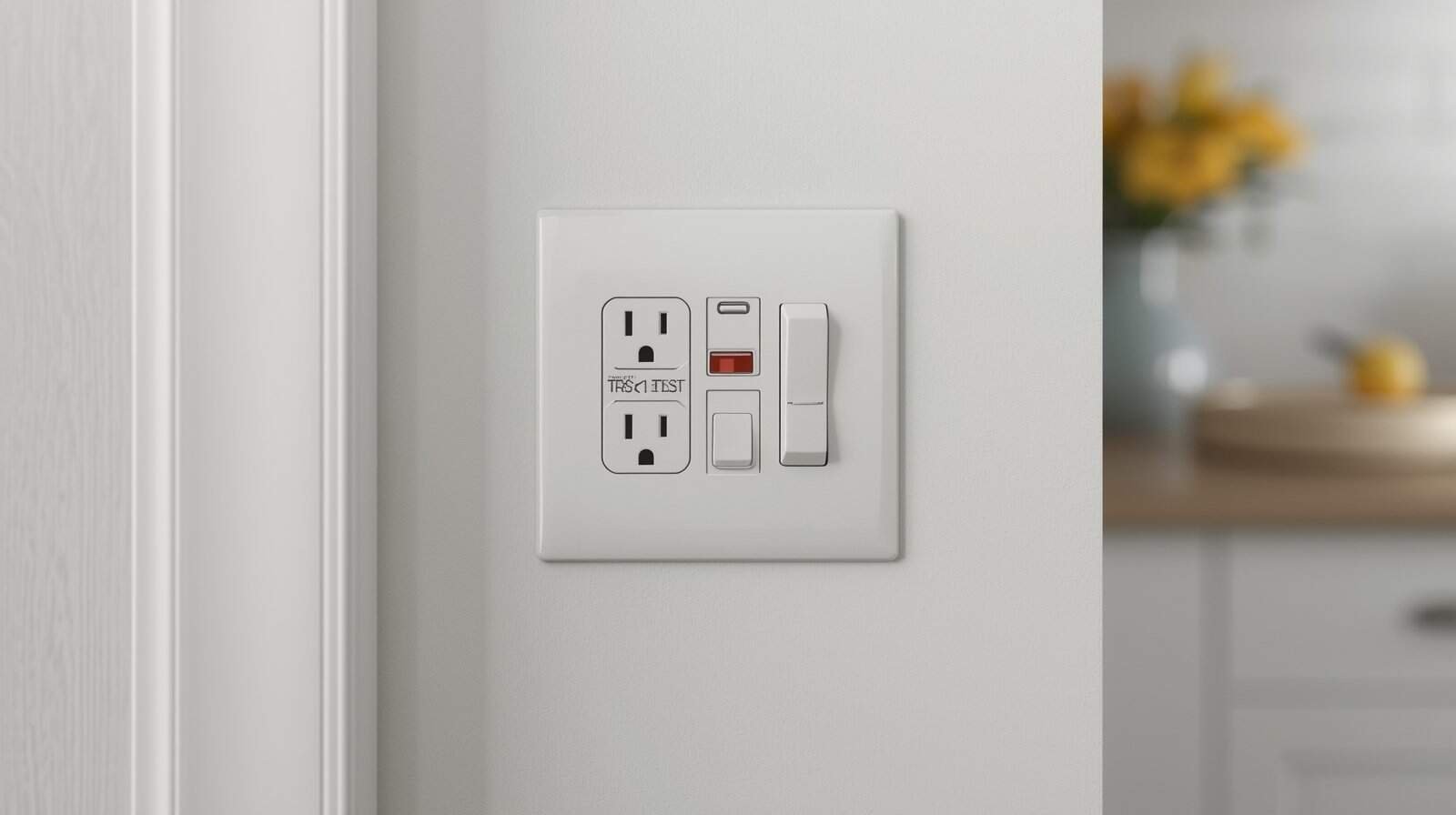
A power outage can leave more behind than blinking clocks and a resetting router. One of the most common—and frustrating—problems homeowners face afterward is a GFCI outlet that suddenly refuses to reset. You press the reset button, expect power to return, and nothing happens.
The Breaker Feeding the GFCI Is Tripped (or Half-Tripped)
A GFCI outlet cannot reset unless it has power. After an outage, the breaker feeding the circuit may be partially or fully tripped—even if it doesn’t look that way.
Flip the breaker fully to OFF, then firmly back to ON before trying the GFCI reset again. If the breaker trips again immediately after you reset it, don’t keep forcing it—use this guide to narrow down likely causes: Breaker Trips After Power Is Restored: Post-Outage Causes and Safe Steps.
Another GFCI Upstream Has Tripped
Many homes use one GFCI device to protect several downstream outlets. If an upstream GFCI is tripped, the outlets it protects will appear dead and may “refuse” to reset because they aren’t actually the controlling device.
Check other bathrooms, the garage, basement, laundry area, and outdoor outlets. Reset any tripped GFCI you find before returning to the problem outlet.
The GFCI Is Detecting an Active Fault
If a GFCI senses current leakage, it will not reset by design. After outages, this commonly happens when moisture enters an outlet due to storms, snow melt, wind-driven rain, or heavy humidity.
Outdoor outlets and garage receptacles are especially vulnerable. Even a small amount of moisture can keep a GFCI locked out. If the outage came with bad weather, give damp areas time to dry before you assume something is “broken.”
A Plugged-In Appliance or Device Is Preventing Reset
Appliances connected to the circuit can prevent a GFCI from resetting. Refrigerators, freezers, sump pumps, dehumidifiers, and older appliances may develop faults during outages or when power returns.
Unplug everything on the circuit and attempt to reset the GFCI with no load connected. If it resets with everything unplugged, plug items back in one at a time until you find the culprit.
The GFCI Outlet Itself Has Failed
GFCI outlets wear out over time. Most last 10–15 years, but repeated surges and nuisance trips can shorten their lifespan.
If the reset button won’t click, won’t stay engaged, or feels loose—even when the circuit has power and nothing is plugged in—replacement is often the only practical fix.
Safe Step-by-Step Troubleshooting
Step 1: Reset the Circuit Breaker
Reset the breaker supplying the outlet, even if it appears to be on. Push it fully to OFF, then firmly back to ON.
Step 2: Unplug Everything on the Circuit
Remove all appliances, extension cords, and devices from the affected outlets. Reset attempts should be done with no load connected.
Step 3: Check for Other Tripped GFCIs
Search the home carefully for upstream GFCI outlets and reset them. Common locations include bathrooms, garage, basement, unfinished areas, exterior receptacles, and laundry spaces.
Step 4: Try the Reset Button Again (Firm Press)
Press the reset button firmly until you feel a click. If it immediately pops back out, stop—something is still wrong (no power, active fault, or a failing device).
Step 5: Consider Moisture and Time
If the outlet is in a damp location, allow time for moisture to evaporate. A nearby fan or dehumidifier can help dry the area, but keep equipment away from the outlet itself and never spray anything into a receptacle.
When Not to Force the Reset Button
Repeatedly forcing a GFCI to reset is unsafe. The device may be preventing a shock or fire hazard. Stop troubleshooting and keep the circuit off if you notice any of the following:
- Burning smells or discoloration
- Buzzing or crackling sounds
- Warm outlet face
- Repeated breaker trips
When to Call an Electrician
Call a licensed electrician if any of these are true:
- The GFCI won’t reset with power confirmed and no load attached
- Multiple GFCIs fail after the outage
- The breaker continues to trip
- The outlet shows physical damage (cracks, charring, melted plastic)
If you’re seeing multiple warning signs after an outage—especially repeated trips, heat, odor, or weird behavior in multiple rooms—treat it as a stop-and-call situation. This related checklist helps you decide when to stop DIY troubleshooting: Electrical Red Flags After an Outage: Signs You Shouldn’t Ignore.
Preventing GFCI Problems After Future Outages
- Replace aging GFCI outlets proactively (especially in damp areas)
- Use weather-resistant GFCIs and in-use covers outdoors
- Install whole-house or panel surge protection to reduce surge stress
- Keep bathrooms, basements, and utility areas well ventilated to reduce moisture
Conclusion
A GFCI outlet that won’t reset after a power outage is usually failing for one of three reasons: the circuit isn’t actually supplying power, the GFCI is detecting a real fault (often moisture or a damaged device), or the GFCI outlet has reached the end of its life.
The safest approach is methodical: reset the breaker properly, unplug everything, check for upstream GFCIs, and only attempt a reset once you’ve removed obvious causes. If the outlet still won’t reset—or you notice heat, noise, burning smells, or repeated trips—stop and bring in a licensed electrician. In those cases, the GFCI may be preventing a serious shock or fire hazard. For a broader non-outage-specific checklist, see GFCI Won’t Reset: Common Causes, Safe Checks, and What to Do Next.
Before assuming the outlet itself has failed, this post-outage breaker and GFCI flowchart shows the safest way to interpret what you’re seeing.