


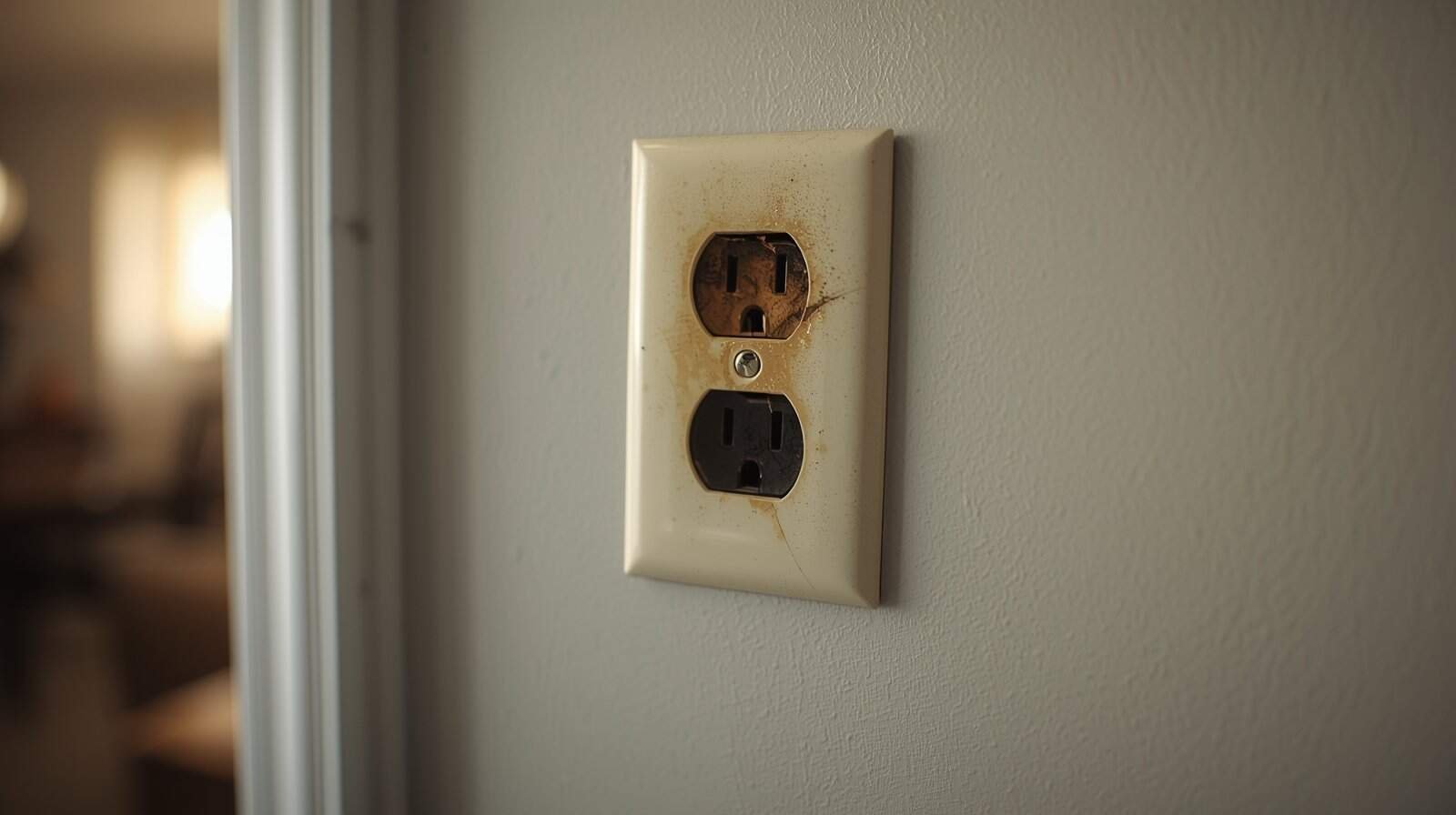
When power returns after an outage, most homeowners focus on restoring comfort and routine. But the period immediately after power restoration is also when hidden electrical problems are most likely to reveal themselves.
Certain warning signs indicate that something beneath the surface may be wrong. Recognizing these red flags early can prevent electrical fires, equipment damage, and personal injury.
Burning Smells or Discoloration
A persistent burning odor or visible discoloration around outlets, switches, or the electrical panel is one of the most serious post-outage warning signs.
These symptoms often indicate overheated wiring, damaged insulation, or arcing inside electrical components. Even if the smell fades or the outlet still appears to function, heat damage may already be present behind the wall.
Repeated Breaker Trips After Power Is Restored
Breakers are designed to trip when they detect overloads, short circuits, or ground faults. If a breaker repeatedly trips after power restoration, it’s usually responding to a real electrical condition—not nuisance behavior.
Post-outage breaker issues often involve stressed wiring, damaged appliances, or weakened connections that were exposed when power surged back on.
Related breaker behavior is discussed in breaker trips after power is restored.
Buzzing, Crackling, or Humming Sounds
Electrical systems should operate silently. Any buzzing, crackling, or humming sound from outlets, switches, or the panel is a warning sign that electricity is not flowing cleanly.
These sounds often point to loose connections or arcing—both of which generate heat and significantly increase fire risk, especially when hidden inside walls or junction boxes.
Outlets or Switches That Feel Warm
Outlets and switches should remain close to room temperature under normal conditions. Warmth—especially heat you can clearly feel—indicates resistance, overload, or internal damage.
Heat buildup can slowly damage insulation and surrounding materials, creating conditions where fires start out of sight.
Appliances That Fail or Behave Erratically
If multiple appliances fail to operate normally after power is restored, the problem may extend beyond individual devices.
Voltage instability, damaged circuits, or compromised wiring can cause appliances to shut down, reset repeatedly, or behave unpredictably—even if outlets appear live.
Diagnostic guidance is provided in power is back but appliances don’t work.
Flickering Lights or Voltage Instability
Persistent flickering after an outage is not normal and should not be dismissed as a temporary issue.
Flicker can signal loose connections, voltage imbalance, or panel-level problems that place stress on wiring and electronics throughout the home.
Partial or Uneven Power Restoration
If only part of your home has power—or if neighbors have power while you do not—the issue may involve service connections, shared neutrals, or internal wiring faults.
These situations require careful interpretation, as continued operation under uneven conditions can increase electrical stress.
Partial power combined with warning signs should never be ignored. This visual safety flowchart highlights when to stop troubleshooting immediately.
When to Stop Troubleshooting and Get Help
Electrical red flags are not inconveniences—they are warnings. Any combination of heat, odor, sound, repeated tripping, or erratic behavior warrants professional evaluation.
Continuing to reset breakers, test outlets, or cycle power can worsen underlying damage.
Clear escalation criteria are outlined in when to call an electrician after an outage.
Conclusion
Electrical red flags after an outage are often the first visible signs of hidden damage. Fires and serious failures rarely begin without warning—they begin with subtle signals that are easy to ignore.
Recognizing and responding to these signs promptly helps protect your home, your equipment, and the people inside it.