


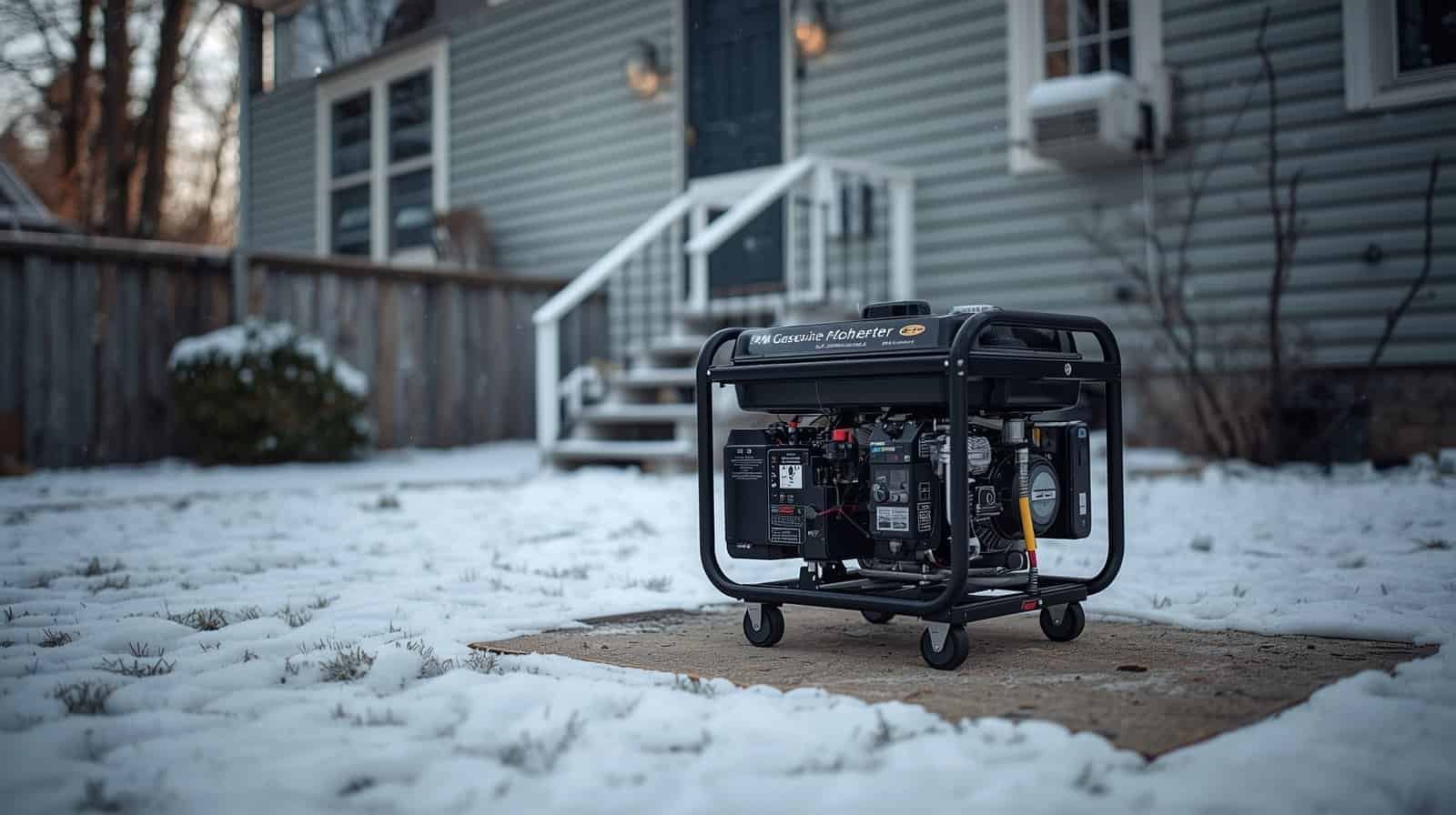
Winter power outages often arrive with snow, ice, and freezing temperatures—exactly when homeowners are most tempted to run portable generators closer to the house or under makeshift protection. While cold weather itself doesn’t prevent a generator from operating, snow and ice introduce serious safety risks that aren’t always obvious.
Why Snow and Ice Change Generator Safety Conditions
Snow and ice affect generators differently than rain. Snow can block airflow, melt into water as the engine warms, and refreeze around controls, cords, and exhaust openings. Ice buildup can also prevent proper ventilation, causing exhaust gases to linger near the generator instead of dispersing safely.
Cold temperatures may make generators harder to start, but the greater danger comes from moisture intrusion and restricted exhaust flow—both of which can lead to electrical hazards or carbon monoxide buildup.
Ventilation Risks in Winter Conditions
Carbon monoxide remains the most serious danger when running a generator in snow or ice. Snowbanks, drifts, and ice-covered surfaces can trap exhaust gases close to the ground, allowing them to drift toward doors, windows, and vents.
Generators must always be operated outdoors with clear, open airflow. Snow-covered patios, garages with doors partially open, or areas shielded by temporary barriers can all create conditions where exhaust accumulates instead of dispersing. For distance guidance, see how far a generator should be from the house.
Moisture Intrusion and Electrical Hazards
As a generator runs, heat from the engine can melt snow and ice that contacts the frame, fuel tank, or outlets. This water can seep into electrical components, increasing the risk of shock, short circuits, or unexpected shutdowns.
Extension cords lying on snow-covered ground are especially vulnerable. Meltwater can travel along cords toward outlets, creating shock risks even when the generator itself appears dry.
Are Generator Covers Safe in Snow?
Using a generator cover or tent may seem like a solution, but improper covers can be extremely dangerous. Any enclosure that restricts airflow or traps exhaust gases increases carbon monoxide risk.
If weather protection is used, it must be specifically designed for generator operation and allow unrestricted airflow on all sides. Never improvise with tarps, plastic sheeting, or enclosed structures.
Cold Weather Starting and Load Considerations
Cold temperatures can thicken engine oil and reduce battery efficiency, making generators harder to start. Applying electrical loads too quickly after startup can also stress the engine.
Allow the generator to warm briefly before connecting loads, and avoid placing it directly on ice or snow where vibration may cause shifting or tipping.
When Snow or Ice Makes Generator Use Unsafe
There are situations where running a generator during winter conditions becomes unsafe regardless of precautions. Deep snow that blocks ventilation, ice storms that coat equipment, or locations where safe outdoor placement isn’t possible should prompt alternative planning.
In these cases, focus on conserving power, relocating critical loads, or waiting until conditions improve rather than risking carbon monoxide exposure or electrical injury.
Related Generator Weather Safety Guidance
Snow and ice safety overlaps with other weather-related generator risks. For broader context, review running a generator in the rain and generator carbon monoxide safety for additional precautions.
Conclusion
For a broader overview of protecting your household during outages and extreme weather, visit our Home Safety During Power Outages hub.
Generators can operate in cold weather, but snow and ice introduce hazards that require extra caution. Maintaining proper ventilation, preventing moisture intrusion, and resisting unsafe shortcuts are critical for winter generator safety.