


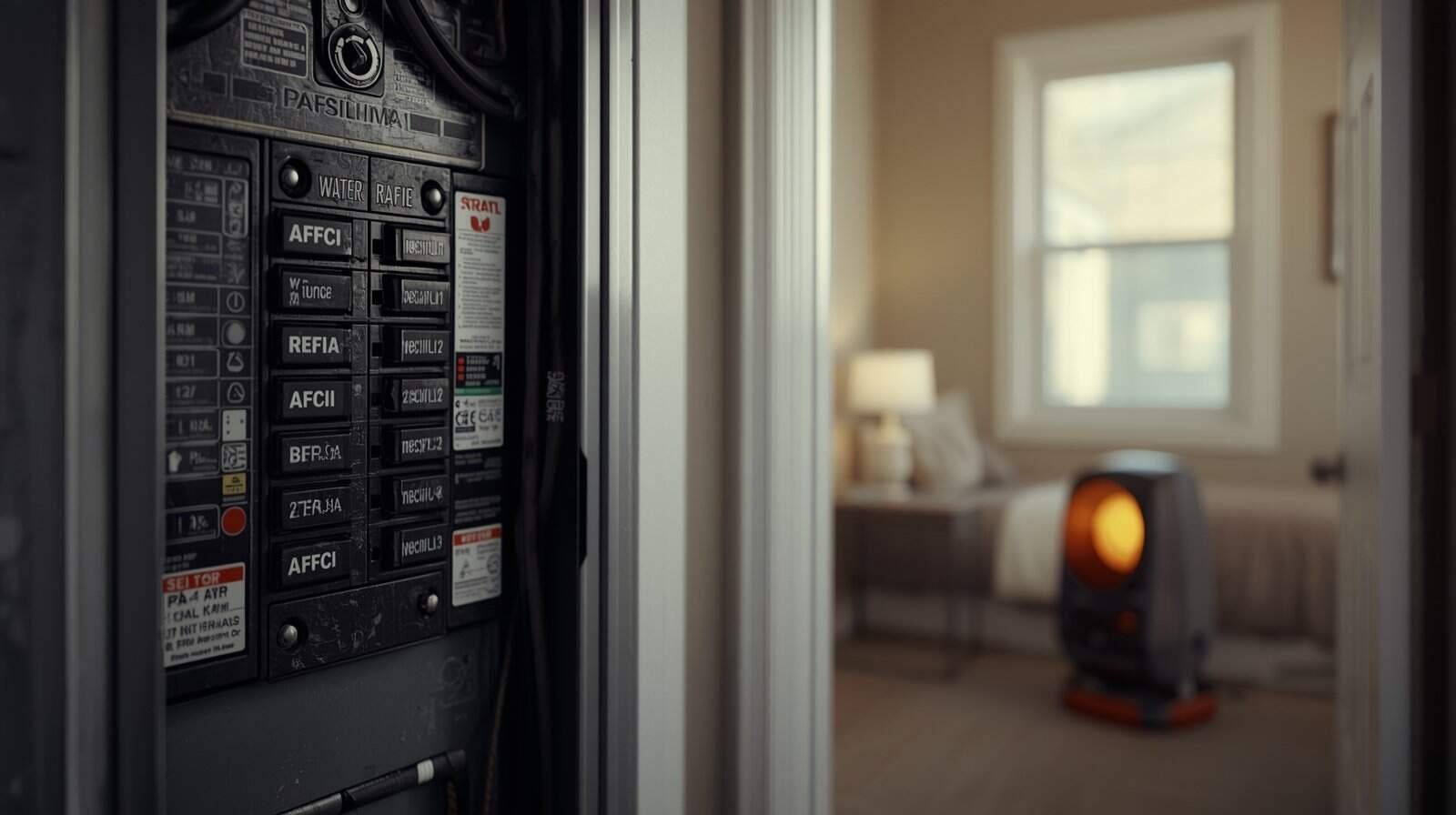
Arc-fault circuit interrupter (AFCI) breakers are designed to detect dangerous electrical arcing before it turns into a fire. When an AFCI breaker trips while a space heater is running, many homeowners assume the heater is simply “too powerful.” In reality, AFCI devices do not primarily respond to overload. They respond to patterns of electrical arcing that may indicate loose connections, damaged cords, or deteriorating wiring.
Because space heaters draw significant current and run for extended periods, they can expose weaknesses in outlets, cords, and branch wiring that other devices may never reveal. An AFCI trip is often a signal that something in the circuit path is unstable under sustained heat and load.
What an AFCI Breaker Is Actually Detecting
An AFCI breaker monitors the electrical waveform flowing through a circuit. It is programmed to detect erratic patterns that resemble arcing—tiny sparks that occur when electricity jumps across a loose or damaged connection. These arc patterns generate heat and are a leading cause of residential electrical fires.
Unlike a standard breaker, which trips when current exceeds safe limits, an AFCI can trip even when total load is within normal range. That is why a heater that appears to run “fine” on one circuit may trip another circuit protected by AFCI technology.
If you want a deeper understanding of how circuits behave under sustained draw, review How Electrical Resistance Creates Heat Long Before Breakers Trip. Resistance and arcing are closely related when connections begin to degrade.
Why Space Heaters Reveal Weak Connections
Space heaters operate at high wattage for long durations. That sustained current flow increases temperature at every connection point along the circuit path—receptacle contacts, wire terminations, and even breaker lugs inside the panel. If any connection is slightly loose or worn, micro-arcing can occur as metals expand and contract under heat.
This type of intermittent arcing may not trip a traditional breaker. However, an AFCI is specifically tuned to recognize those irregular electrical signatures. In that sense, the heater is not necessarily the problem—it is the stress test exposing a weakness.
Homeowners often notice similar stress patterns described in Space Heater Keeps Tripping the Breaker, although the mechanism is different. One relates to load; the other relates to arc detection.
Extension Cords and Plug Wear Increase Arc Risk
High-draw devices plugged into worn outlets or extension cords significantly increase the chance of arc formation. Loose plug blades, fatigued cord conductors, or back-stabbed receptacles can all contribute to unstable contact surfaces. When high current flows across imperfect connections, microscopic sparking can occur.
That sparking may be invisible and silent, yet it produces heat and carbon buildup that worsens over time. AFCI technology is designed to interrupt that process early. In this way, the trip can be protective rather than inconvenient.
To understand how cumulative load affects circuit stress overall, see Electrical Load Management at Home: How to Reduce Strain, Prevent Trips, and Stay Safe. High-draw winter devices frequently push aging circuits toward their tolerance limits.
When an AFCI Trip Suggests a Larger Safety Concern
Not every AFCI trip signals immediate danger, but repeated trips under the same conditions indicate a pattern. If the breaker trips consistently when the heater cycles on or after several minutes of operation, that consistency points toward arc detection rather than random nuisance behavior.
It is important to distinguish this from pure overload scenarios explained in Overloaded Circuits Without Tripped Breakers. AFCI trips are about connection stability, not just total wattage.
Warning signs that elevate concern include buzzing from outlets, warmth at plug connections, flickering lights, or visible discoloration at receptacles. These signs indicate that electrical instability may already be generating heat.
AFCI breakers exist because many electrical fires begin with small arcs that go unnoticed. When a space heater triggers an AFCI trip, it is often acting as a stress indicator for the circuit. Treat the event as useful safety feedback rather than a nuisance, and escalate when patterns suggest that connection integrity may be compromised.