


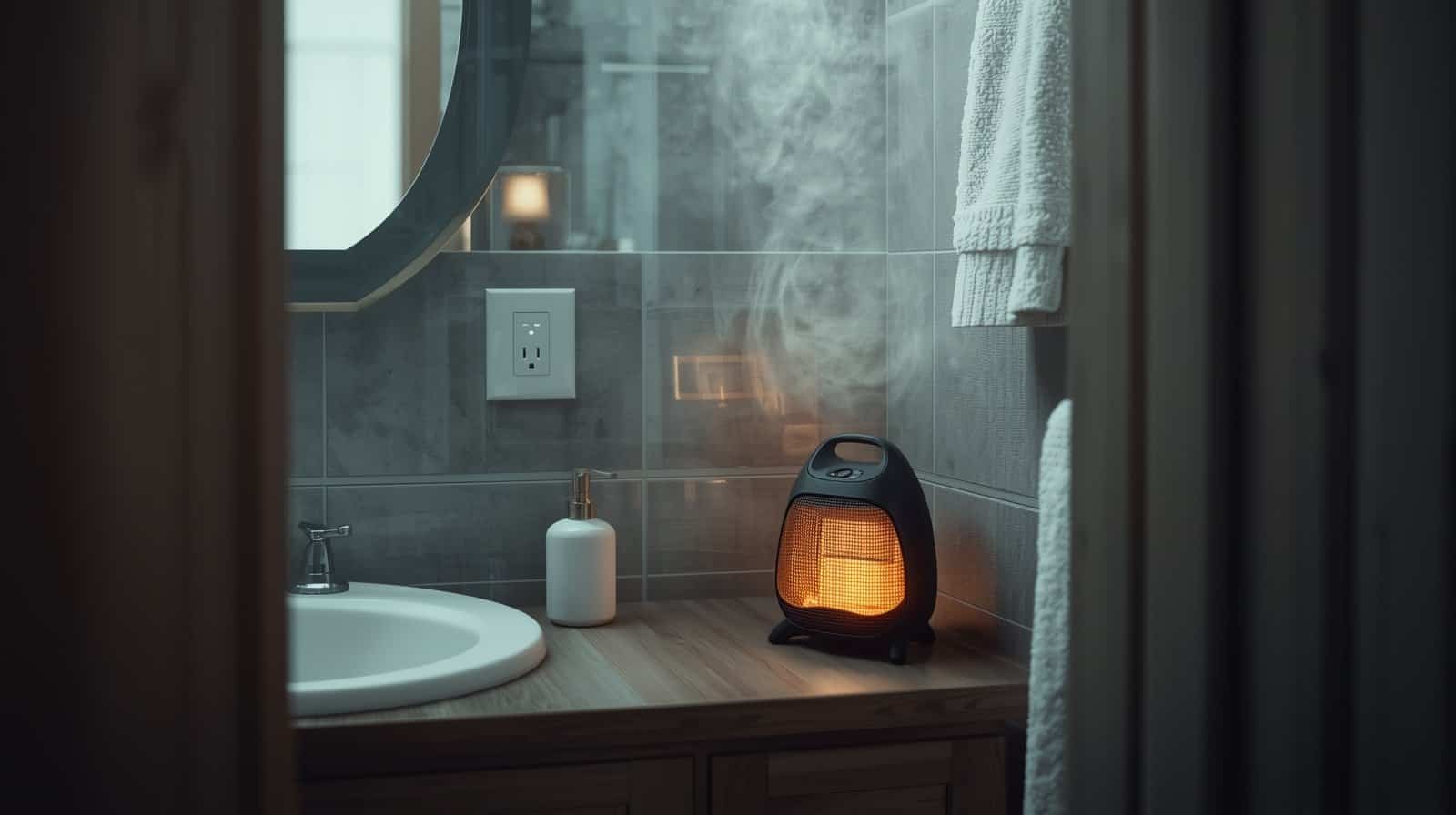
Bathroom heaters and “bathroom-safe” warming devices are common in winter, especially in homes where the bathroom runs colder than the rest of the house. When one of these devices causes a GFCI outlet to trip, it can feel confusing because the heater may be small, the circuit may seem fine, and nothing else in the home is acting up. In most cases, the trip is happening because bathrooms are designed to be electrically sensitive spaces, not because something is automatically “broken.”
That said, a GFCI trip is not something to brush off or work around. GFCI protection exists because bathrooms combine electricity, water, and human contact in a way that increases shock risk. Understanding why bathroom heaters trigger GFCIs helps you make safer choices about where and how you use heat, and it also helps you recognize when repeated trips point to a real electrical hazard that needs a licensed electrician.
What a GFCI Is Actually Detecting (And Why It Trips So Easily)
A GFCI (ground-fault circuit interrupter) is not primarily an “overload” device. Its job is to detect a small imbalance between the electricity going out on the hot conductor and the electricity returning on the neutral conductor. If the GFCI senses that some current is leaking somewhere else—potentially through water, damp materials, or a person—it trips quickly to reduce shock risk.
This is why a bathroom heater can trip a GFCI even when the heater’s wattage seems normal and the breaker in the panel does not trip. Breakers respond to high current and overheating risk over time, while GFCIs respond to leakage/imbalance that can occur at much lower current levels. If you want a clearer mental model for how “normal use” and “protection devices” differ, start with How Home Electrical Loads Really Work (And Why Problems Don’t Always Trip Breakers), then come back here.
Why Bathrooms Are a Perfect Storm for GFCI Trips
Bathrooms are one of the most moisture-prone rooms in a home, and moisture changes how electricity behaves at surfaces and connection points. Steam from showers, condensation on outlets and plugs, damp towels, and wet floors all increase the chance that tiny amounts of current could travel where they shouldn’t. A GFCI is designed to be sensitive in exactly these scenarios, so the same heater that runs fine in a dry bedroom may trip a bathroom GFCI more easily.
Bathrooms also tend to have limited outlet placement, so people are more likely to plug heaters into the only convenient receptacle—often near a vanity where humidity is highest. If cords are routed around sinks or tubs, they can pick up moisture or get pinched, which increases the odds of leakage. Even minor wear on a plug or cord jacket can matter more in a damp room because moisture reduces the margin for error.
In short, a bathroom is not just “another room with an outlet.” It’s a high-sensitivity environment where protective devices respond faster and more often, because the consequences of leakage current can be severe. That is a feature of the system, not an annoyance to defeat.
Why Heaters Are More Likely Than Other Devices to Trigger GFCIs
Heaters are high-wattage devices that run continuously and generate heat at the element and internal wiring. That internal heat can slightly change resistance and insulation behavior inside the device, especially as it warms up and cycles. In a dry living room, those tiny changes may never matter, but in a humid bathroom they can add up to conditions that make a GFCI more likely to trip.
Some heaters also include electronics such as timers, thermostats, or internal safety sensors. Electronics can introduce small leakage paths that are still within normal product tolerances, but again, a damp environment tightens the window. None of this means that every trip indicates a defective heater, but repeated trips are a strong signal that the combination of device + environment + outlet condition is not stable.
It also helps to remember that GFCI devices are designed to react quickly when they detect risk. From a safety perspective, a nuisance trip is preferable to a situation where the device stays on while leakage is increasing. The goal is not “never trip,” but “trip before harm.”
How “Leakage” Can Come From the Outlet Side, Not Just the Heater
When people think about a heater tripping a GFCI, they assume the heater itself is the problem. In reality, the outlet and the wiring feeding it can contribute to the conditions that trigger a trip. Loose contacts, worn receptacles, and aging connections can create heat and micro-arcing that increases electrical instability at the connection point, especially under high load.
That connection-point heating is one reason you should treat warmth at the plug or outlet cover seriously, even if power is still working. If you want a deeper explanation of why heat can develop at connections during normal use, see Why Outlets or Switches Get Warm During Normal Use. The point is not to diagnose wiring yourself, but to understand why repeated heat at a connection is a safety signal.
Bathrooms also experience higher corrosion potential because humidity accelerates oxidation on metal contacts. Over years, that can reduce contact quality and make GFCI sensitivity more likely to show up as “random trips,” particularly during winter when heaters are added to the room’s baseline load.
Why a GFCI Trip Doesn’t Always Mean “Overload”
It’s easy to conflate a GFCI trip with an overloaded circuit because both events interrupt power. However, overload protection and ground-fault protection serve different purposes. Overload relates to too much current for the wiring’s safe heat limit, while GFCI protection relates to current going where it shouldn’t, even at much lower levels.
This distinction matters because “reducing load” may not stop trips if the underlying issue is moisture intrusion, leakage paths, or an unstable connection. At the same time, load still matters in winter because heaters raise current flow and expose weak points. To see why “high draw” can stress circuits without always causing a breaker to trip, read Overloaded Circuits Without Tripped Breakers: Why It Happens and Why It’s Dangerous.
A helpful way to think about it is that heaters increase stress, and bathrooms increase sensitivity. When those overlap, even a small leakage tendency can become visible as a trip. The safe response is to treat repeated trips as a warning that the current setup is not reliable—not as a puzzle to brute-force through resets.
Safe Homeowner Observations That Help You Decide What to Do Next
In a home-safety context, the goal is not to “fix” a GFCI trip, but to observe patterns that help you choose safer next steps. If trips happen only in the bathroom and only when the heater is running, that points to a combination issue between the device and the bathroom’s moisture conditions. If trips are more random or happen with multiple devices, that suggests the GFCI is responding to broader conditions in that outlet’s environment.
Pay attention to timing. Trips that occur shortly after a shower, during high humidity, or when the bathroom is steamy are more likely to be moisture-linked than purely load-linked. Trips that happen during dry conditions may suggest the device, cord, or outlet connection is unstable under heat and current flow.
Also notice physical warning signs. Warmth at the plug, discoloration at the outlet, buzzing, or plastic odor should be treated as higher concern indicators. Those signals are not “normal inconvenience,” and they should move your decision toward stopping use and escalating.
When to Stop Using the Heater and Escalate
A single trip does not automatically mean your home is unsafe, but repeated trips are a safety pattern that should change your behavior. If you find yourself resetting a GFCI repeatedly so a heater can run, that’s a strong sign the setup is not stable in that environment. The safest posture is to stop trying to force the same configuration to work and instead reduce exposure while you determine next steps.
In practical terms, repeated GFCI trips mean you should discontinue heater use from that outlet and avoid routing cords across damp areas. If the bathroom needs supplemental warmth, the next step is often a licensed electrician evaluating outlet condition, wiring integrity, and whether the space has appropriate electrical support for sustained heat loads. For broader household strategies to reduce electrical strain during winter, see Electrical Load Management at Home: How to Reduce Strain, Prevent Trips, and Stay Safe.
Bathrooms are designed to be protected spaces, and GFCI sensitivity is part of that protection. When heaters repeatedly trip a GFCI, it is usually a signal that moisture, load, and connection quality are combining in a way that reduces safety margin. Treat the trips as meaningful information, adjust behavior to reduce risk, and escalate when the pattern suggests the setup is no longer trustworthy.