


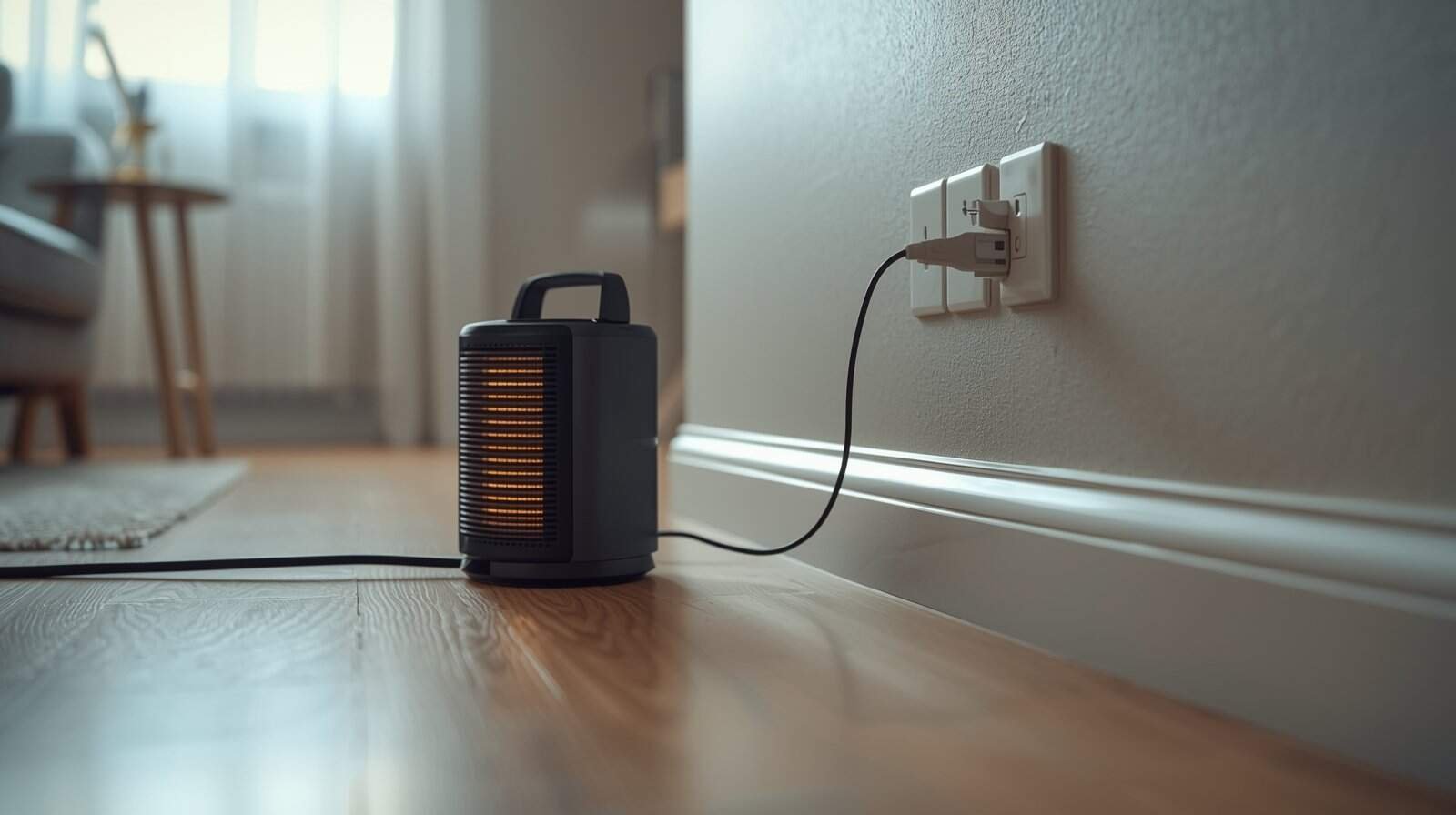
It’s a common winter setup: a space heater in the corner, and an extension cord used to “make it reach.” The problem is that many extension cords are not built for long, steady, high-wattage loads. A space heater is exactly that kind of load.
In plain terms, an extension cord can become the weak link—heating up at the plug, the cord itself, or the wall outlet—sometimes long before a breaker trips. This guide explains why it’s risky, what warning signs matter, and what safer options look like for real homes.
Why space heaters are different from most household devices
Many devices pull power in bursts. A blender runs for a minute. A vacuum might run for 15–30 minutes. A space heater is designed to draw a large amount of power continuously—often for hours—because turning electricity into heat is inherently power-hungry.
That steady, high draw increases the odds of heat building up at points of resistance: at the plug blades, the extension cord connections, the outlet contacts, or a worn/loose connection inside the wall. Over time, resistance turns into heat—sometimes quietly—without an obvious “failure moment.” If you want the deeper mechanism, read How Electrical Resistance Creates Heat Long Before Breakers Trip.
What actually goes wrong with extension cords on heaters
The risk isn’t “the cord will instantly melt.” The risk is gradual overheating at the most vulnerable points—especially where metal contacts meet and where the cord is stressed, coiled, pinched, or run under rugs or furniture.
1) The plug connection becomes a heater itself
Extension cords add extra connection points: wall outlet → cord plug → cord length → cord end → heater plug. Each connection is a place where small looseness or wear can increase resistance. Increased resistance means increased heat at that spot.
2) Coiling and bundling trap heat
Even a cord that feels “fine” can get much hotter if it’s coiled, bundled, or covered. Heat can’t dissipate well, so the temperature rises faster. This is one reason space heaters and power strips are a bad combination: tight, cluttered connections and poor heat shedding.
3) The wall outlet can overheat without obvious symptoms
If the outlet is worn or the internal contacts are loose, a heater’s load can warm the outlet faceplate and the wiring behind it. That’s not just discomfort—it’s a warning sign. For context on what warmth can mean in normal use versus danger, see Why Outlets or Switches Get Warm During Normal Use.
“But the breaker didn’t trip.” Why that doesn’t prove it’s safe
Breakers are designed to protect wiring from severe overcurrent—not to detect every overheating connection. A cord or outlet can overheat from resistance at normal current levels. In other words, you can have dangerous heat without ever exceeding the breaker’s trip threshold.
This is why people are sometimes surprised by warm outlets, scorched faceplates, or a burning-plastic smell even though “nothing ever tripped.” If you want a broader set of warning signs that matter, review When Home Electrical Systems Become a Fire Risk: Clear Signs You Shouldn’t Ignore.
Warning signs that matter with heaters and cords
If you’re trying to assess a setup you’ve already used, focus on signals that point to overheating or poor connections. Any single warning sign is reason to stop using the cord-with-heater setup.
- Heat at the outlet or plug: the faceplate, plug body, or cord end feels hot to the touch
- Odor: a faint “hot plastic,” “electrical,” or “dust burning” smell that persists
- Discoloration: darkening around the outlet slots or on the plug blades
- Loose fit: the plug doesn’t feel snug in the outlet, or wiggles easily
- Intermittent behavior: heater power cuts out, then returns (possible heat-related contact issues)
- Warm cord length: the cord itself feels warm along its run, especially if coiled or covered
Safer options that don’t involve rewiring your home
You don’t need to remodel your electrical system to reduce risk. In many homes, the safest answer is a practical layout change.
Place the heater where it can plug directly into a wall outlet
This is the simplest and safest move. It removes extra connections and reduces the chance of heat building at a cord junction.
Use a different heat strategy for that room
If the only reachable outlet is far away, consider using the heater in a different room, heating the home more evenly, or using non-electric warming strategies that don’t require a high-wattage plug-in device. The safest “fix” is often to avoid forcing a high-load device into a low-quality power path.
If a cord is truly unavoidable, treat it as a last-resort risk decision
PowerPrepGuide doesn’t recommend running space heaters on extension cords. But if someone chooses to do it anyway, the safety priority is to reduce heat buildup and poor connections as much as possible—without improvising or stacking adapters.
- Use only a single, heavy-duty cord (no daisy-chaining, no power strips).
- Keep the cord fully uncoiled and uncovered (never under rugs or furniture).
- Ensure the outlet connection is snug and does not wobble.
- Check for heat at the plug/outlet after 10–15 minutes of operation.
- Stop using the setup immediately if there is heat, odor, discoloration, or flicker.
When to escalate to a professional
If your home regularly requires “workarounds” to power basic heating safely, that’s a sign your outlets, circuits, or room layout may not match modern load needs. Also, if you’ve noticed warmth at outlets, any burning smell, buzzing/crackling, or repeated breaker trips, it’s time to stop experimenting.
Use this escalation guide as your safety backstop: When to Call an Electrician After an Outage: Clear Signs You Shouldn’t Ignore. Even when the original trigger isn’t an outage, the warning signs and escalation logic are the same—heat, odor, sound, unstable behavior, and repeated tripping are not “normal winter quirks.”
If you’ve seen heat, odor, discoloration, or repeated breaker trips, stop using the setup and escalate. When electricity and heat are involved, “it worked last night” is not a safety guarantee.