


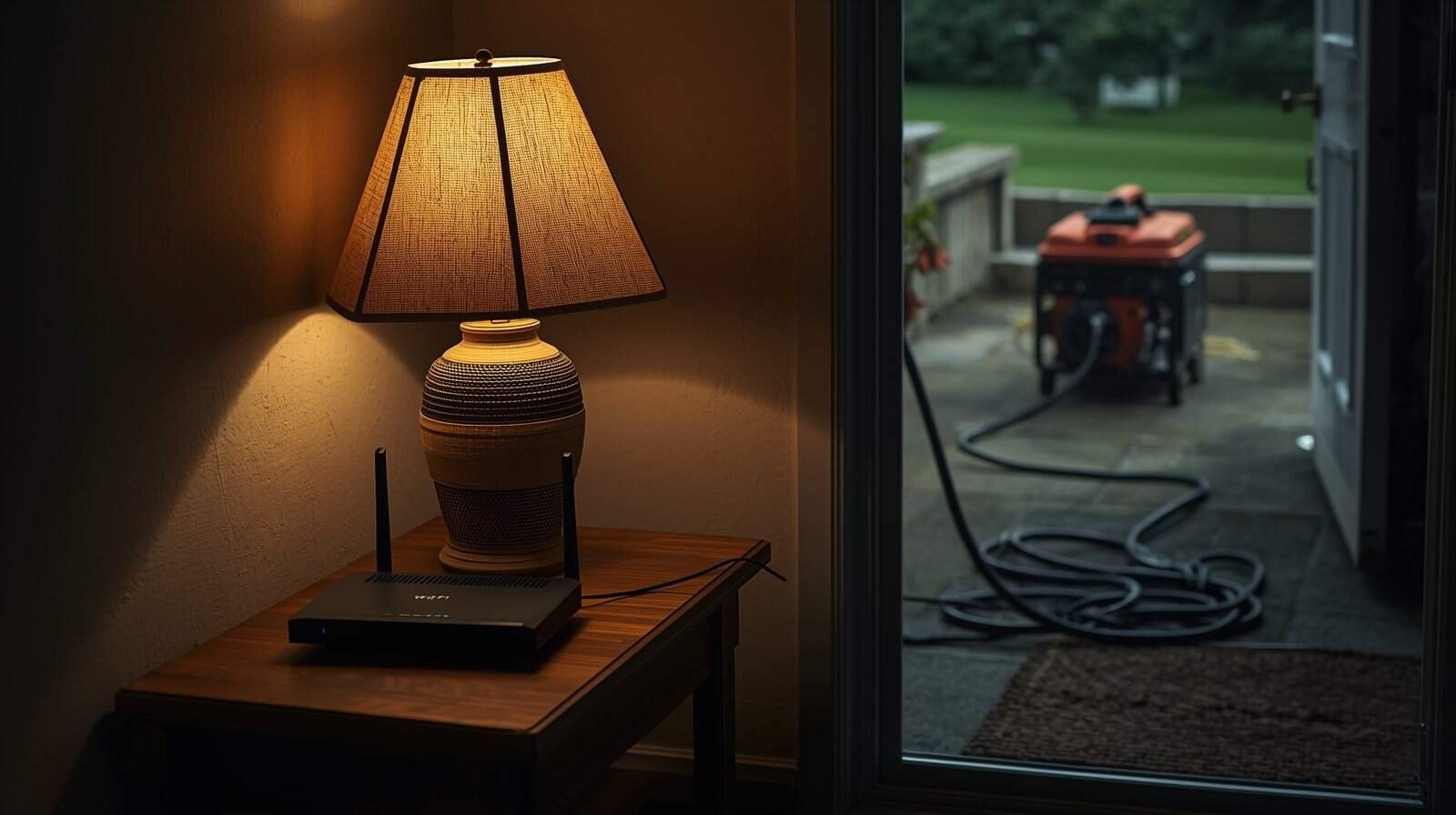
Short answer: Electronics usually reset or flicker on generator power because the electricity is not staying stable when loads change. The most common causes are motor startup surges, long or undersized extension cords, poor connection points, or a generator that is struggling to regulate voltage smoothly under real-world demand.
One of the most frustrating generator problems is when devices seem to “almost work.” The router boots, then resets. The lamp flickers when the refrigerator starts. A charger works for a moment, then disconnects. These patterns are easy to dismiss as minor annoyances, but they are often signs that generator power quality is slipping outside a safe, stable zone.
This guide explains why that happens, what conditions usually cause it, and when repeated resets or flicker should be treated as a stop sign instead of something to tolerate until the outage ends.
Why Electronics React So Quickly to Unstable Generator Power
Modern electronics depend on steady input power. Small routers, TVs, chargers, control boards, streaming devices, and laptops are much less tolerant of dips and swings than a simple incandescent bulb. They do not need a total outage to fail momentarily. A brief drop or unstable fluctuation may be enough to make them reboot, disconnect, or act erratically.
If you want the broader explanation of voltage and frequency stability in plain English, start with: Generator Power Quality Explained: Voltage, Frequency, and Why Electronics Get Damaged.
The Most Common Cause: Sudden Load Changes
The most common reason electronics flicker or reset on generator power is that another device starts up and briefly pulls the generator down. Refrigerators, freezers, sump pumps, dehumidifiers, and other motor-driven appliances are frequent triggers because they draw extra current during startup.
When that happens, the generator has to respond quickly. If the system is already working hard or the response is uneven, electronics elsewhere on the setup may “feel” the dip immediately. That can show up as a lamp flicker, a router reboot, or a charger disconnecting and reconnecting.
Extension Cords Are Often the Hidden Problem
Even when generator output is acceptable at the source, the power delivered to a device can become much worse by the end of a long or undersized extension cord. Every extra foot and every too-thin conductor adds resistance. Resistance causes voltage drop, and voltage drop becomes especially obvious when loads change suddenly.
That is why a generator may seem to power some electronics “fine” near the source while devices farther away flicker or reset. If cord losses are part of the picture, use: Extension Cord Sizing for Generators: Gauge, Length, and Overheating Risks.
Why Some Devices Reset While Others Seem Fine
Not all devices respond to unstable power the same way. Some lights will simply dim and recover. A router may reboot. A charger may disconnect. A refrigerator control board may behave strangely while the compressor hums. This uneven behavior makes the setup feel random when it is actually revealing which devices are more sensitive to dips and fluctuations.
If you are trying to make sense of “some things work, some don’t,” this related article helps explain the pattern: Generator Powers Some Devices but Not Others.
Poor Connections and Moisture Make Flicker Worse
Reset and flicker problems can also come from poor plug contact, worn adapters, damp junctions, or compromised connection points. These conditions create extra resistance, which makes already-marginal power behave even more erratically under load.
This is why the problem often feels worse during bad weather. Homeowners may blame the generator alone when the bigger issue is a strained setup combined with wet or weak connection points.
When Flicker and Resets Point to Regulation Problems
Sometimes load and cord issues are not the whole story. If electronics continue resetting even after you reduce the load, shorten the cord runs, and remove obvious problem devices, the generator may not be regulating output smoothly enough under normal use.
That is where the issue shifts from “manage the setup better” to “this may be unsafe to keep using for electronics.” Homeowners should not treat internal regulation as a DIY adjustment task. The important decision is whether power has become too unstable to trust.
When to Stop Using Generator Power for Electronics
Repeated resets and visible flicker should not be normalized. Stop using the setup for sensitive electronics if you notice:
- Routers, TVs, chargers, or power bricks resetting repeatedly
- Lights dimming or flickering sharply when normal loads start
- Electronics behaving unpredictably even after you reduce load
- Warm plug ends, buzzing adapters, or hot-smelling electronics
- The pattern getting worse over time instead of stabilizing
This is the point where the broader safety boundary matters more than continued use. For that explicit stop/continue decision line, see: Generator Voltage Too High or Too Low: Signs, Risks, and When to Stop Using It.
What to Do First When You See This Pattern
The safest first response is to simplify the system rather than keep experimenting. Reduce non-essential loads, avoid running multiple motor-driven devices at once, shorten or upgrade extension cords, and remove any suspect adapters or weak connection points.
If stability returns, the issue was likely setup-related. If it does not, continued operation for electronics is no longer worth the risk.
Conclusion: Resets and Flicker Are Early Warning Signs
Electronics that flicker, reset, or disconnect on generator power are often showing you a problem before outright failure happens. The most common causes are predictable: load changes, long or undersized cords, poor connections, and unstable regulation under stress.
Treat those symptoms as useful warning signs, not harmless quirks. Stable power matters more than just having some power, especially when sensitive electronics are involved.