


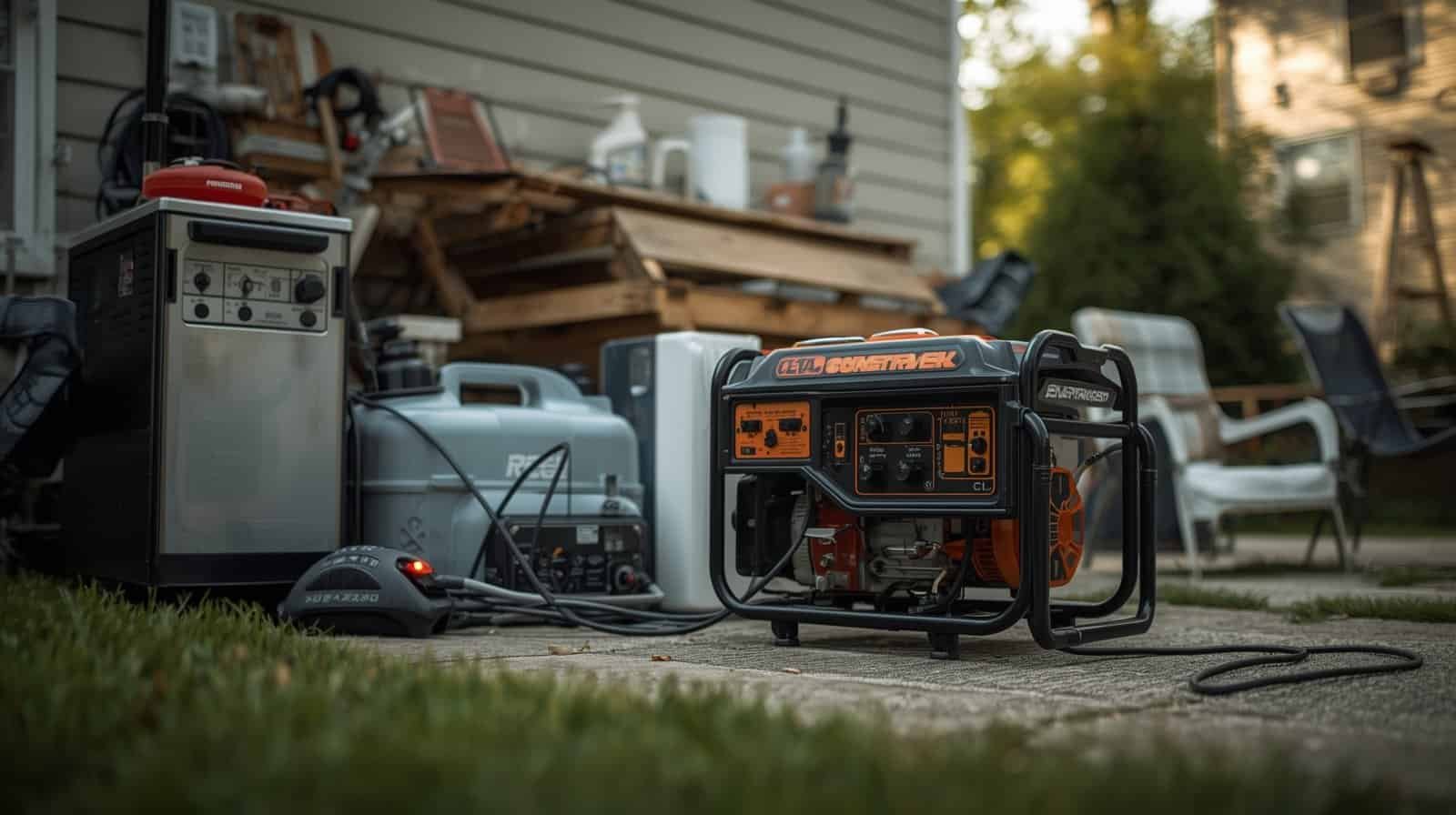
Short answer: A generator can be running and still produce voltage that is too low, too high, or unstable for safe appliance use. That makes this problem more dangerous than a total shutdown, because power is present—but not necessarily safe or usable for motors, electronics, or chargers.
It’s possible for a generator to sound normal, power a few lights, or keep some devices running while still delivering electricity that drifts outside a safe range. In those situations, appliances may hum, fail to start, reset unexpectedly, or overheat internally.
This guide explains what unstable generator voltage actually means, why it happens, the most common homeowner-side causes, and when you should stop using the generator before connected equipment is damaged.
What “Unstable Voltage” Actually Means
Normal household power in the U.S. is built around roughly 120 volts at standard outlets. When generator output falls too low, rises too high, or fluctuates rapidly, connected devices can start behaving unpredictably.
That can show up as:
- Lights dimming or brightening suddenly
- Motors humming, stalling, or struggling to start
- Electronics shutting off, rebooting, or refusing to charge
- Plug ends or cords feeling warmer than expected
Unstable voltage is different from total power loss. The generator is producing electricity, but not at a steady or safe level.
Why Generators Struggle to Maintain Stable Voltage
Generator voltage stability depends on engine speed, electrical load, and internal regulation. When engine RPM changes or electrical demand swings too sharply, output can drift.
Common triggers include cold weather, fuel delivery issues, sudden motor starts, overloaded circuits, and poor-quality extension cord setups. In other words, unstable voltage is often caused by a mix of generator stress and real-world operating conditions—not just a single “bad part.”
Load Changes and Inrush Current
Many appliances draw a short burst of extra current when they first start. Refrigerators, freezers, sump pumps, and other motor-driven devices are common examples. If the generator is already working near its limit, that startup surge can pull voltage down sharply for a moment.
When this happens, lights may flicker, motors may stall, and sensitive electronics may reset. Homeowners sometimes assume the generator is completely failing, when the real problem is that the load pattern is pushing output outside a stable range.
If you want a quick decision guide for this kind of “some things work, some don’t” behavior, see Why a Generator Powers Some Devices but Not Others (And What to Do Safely).
Voltage Regulators and Internal Control Problems
Many modern generators use an Automatic Voltage Regulator (AVR) or other internal control system to keep output within a safe range. If that regulation system is failing, voltage may fluctuate even when the connected load seems reasonable.
That kind of instability is more concerning because it may persist even after you reduce load. Internal regulator issues are not a homeowner repair topic. Continued use in that condition can damage both the generator and connected equipment.
Extension Cords Can Cause Voltage Drop All by Themselves
Not all voltage problems start inside the generator. Long or undersized extension cords add resistance, which reduces voltage by the time power reaches the appliance. That means the generator may be producing acceptable power at the source while the device at the end of the cord sees something much worse.
This is one of the most common homeowner-created causes of unstable performance. Before assuming the generator has an internal fault, verify that your cord setup is appropriate using Extension Cord Sizing for Generators.
Why Low Voltage Can Be Harder on Appliances Than No Power
Total power loss is obvious: the device simply stops. Low voltage is more deceptive. Motors and compressors may continue trying to run, drawing higher current and generating excess heat as they struggle.
That heat can damage windings, shorten appliance lifespan, and in some cases cause immediate failure. Electronics can also be harmed by repeated low-voltage events, especially if they cycle on and off or keep trying to start.
For the broader electronics-damage side of this issue, see Why Generator Power Problems Can Damage Electronics (And How to Prevent It).
Safe Checks Homeowners Can Perform
Homeowner-safe checks should stay simple and observational. The first step is to reduce the connected load and see whether behavior becomes more stable.
- Disconnect non-essential devices
- Avoid starting multiple motor-driven appliances at once
- Use shorter, properly sized cords where possible
- Watch for changes in flicker, resets, or motor behavior
If output steadies noticeably when load is reduced, you may be dealing with a capacity or delivery problem. If instability continues under minimal load, internal generator regulation may be the more likely issue.
When to Stop Using the Generator
Voltage instability is not something to “push through” for convenience. Continued operation under unstable conditions can quietly cause cumulative damage to electronics, motors, and plug connections.
Stop using the generator if:
- Appliances hum, stall, or repeatedly fail to start
- Electronics reset, alarm, or behave erratically
- Lights dim or brighten noticeably under ordinary use
- Plug ends, cords, or adapters become warm or smell hot
Related Generator Faults That Can Look Similar
Some voltage problems are mistaken for total output loss or breaker faults. If your generator loses output entirely, use Generator Runs but Produces No Power. If the breaker trips repeatedly under load, that points toward a different fault path than voltage instability.
Conclusion
Generator voltage that is too low or unstable is one of the most dangerous “looks like it’s working” problems homeowners face. The generator may be running, but the electricity reaching your devices may no longer be safe or reliable.
Understanding how load changes, cord losses, and internal regulation problems affect output helps you recognize when generator power has crossed from inconvenient to unsafe. When in doubt, reduce load, simplify the setup, and stop using sensitive equipment until stability returns.