


Short answer: “Generator power quality” is a plain-English way of describing how steady and predictable your generator’s electricity is. When voltage or frequency swings, electronics can overheat internally, reset, or fail over time—even if the generator seems to be running fine.
During outages, a generator can be the difference between staying comfortable and losing critical routines. But not all generator power is equally friendly to modern electronics. People often assume that if lights turn on, the power is “good.” In reality, the power can be present while still being unstable enough to stress sensitive devices.
This guide explains the two biggest pieces of power quality—voltage and frequency—in plain language, why they drift during real-world generator use, and the warning signs that tell you it’s time to stop using generator power for sensitive electronics.
What “Power Quality” Means for a Home Generator
In a house with utility power, electricity is tightly regulated and stays within predictable ranges. A portable generator is different. It’s a small engine making electricity in real time, reacting to load changes as appliances start and stop.
Power quality becomes important when you run anything that contains circuit boards, microprocessors, or sensitive power supplies—think routers, TVs, modern refrigerators, chargers, CPAP power bricks, and newer appliances with electronic controls. These devices often keep working right up until they don’t, which is why generator-related damage can be hard to trace.
If you want the deeper “damage mechanisms” view—how electronics fail gradually under unstable output—this companion guide explains what happens inside devices over time: Why Generator Power Problems Can Damage Electronics (And How to Prevent It).
Voltage in Plain English: The “Pressure” of Electricity
Voltage is often described as electrical “pressure.” In most U.S. homes, common outlets provide about 120 volts. Many household devices are designed to tolerate small variations around that target, but large swings are where problems begin.
When voltage drops too low, motors may struggle to start and draw more current, which creates heat. When voltage rises too high, components inside electronics can run hotter than designed and fail sooner. The danger is that these problems can happen without an obvious “bang.” You might just notice odd behavior: dimming, buzzing, resets, or devices refusing to start.
Voltage issues can be caused by the generator itself, but they’re often created by the homeowner’s setup—especially when cords are undersized, runs are long, or the generator is being pushed near its capacity.
Frequency: The “Timing” That Electronics and Motors Rely On
Frequency is the rhythm of the alternating current—measured in Hertz (Hz). In the U.S., utility power is designed around 60 Hz. Some devices are more tolerant than others, but frequency instability can show up as electronics acting “glitchy” or motors sounding strained.
Why does frequency drift on generators? Because the engine has to maintain a steady speed while loads turn on and off. When a refrigerator compressor kicks on, for example, the generator suddenly has to work harder. If the engine governor can’t respond smoothly, frequency and voltage can both wobble.
You don’t need to memorize technical numbers to benefit from this concept. Just remember: when the generator is being stressed, both voltage and frequency are more likely to drift—and electronics are more likely to suffer.
The Most Common Causes of “Rough” Generator Power
Generator power quality usually degrades for predictable reasons. The goal isn’t to turn you into a technician—it’s to help you recognize the conditions that make stable power less likely so you can adjust your use safely.
1) Sudden load changes (motors starting and stopping)
Appliances with motors—refrigerators, sump pumps, freezers, furnace blowers—create brief, high startup demand. Those spikes can cause short voltage dips that sensitive electronics “feel” even if the lights stay on.
2) Long or undersized extension cords
Extension cords add resistance. Resistance causes voltage drop and heat at plug ends. If your cords are too thin or too long, you can create the exact power instability you’re trying to avoid.
If you want a clear sizing reference and why gauge matters, use: Extension Cord Sizing for Generators: Gauge, Length, and Overheating Risks.
3) Overloading the generator (even “a little”)
Overload isn’t always dramatic. You can be near the limit without tripping a breaker. In that zone, power quality often worsens first: flicker, dimming, unstable behavior, and devices cycling or alarming.
4) Wet or compromised connection points
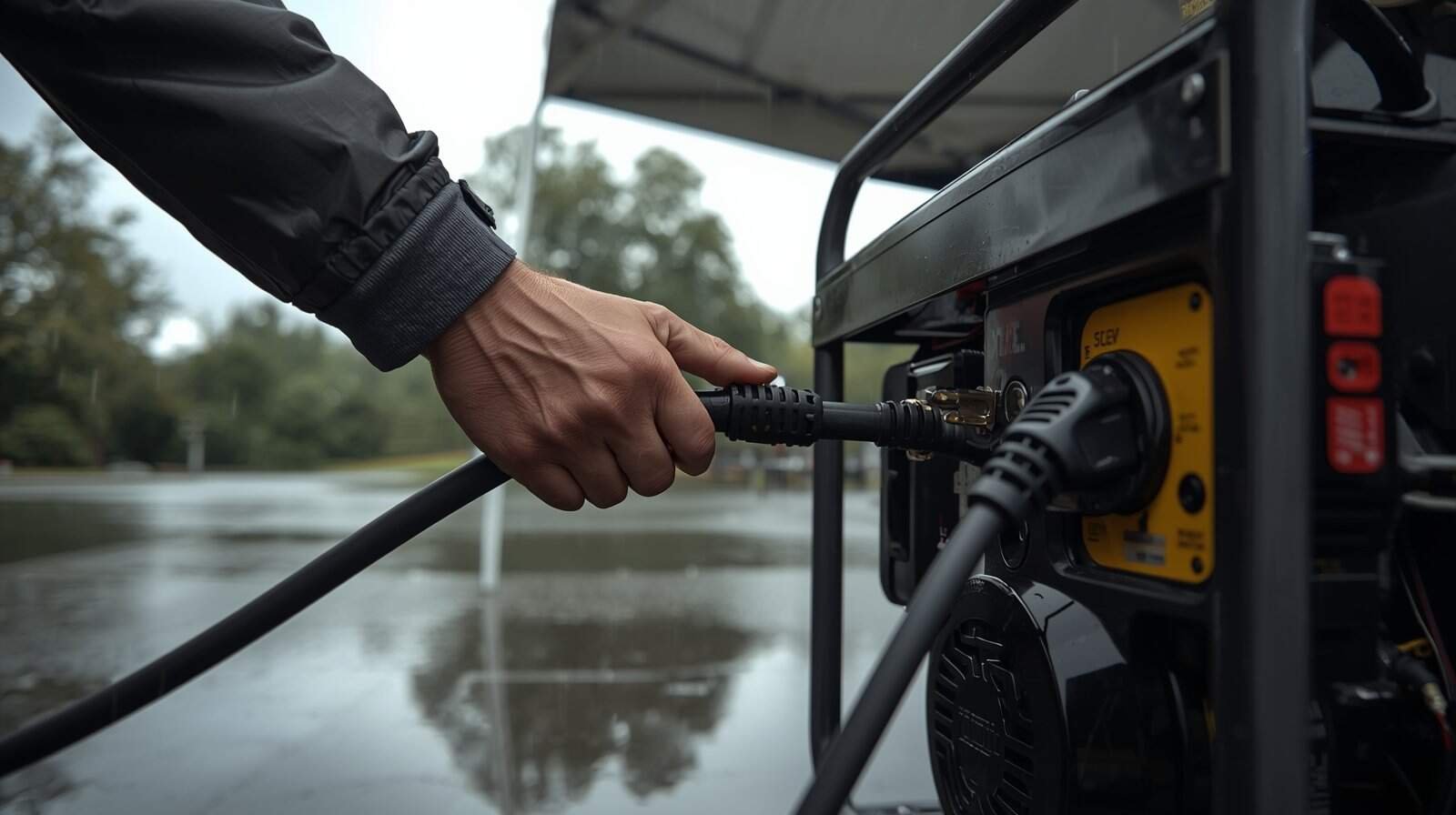
Moisture at plugs, cord junctions, or generator outlets can create poor contact and resistance. That can contribute to heat, unstable voltage delivery, and unpredictable device behavior. Rain also increases the odds people move the generator closer to the home—creating a far bigger hazard: carbon monoxide exposure.
For wet-weather boundaries and what not to do when storms push you toward shortcuts, see: Can You Run a Generator in the Rain? Safe Weather Protection Options.
Warning Signs Your Generator Power Quality Is Unsafe for Electronics
You don’t need advanced instruments to recognize the most common danger signs. These clues often appear before anything permanently fails.
- Electronics reset repeatedly (routers, TVs, chargers cycling on/off)
- Lights dim or brighten noticeably when devices start
- Buzzing or unusually warm plug ends at cords or adapters
- Motors hum, stall, or struggle to start
- Devices refuse to charge even though the outlet “has power”
What to Do When You Suspect Power Quality Problems
The safest “first response” is not more testing. It’s reducing the stress factors that commonly create unstable output.
- Reduce load by unplugging non-essential devices and avoiding large motor starts while sensitive electronics are connected.
- Shorten cord runs and avoid thin cords. Use appropriately sized cords to reduce voltage drop.
- Separate sensitive electronics from high-draw appliances when possible (don’t share the same strained connection path).
- Pause use of expensive electronics until power behavior stabilizes.
If you’re repeatedly seeing instability even after reducing load and improving cord conditions, that’s a strong signal the situation is beyond simple safe adjustments.
Do Not “Solve Rain” by Moving the Generator Closer
Power quality issues often show up in bad weather, when people are tempted to shorten cords or shelter the generator in unsafe spaces. This is where the biggest life-safety risk appears: carbon monoxide.
Even with perfect cords and good electrical habits, a generator placed too close to the home or near openings can send exhaust inside. Carbon monoxide is invisible, fast-acting, and deadly. Keep exhaust safety separate from electrical safety and treat both as non-negotiable.
For the placement fundamentals and why “just outside the garage” is still dangerous, read: Generator Carbon Monoxide Safety: What Every Homeowner Needs to Know.
Conclusion: Stable Power Matters More Than Continuous Power
Generator power quality comes down to whether your setup delivers steady voltage and frequency under real conditions. The most common threats are predictable: long or undersized cords, heavy load changes, wet connections, and pushing the generator near its limits.
If you keep the generator safely placed outdoors, reduce stress on the system, and watch for early warning signs, you dramatically lower the odds of damaging electronics during an outage. When instability persists, the safest choice is to stop and escalate rather than “push through” with questionable power.