


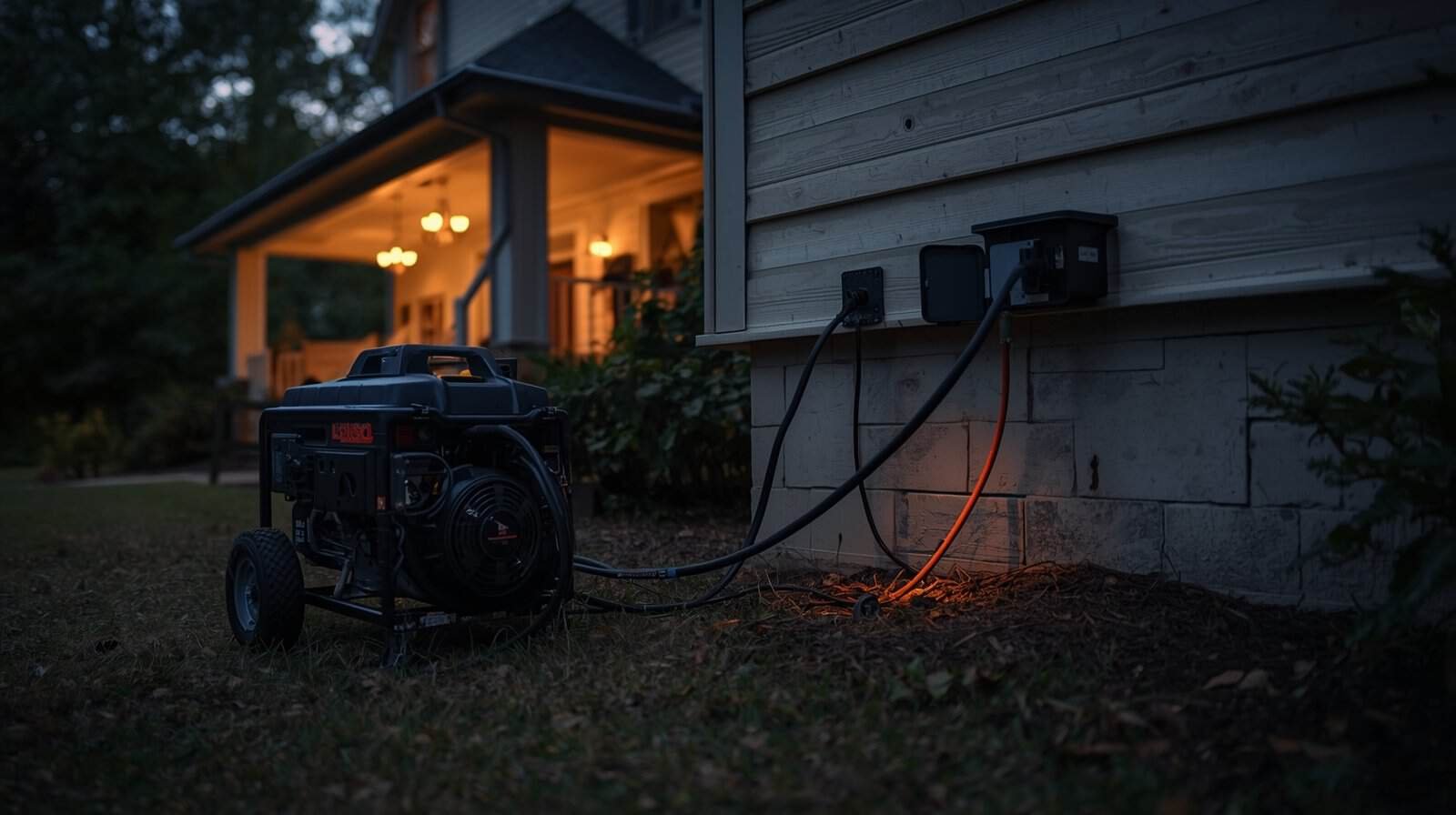
When a generator is running smoothly but the house remains completely dark, the problem is rarely the generator itself. In most cases, the failure occurs at the connection point between the generator and the home’s electrical system.
Why a Running Generator Doesn’t Automatically Power the House
Portable and standby generators do not feed power into a home automatically. Power must pass through a safe connection system—typically an inlet box paired with a transfer switch or interlock—to reach household circuits.
If any part of that connection chain is misconfigured, damaged, or disengaged, the generator can run perfectly while the house receives nothing.
Start With the Generator Inlet Box
The inlet box is the physical entry point where generator power enters the home. Loose terminals, weather intrusion, or internal damage can interrupt power before it ever reaches the breaker panel.
Even when the inlet appears intact from the outside, internal wiring issues can prevent voltage from passing through correctly. For a detailed explanation of inlet box behavior, see generator inlet boxes explained.
Transfer Switches and Interlocks: What Must Happen
Transfer switches and interlock kits are designed to isolate generator power from utility power. If they are not fully engaged, power flow is blocked by design.
Homeowners often assume that flipping a breaker or sliding an interlock plate is enough. In reality, partial engagement or mechanical misalignment can leave circuits disconnected.
If you use an interlock system, review interlock kit installed but generator power still doesn’t work for common setup failures.
When a Transfer Switch Clicks but Nothing Happens
Manual and automatic transfer switches rely on internal contacts and relays. A clicking sound indicates movement, but it does not guarantee electrical continuity.
Worn contacts, control failures, or wiring errors can all result in a switch that appears to operate but delivers no power. This scenario is covered in transfer switch clicks but no circuits get power.
Why Backfeeding Assumptions Are Dangerous
Some homeowners attempt to bypass transfer equipment when power fails. This creates serious backfeeding risks and often results in power not reaching the home as expected.
Improper connections can energize utility lines, damage equipment, and put utility workers at risk. If backfeeding is suspected, stop immediately and review generator backfeeding explained.
Safe Checks Homeowners Can Perform
Verify that the generator breaker is on, the inlet cord is fully seated, and the transfer mechanism is completely engaged. Check for visible damage, moisture, or loose fittings at the inlet box.
Do not remove panel covers or attempt internal repairs unless you are trained and following proper shutdown procedures.
Want the fastest way to confirm the safe connection path? Use this visual flowchart to verify generator → inlet box → transfer equipment → panel (and see exactly where most setups break): Generator Runs but House Has No Power — Safety Setup Flowchart.
When to Stop and Call a Professional
If the generator is producing power but the house remains unpowered after basic checks, the issue is likely internal wiring or transfer equipment failure. Continuing to experiment can create shock or fire hazards.
A licensed electrician can safely verify voltage paths, equipment integrity, and code compliance.
Conclusion
When a generator runs but the house has no power, the problem almost always lies between the generator and the breaker panel. Understanding how inlet boxes and transfer equipment work helps homeowners troubleshoot safely and know when to stop.