


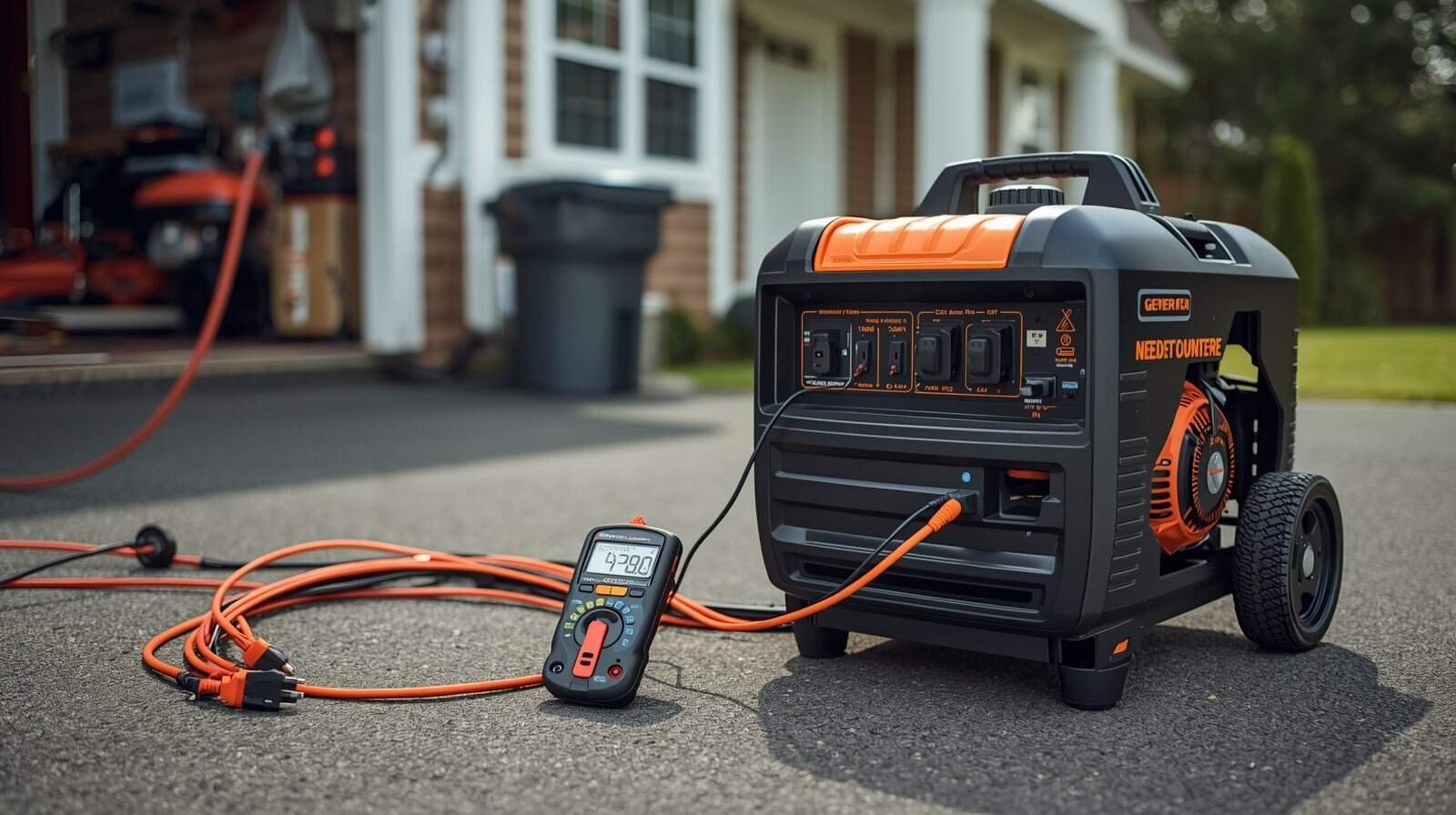
Short answer: Generator voltage that is too high or too low is unsafe because it can damage electronics, overheat motors, and create misleading “it still has power” conditions. If devices are resetting, struggling to start, buzzing, running hot, or behaving unpredictably, stop assuming the power is usable just because the generator is running.
Many homeowners think generator problems are obvious: either it has power or it doesn’t. In reality, one of the riskiest situations is when the generator is still producing electricity, but that voltage is outside a safe working range. In those cases, lights may come on, chargers may appear to work, and appliances may still respond—while internal damage risk is quietly increasing.
This guide explains what “too high” and “too low” voltage look like in plain English, the common causes behind them, and when the safest move is to stop using generator power rather than pushing through with a questionable setup.
What “Too High” or “Too Low” Voltage Means
Most common U.S. household outlets are built around roughly 120 volts. Small variations happen in normal use, but larger swings are where problems begin. When voltage drops too low, devices may struggle to start, run weakly, or overheat from drawing extra current. When voltage rises too high, sensitive electronics and internal power supplies may run hotter than designed and fail sooner.
If you want the broader foundation for why stable voltage and frequency matter, start with: Generator Power Quality Explained: Voltage, Frequency, and Why Electronics Get Damaged.
What Low Voltage Looks Like in Real Life
Low voltage is usually easier to spot than high voltage because devices often “act weak.” Common signs include:
- Motors humming or struggling to start
- Lights dimming more than expected
- Electronics shutting off or rebooting
- Chargers refusing to charge properly
- Appliances cycling strangely or not reaching normal performance
Low voltage is especially dangerous for motors and compressors because they may draw higher current while trying to do the same work. That extra current creates heat. Over time, that can shorten appliance life or cause immediate failure in stressed conditions.
For a companion article focused specifically on low or unstable voltage behavior, see: Generator Produces Power but Voltage Is Too Low or Unstable.
What High Voltage Looks Like in Real Life
High voltage can be harder to identify because the symptoms are not always dramatic right away. Devices may still appear to work while internal components run hotter than they should. In some cases, you may notice:
- Unusual brightness in lights
- Electronics or power bricks running hotter than normal
- Devices behaving erratically or failing unexpectedly
- Unusual smell from adapters, chargers, or plug-in electronics
High voltage tends to be especially hard on electronics because many modern devices depend on tightly regulated internal power supplies. A device may survive one brief high-voltage event and then fail later in a way that seems unrelated.
Common Causes of Unsafe Generator Voltage
Unsafe voltage is often caused by a mix of generator stress and real-world setup problems. The most common causes include:
Heavy load changes
When refrigerators, freezers, sump pumps, or other motor-driven appliances start, they create a brief surge in demand. If the generator is already working hard, voltage may dip sharply and recover unevenly.
Long or undersized extension cords
Voltage may be acceptable at the generator but significantly worse at the end of a long or thin extension cord. This is one of the most common homeowner-created causes of weak or unstable appliance performance.
Wet or compromised connections
Moisture at plug ends, adapters, or cord junctions can increase resistance and create erratic delivery. This can make the problem feel “random” when the real issue is a poor connection under load.
Internal regulation problems
Some voltage problems come from the generator’s own regulation system. Homeowners should not treat this as a DIY adjustment issue. If voltage behavior stays abnormal under reduced, well-managed load, internal service may be needed.
Why Unsafe Voltage Can Damage Appliances and Electronics
Low voltage and high voltage damage different things in different ways, but both create risk. Low voltage tends to overheat motors and make appliances strain. High voltage tends to stress electronic boards, power supplies, chargers, and sensitive device components.
That is why “it still turns on” is not a useful safety test. Many devices will continue operating for a while under harmful voltage conditions before their failure becomes obvious.
What to Do When You Suspect Voltage Is Unsafe
The safest first move is to reduce the stress factors you can control. That usually means:
- Disconnect non-essential loads
- Avoid running multiple motor-driven devices at once
- Use shorter, properly sized extension cords
- Pause use of sensitive electronics until behavior stabilizes
If some devices work while others refuse to start or behave unpredictably, this visual guide can help you sort out what that pattern usually means: Why a Generator Powers Some Devices but Not Others (And What to Do Safely).
When to Stop Using the Generator
There is a point where “troubleshooting” becomes riskier than helpful. Stop using generator power for sensitive devices—and strongly consider shutting the generator down for further evaluation—if you notice:
- Repeated resets or cycling across multiple electronics
- Motors repeatedly humming, stalling, or failing to start
- Lights dimming or brightening unusually with normal loads
- Warm plug ends, buzzing adapters, or hot-smelling electronics
- Unpredictable behavior that continues even after reducing load
This related spoke explains why flicker, resets, and strange behavior often happen together when generator output is struggling: Why Electronics Reset or Flicker on Generator Power: Load Changes, Cords, and Regulation.
Conclusion: Safe Generator Power Needs Stable Voltage
Generator voltage that is too high or too low is not just a performance issue. It is a safety and equipment-protection issue. The danger is greatest when the generator still appears to be “working” while devices are actually being stressed every minute they stay connected.
If you notice dimming, resets, weak starts, heat, or unpredictable behavior, treat that as a voltage-quality warning. Stable power matters more than simply having power at all.