


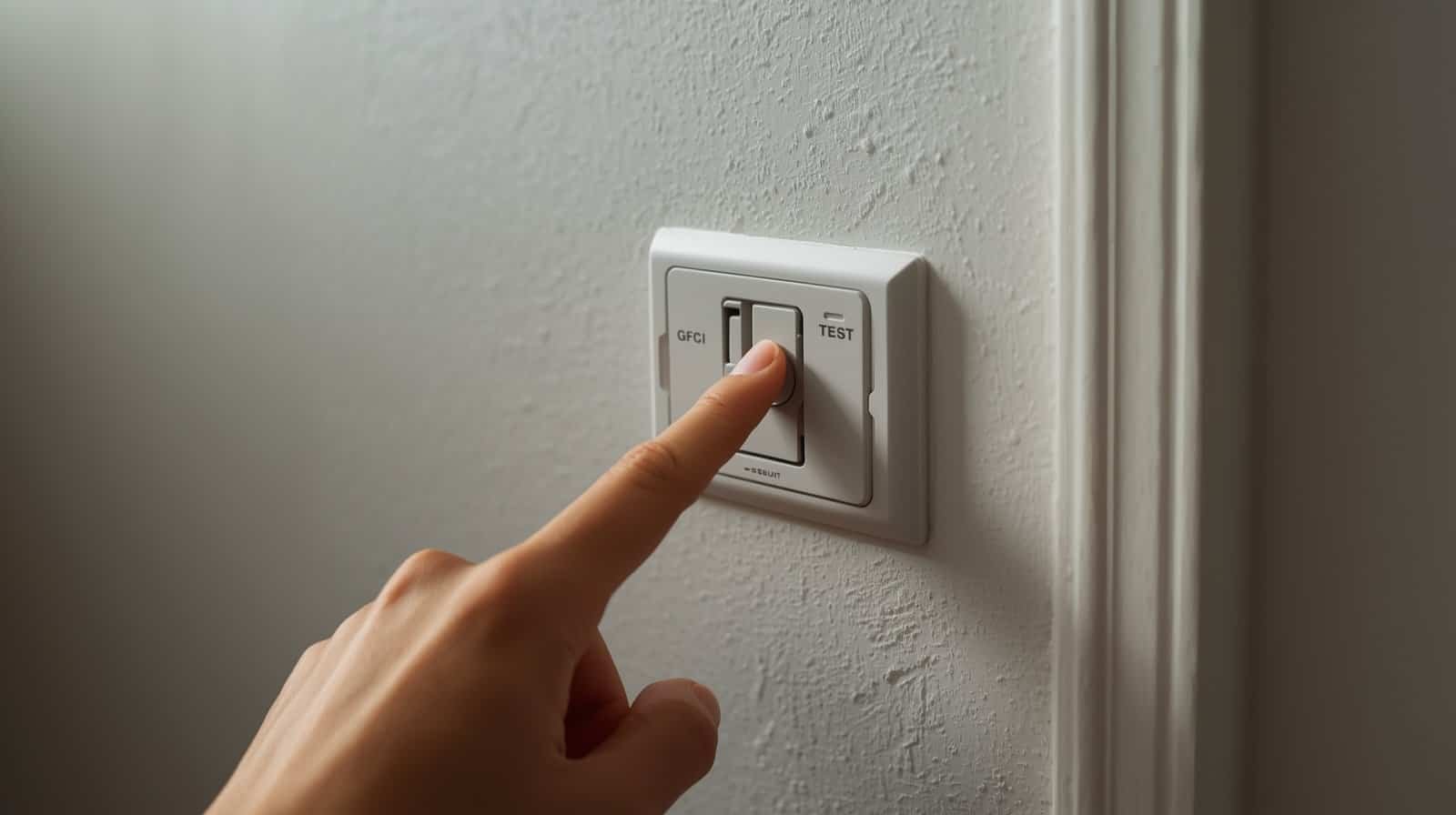
This guide focuses specifically on GFCI outlets that continue to trip repeatedly after power has been restored, rather than general GFCI behavior during outages.
After a power outage, it’s common for a GFCI outlet to trip once. What’s not normal is when it keeps tripping over and over—sometimes immediately after you press reset, or a few minutes later when a load is applied.
Repeated tripping after restoration often points to lingering moisture, wiring instability, or damage triggered during the outage itself. For a broader look at GFCI tripping causes that aren’t limited to post-restoration behavior, see GFCI Keeps Tripping After an Outage. Continued tripping should be treated as a warning sign rather than an inconvenience.
Safe Step-by-Step Troubleshooting (No Guessing)
Step 1: Unplug Everything on the Circuit
Reset the GFCI, then unplug everything connected to the GFCI and any outlets it protects. Leave it unplugged for 10–15 minutes.
If it stays on with nothing plugged in, your most likely cause is a device/cord. Skip to Step 4.
If it trips with nothing plugged in, suspect moisture, wiring, or a failing GFCI device. Continue to Step 2 and Step 3.
Step 2: Consider Moisture and Let Things Dry
If the circuit protects outdoor outlets, a garage, or a basement, moisture is the first suspect. Don’t spray anything into outlets. Instead:
- Keep the outlet cover closed
- Use a fan or dehumidifier in the room (kept away from the receptacle)
- Wait several hours to a full day if conditions were wet
If the tripping started right after a storm outage, this related guide helps you think through power-return side effects more broadly: Surge After Power Restoration: What to Check and How to Protect Your Home.
Step 3: Check Whether This GFCI Protects Other Outlets
Many GFCIs feed “downstream” outlets. A fault on any one of those outlets can trip the GFCI. Check bathrooms, garage, basement, exterior receptacles, and sometimes the laundry area.
If you find one outlet that looks wet, damaged, or scorched, stop and keep the circuit off.
Step 4: Plug Things Back In One at a Time
Once the GFCI holds with nothing plugged in, begin reconnecting devices one at a time. Wait a minute or two between items.
When it trips, you’ve likely found the culprit. That device (or its cord) should be repaired or replaced. Do not keep resetting the GFCI to “force it.”
Step 5: If It Trips With No Load, Treat It as a Safety Problem
If the GFCI trips even when everything is unplugged and conditions are dry, you’re likely dealing with one of these:
- A failing GFCI device
- A wiring fault (neutral-ground contact, damaged insulation, loose connection)
- Water intrusion in a box or conduit
At that point, continued DIY resets aren’t “testing”—they’re ignoring a protective device. If you’re seeing other odd electrical symptoms too, review: Electrical Red Flags After an Outage: Signs You Shouldn’t Ignore.
When to Call an Electrician
Call a licensed electrician if any of the following are true:
- The GFCI trips with everything unplugged
- It trips repeatedly and you can’t identify a single device causing it
- You see heat, smell burning, or hear buzzing/crackling
- The circuit serves critical equipment (sump pump, medical devices, freezer) and you need a reliable solution
In many cases, a pro can quickly determine whether the device is bad, whether there’s a fault on a downstream receptacle, or whether the circuit has a wiring condition that needs correction.
How to Reduce Repeat Trips in the Future
- Upgrade outdoor protection: Use weather-resistant (WR) receptacles and in-use covers where appropriate.
- Keep damp areas drier: Improve ventilation or run a dehumidifier during wet seasons (safely).
- Replace aging GFCIs: If yours is old or inconsistent, replacement is often cheaper than repeated frustration.
- Protect the whole home from surges: Panel surge protection can reduce stress on devices during restoration events.
Conclusion
A GFCI that keeps tripping after a power outage is usually telling you something real: moisture has gotten where it shouldn’t, a device or cord is leaking current, or the circuit (or the GFCI itself) has a fault that became obvious when power returned.
The safest fix is isolation, not repetition. Unplug everything, let damp areas dry, and reintroduce devices one at a time. If it still trips with no load—or you see warning signs like heat, odor, or repeated trips—stop and bring in a licensed electrician. And if your GFCI won’t reset at all, use GFCI Won’t Reset: Common Causes, Safe Checks, and What to Do Next for that specific problem.
If repeated trips are making it hard to tell what’s normal, this post-outage troubleshooting flowchart lays out the common branching paths clearly.