


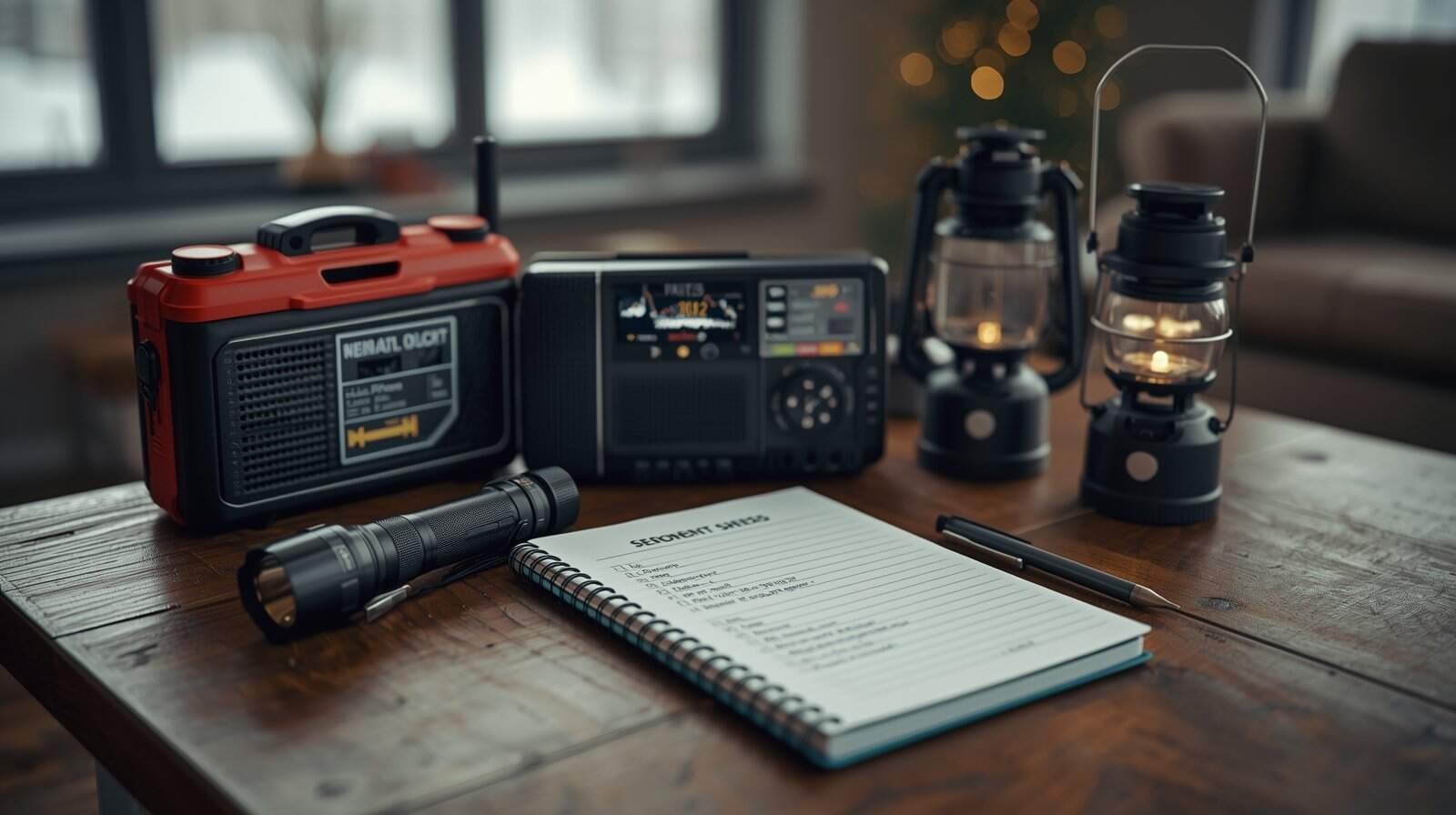
A multi-day power outage rarely becomes unsafe all at once. It usually shifts in stages: the house cools, routines break down, communication gets spotty, food and water safety slip, and people make riskier choices because they’re tired. A good capstone isn’t a generic checklist — it’s a decision tool that helps you notice those shifts early and respond before you’re boxed into a bad option.
This page is designed to be your “dashboard” for days 1–5+ of an outage. If you want the full step-by-step survival framework (heat, lighting, food, sanitation, supplies), start with How to Safely Live Through a Multi-Day Power Outage at Home. Use this capstone to decide what to prioritize, what to stop, and when the safest move is to relocate.
How to Use This Capstone During a Real Outage
Start by identifying which of the five core risk domains is most likely to fail next in your home: warmth, air safety (carbon monoxide), food and water safety, fuel and fire risk, or medical and communication stability. Then use the “threshold” language in each section to decide whether you’re in a normal discomfort zone, a caution zone, or an escalation zone.
Most households get into trouble by treating everything as equal urgency. In reality, carbon monoxide and fire hazards escalate faster than comfort issues, while food and water problems build more slowly but can become serious if ignored. The goal is not to do everything — it’s to do the highest-safety moves first.
The Survival Matrix: What to Watch, What It Means, What to Do Next
This matrix is intentionally conservative. It’s built to prevent the common “we thought we were fine” scenario, where warning signs were present but dismissed. Use it once in the morning and once before bed during extended outages.
| Risk Area | Early Warning (Monitor) | Caution (Adjust Now) | Escalate (Stop / Leave / Get Help) |
|---|---|---|---|
| Carbon Monoxide (CO) | You’re using any fuel-burning heat/cooking source; you feel “off” or unusually tired. | Headache, dizziness, nausea; you smell exhaust; you’re tempted to move equipment closer “just for a bit.” | CO alarm activates; confusion; vomiting; anyone faints or can’t stay alert — move to fresh air immediately. |
| Fire / Heat Risk | More candles/open flames than planned; cords and chargers are scattered; people are exhausted. | Charging piles on bedding/couches; open flame near blankets; cooking surfaces feel unstable. | Burning smell, smoke, unusual heat from devices, or flames you can’t supervise reliably — stop and relocate if needed. |
| Cold Exposure | Indoor temp drifting down; you’re relying on extra layers; floors and bedrooms are cold. | Indoor temp trending into the 50s overnight; shivering; older adults/infants are present. | Indoor temps persist in low 50s or below and you can’t safely stabilize heat — leave before conditions worsen. |
| Food & Water Safety | Fridge warming; limited clean water; hygiene routines slipping. | You’re guessing on food safety; you can’t wash hands/dishes reliably; water access is uncertain. | No safe drinking water plan; sanitation is failing; GI illness symptoms appear — reassess staying. |
| Fuel Handling | Fuel is running low; refueling is frequent; storage area is cluttered. | You smell faint fumes; containers are moved “temporarily” near living areas; spills occur. | Strong fuel odor indoors; leaking/damaged container; fuel stored inside — stop and fix the hazard immediately. |
Decision Flow: The 90-Second “Stay, Adjust, or Leave” Check
When you’re tired, you need a short process you can repeat. The purpose of this flow is to prevent slow drift into unsafe conditions. Run it anytime something changes (temperature drops, fuel runs low, a new heat or cooking method is introduced).
- Identify the biggest risk domain today: CO, fire, cold, food/water, or fuel handling.
- Ask the threshold question: “Is this risk still fully controlled without relying on perfect attention?”
- If “no,” adjust immediately: reduce load, reduce flame, move cooking outside, consolidate rooms, simplify.
- If symptoms or hazards are present, escalate: stop the activity, move to fresh air, or relocate to safer shelter.
The key phrase is “without relying on perfect attention.” Multi-day outages create fatigue. If your safety plan depends on you never getting distracted, it will eventually fail. The safest plans are boring and repeatable.
Carbon Monoxide Is the Fastest Escalating Risk
CO is the reason otherwise capable households get into immediate danger during outages. It’s odorless, it causes drowsiness and confusion, and it often appears when people improvise: moving heat sources inside, running combustion devices in garages, or placing fuel-burning equipment too close to the home.
Do not try to “power through” symptoms. If anyone has headache, dizziness, nausea, or unusual fatigue during an outage, assume CO is possible until proven otherwise. For symptom clarity and decision thresholds, review Carbon Monoxide Poisoning Symptoms During Power Outages and treat it as a stop-and-escalate category.
Cooking Decisions: Safety Beats Hot Meals
Cooking is where carbon monoxide, fire, and sanitation risks collide. When people are cold and hungry, they make faster choices — and that’s exactly when indoor combustion, unstable flames, or rushed handling create accidents. Your cooking plan should reduce flame exposure, reduce indoor combustion to zero, and simplify cleanup.
If you’re cooking during a prolonged outage, your biggest safety win is choosing methods that don’t require improvisation. Outdoor-only cooking with clear ventilation is fundamentally safer than trying to “ventilate” indoor fuel burning. For an outage-specific cooking hierarchy and strict indoor boundaries, use Cooking Safely During Extended Power Outages.
Fuel Planning: Most Problems Start With “Temporary” Storage
Fuel risk tends to build gradually. A container gets moved closer to a door for convenience. A small spill is ignored. A garage becomes cluttered. Then fumes creep into living space, or a refueling mistake happens when someone is exhausted.
Fuel planning is not just “how much you have.” It’s whether you can store, access, and use it without increasing hazard exposure. Your household should be able to answer a simple question: “If we keep doing this for three more days, does it get safer or riskier?” If the answer is “riskier,” reduce your operating tempo and tighten your storage discipline.
For safe storage principles and warning signs that your plan is becoming unsafe, review Fuel Planning and Safe Storage for Multi-Day Power Outages. Treat indoor fuel smells as a serious escalation signal, not a nuisance.
Cold Exposure: The Risk Is the Trend, Not the Moment
Cold becomes dangerous because people normalize it. The house cools slowly, and households convince themselves they can “make it one more night.” But cold also worsens sleep, judgment, and balance — and it increases risk for older adults, infants, and anyone with medical conditions.
A conservative approach is to act on trends rather than waiting for extremes. If indoor temperatures are steadily dropping and you cannot safely stabilize warmth, plan relocation earlier while roads are manageable and you still have good decision-making capacity. The safest move is usually leaving before conditions become a crisis.
Food and Water: Slow-Build Risks That Catch People Off Guard
Food and water safety can feel less urgent than heat or lighting, but it becomes serious when sanitation slips or dehydration starts. In multi-day outages, people often reduce handwashing, reuse questionable water, or eat food based on hope instead of safe thresholds.
The simplest safety rule is this: if you can’t maintain basic hygiene and safe drinking water, your risk rises sharply. This is especially true if anyone in the home is medically vulnerable, very young, or already sick. Make sure your planning includes sanitation, not just calories.
End-of-Day Safety Review: The Three Questions That Prevent “Day 4 Mistakes”
Most dangerous choices happen late at night, when people are cold and tired. Before bed, do a short review. It takes two minutes, and it prevents overnight risk stacking.
- Are we using any method that could quietly harm us while sleeping? (CO risk, open flame, charging piles on bedding)
- Are we depending on a “temporary” workaround? (fuel moved indoors, cooking inside, risky heat source)
- If the situation worsens overnight, do we have a leave plan? (keys, bags, warm layers, destination)
If any answer is “yes” and you can’t correct it quickly, the safest move is to simplify — or relocate before the night creates a higher-risk situation.
What This Capstone Is Really Saying
A successful multi-day outage plan is not the one with the most gear. It’s the one that keeps your household out of the “high-risk zones” that escalate quickly: carbon monoxide exposure, uncontrolled fire risk, unsafe fuel handling, and cold exposure that trends into dangerous territory.
Use the matrix to identify your next likely failure point, and use the escalation flow to decide early. If you need the full survival playbook and staging order, return to the multi-day outage survival hub and treat this capstone as your daily decision tool.