


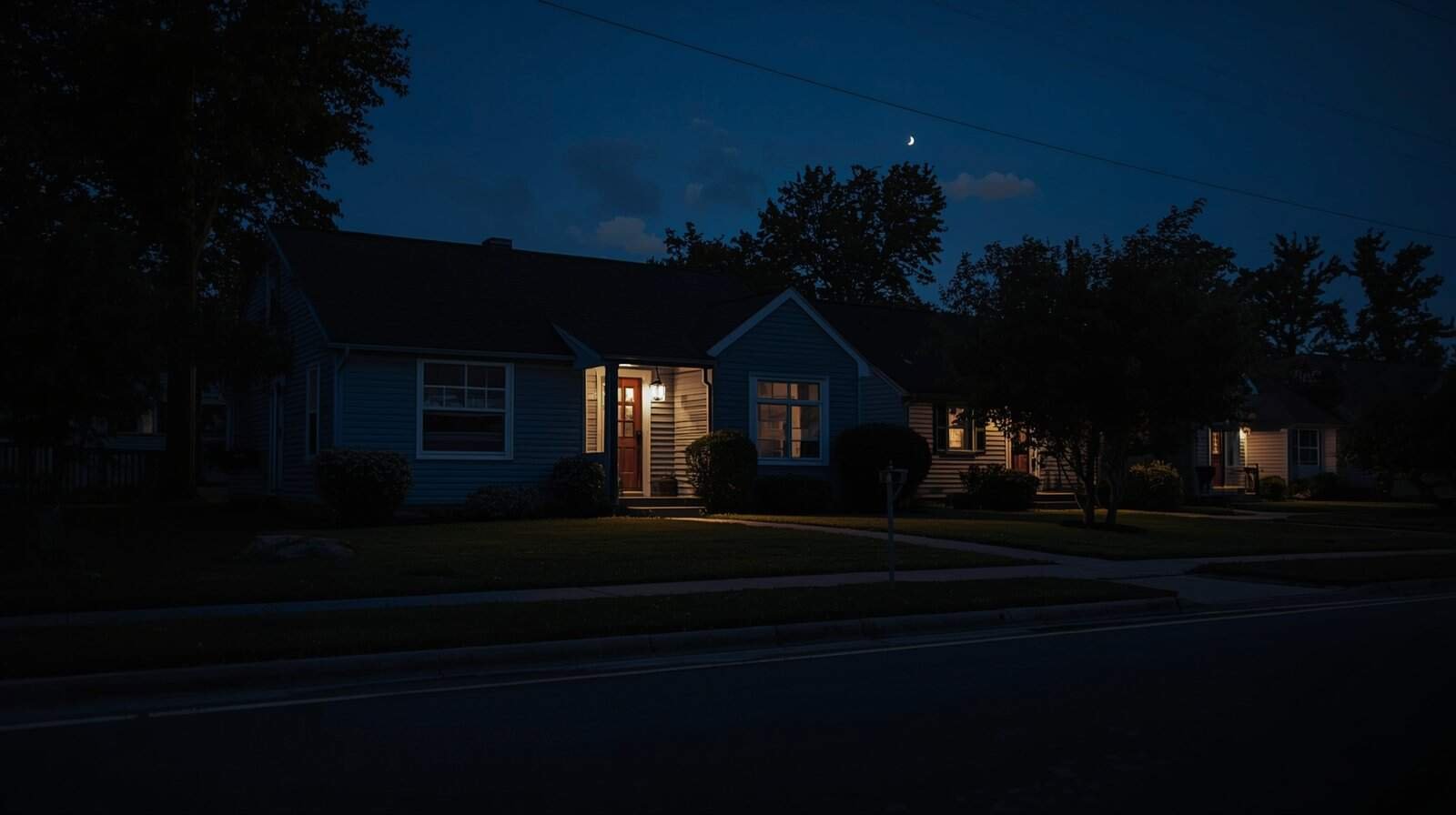
It can be confusing—and concerning—when your home loses power but nearby houses appear unaffected. While this situation often points to a localized issue, it does not automatically mean there is a dangerous electrical failure inside your home.
Understanding why this happens helps you perform safe checks, avoid unnecessary risks, and recognize when the issue belongs to the utility company rather than your electrical system.
Why Neighbors May Have Power When You Don’t
Electrical distribution systems are segmented by design. Even homes located next door to each other may be served by different transformers, service lines, or utility fuses.
This means a fault affecting your home can occur without impacting nearby houses. In many cases, the issue is limited to your service connection, main protection device, or a small section of utility equipment upstream.
If your entire home is dark but neighbors have power, the problem is usually either:
(1) Your main breaker or panel, or
(2) The service line or utility equipment serving only your home.
Common Causes of a Single-Home Power Outage
Tripped Main Breaker
A main breaker can trip due to overload, short circuit, or instability during restoration. When this happens, the entire home loses power even though the utility supply is still present.
Main breakers sometimes trip without dramatic noise, making them easy to overlook.
Service Line or Meter Issue
Damage to the service line, weatherhead, or meter base can interrupt power to one property. High winds, falling branches, ice buildup, or loose connections are common causes.
These components are typically utility-owned and must not be handled by homeowners.
Utility Fuse or Transformer Problem
Some utility protection devices serve only one or a small cluster of homes. A blown fuse upstream can cut power to your home while leaving neighbors unaffected.
In these cases, restoration requires utility involvement.
Safe Checks You Can Perform
- Inspect your main breaker panel for a clearly tripped main breaker
- Reset the main breaker once if it appears tripped
- Confirm whether absolutely no circuits are working
- Visually scan around the meter for obvious damage (without touching)
If the main breaker is firmly ON and the home is completely dark, the issue is likely upstream of your panel.
What Not to Do
- Do not open the meter base
- Do not touch service wires or weatherhead connections
- Do not repeatedly reset a breaker that trips again
- Do not assume the issue will “self-correct” if warning signs are present
If you notice burning smells, sparking, buzzing from the panel or meter area, visible wire damage, or partial/unstable power, stop troubleshooting and contact a licensed electrician or your utility provider immediately.
How This Differs From Partial Power
If only part of your home has power—while other rooms are dark—you may be dealing with a split-phase imbalance instead of a total outage. That scenario is covered in Half the House Has Power.
If breakers refuse to stay on when you reset them, see Breaker Won’t Reset for safe boundaries.
When to Contact the Utility Company
Call your utility provider if:
- The entire home is dark
- The main breaker is ON
- No circuits restore power
- Neighbors clearly have service
If you are unsure whether escalation is appropriate, review When to Call an Electrician After an Outage.
For a visual overview of related post-outage power patterns, see the Partial Power Safety Flowchart.
Conclusion
When your home loses power but neighbors still have electricity, the cause is often localized and manageable. Differences in service connections and protection devices frequently explain the mismatch.
Perform only safe surface checks, avoid repeated resets, and escalate promptly if power does not return. Identifying whether the issue is inside your panel or upstream at the service connection helps ensure the right professional is contacted quickly.