


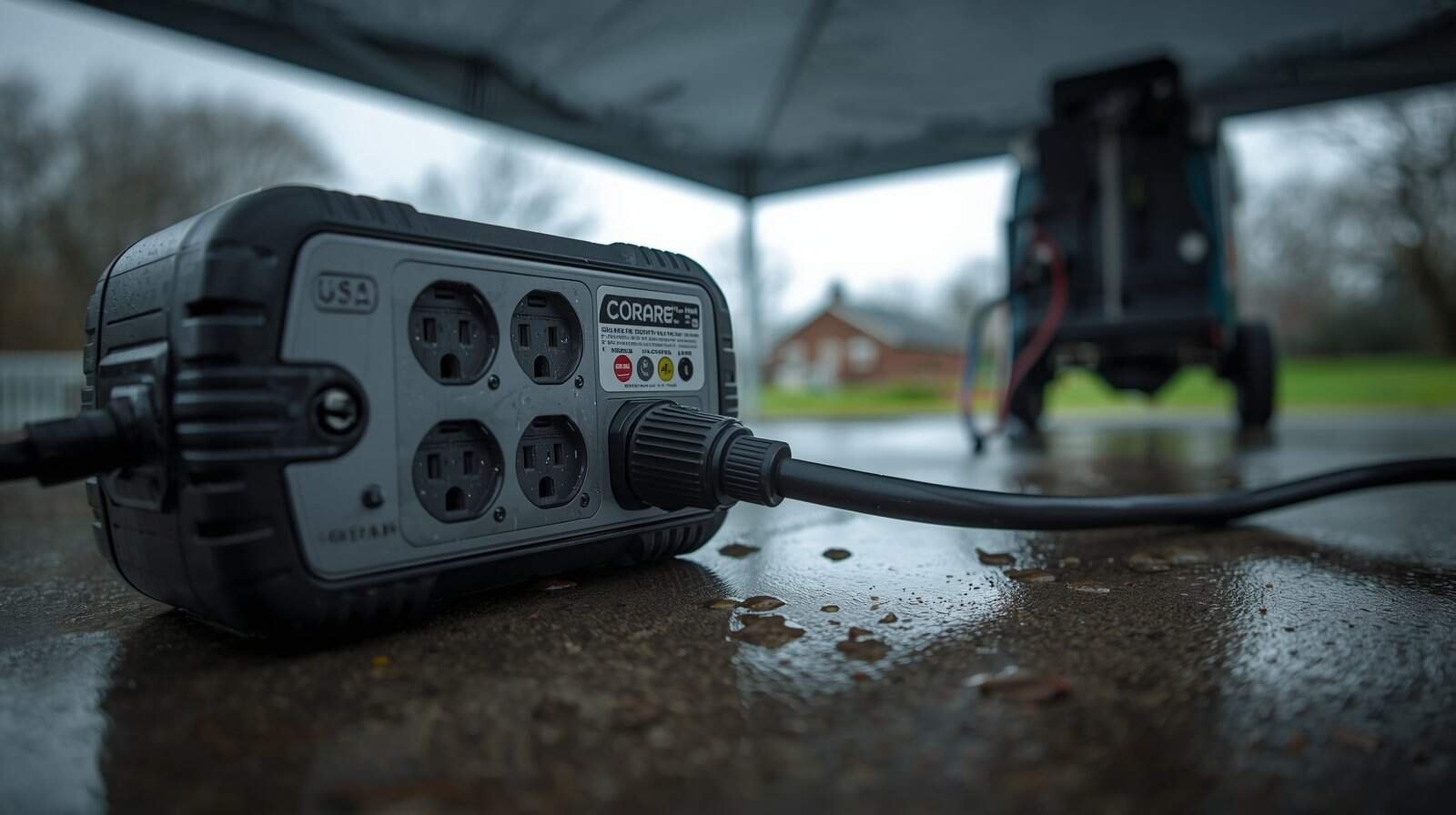
Short answer: Yes, you can plug a surge protector into a generator—but you need to understand what it actually protects against. A surge protector can help with brief voltage spikes, but it cannot “clean up” unstable generator power, fix low voltage, or make an overloaded setup safe.
Surge protectors are often marketed as a simple solution for protecting electronics. During outages, it’s natural to want an extra layer of protection for routers, TVs, computers, and chargers. The problem is that many generator-related electronics issues are not “surge” problems. They’re power quality problems—voltage sag, frequency drift, and unstable output under load.
This guide explains when surge protectors help, when they don’t, and how to avoid the common setups that create heat, shock risk, and a false sense of safety.
What a Surge Protector Actually Does
A surge protector is designed to reduce the impact of short, high-voltage spikes. Those spikes can happen when loads switch on/off, when a generator is started or stopped, or when utility power returns and devices reconnect quickly.
Most common surge protectors do this by diverting excess voltage away from your device for a brief moment. That can reduce damage risk from a sudden spike, but it doesn’t mean the electricity becomes “clean.”
For the broader plain-English foundation on generator power stability (voltage and frequency), start with: Generator Power Quality Explained: Voltage, Frequency, and Why Electronics Get Damaged.
What a Surge Protector Cannot Do on Generator Power
This is where people get misled. Many generator problems that harm electronics are caused by low voltage, rapid fluctuations, or frequency instability. A surge protector does not correct these conditions.
In practical terms, that means a surge protector cannot reliably prevent:
- Brownouts (voltage dropping under load)
- Repeated resets and “cycling” behavior in electronics
- Motors struggling to start due to voltage sag
- Overheating at plug ends caused by resistance in cords and connections
If you want the “why electronics get damaged over time” explanation, this companion article goes deeper into the mechanisms: Why Generator Power Problems Can Damage Electronics (And How to Prevent It).
When a Surge Protector Helps During an Outage
Using a surge protector can be reasonable when you are powering low-draw, sensitive electronics and your generator setup is stable. The most common helpful scenarios include:
- Protecting a router/modem, small TV, laptop chargers, and similar light loads
- Reducing risk from brief spikes when devices reconnect
- Adding an extra layer of protection during switching events (start/stop)
Surge protection is also relevant when utility power is coming back online and electronics may see rapid reconnection events. That risk is covered here: Surge After Power Restoration: What to Check and How to Protect Your Home.
Common Unsafe Setups That Create More Risk
A surge protector can’t make an unsafe generator setup safe. These are the most common mistakes that turn “protection” into added risk:
Daisy-chaining power strips or surge protectors
Stacking strips increases resistance and heat at connection points. It also makes it easier to overload a cord without realizing it.
Using indoor-only strips outdoors
Many surge protectors are not built for wet conditions. Moisture at plug connections increases shock risk and can create heat from poor contact.
Plugging high-draw appliances into a strip
Space heaters, microwaves, air conditioners, and other high-load devices should not be run through typical power strips. This is a common path to overheating.
Using a surge protector to “fix” unstable power
If lights dim, electronics reset, or devices act erratically, the issue is usually load/cord/power quality—not a missing surge protector.
The Safer Alternative for Sensitive Electronics: A UPS (In the Right Role)
If your goal is not just spike protection but smoother power behavior for sensitive devices, a UPS may be a better fit in certain setups—especially for routers and computers. But UPS use has its own mistakes and limits on generator power.
This dedicated guide explains when a UPS helps, when it doesn’t, and how to avoid the most common pitfalls: UPS on Generator Power: When It Helps, When It Doesn’t, and Common Mistakes.
When to Stop Using Generator Power for Electronics
Regardless of what you plug in, the safest decision boundary is the behavior you observe. Stop using generator power for sensitive electronics if you see:
- Repeated resets or devices cycling on/off
- Noticeable dimming/brightening with normal load changes
- Buzzing sounds or hot plug ends
- Electronics that refuse to charge or behave erratically
Conclusion: Surge Protectors Help With Spikes, Not Bad Power Quality
It can be safe to plug a surge protector into a generator when you’re powering light electronics and your generator output is stable. But surge protectors are not magic filters. They won’t correct low voltage, frequency drift, overload conditions, or wet connection problems.
The safest approach is to treat surge protection as a bonus layer—not a substitute for good generator habits: stable load, safe cords, and clear stop points when power behavior becomes erratic.