


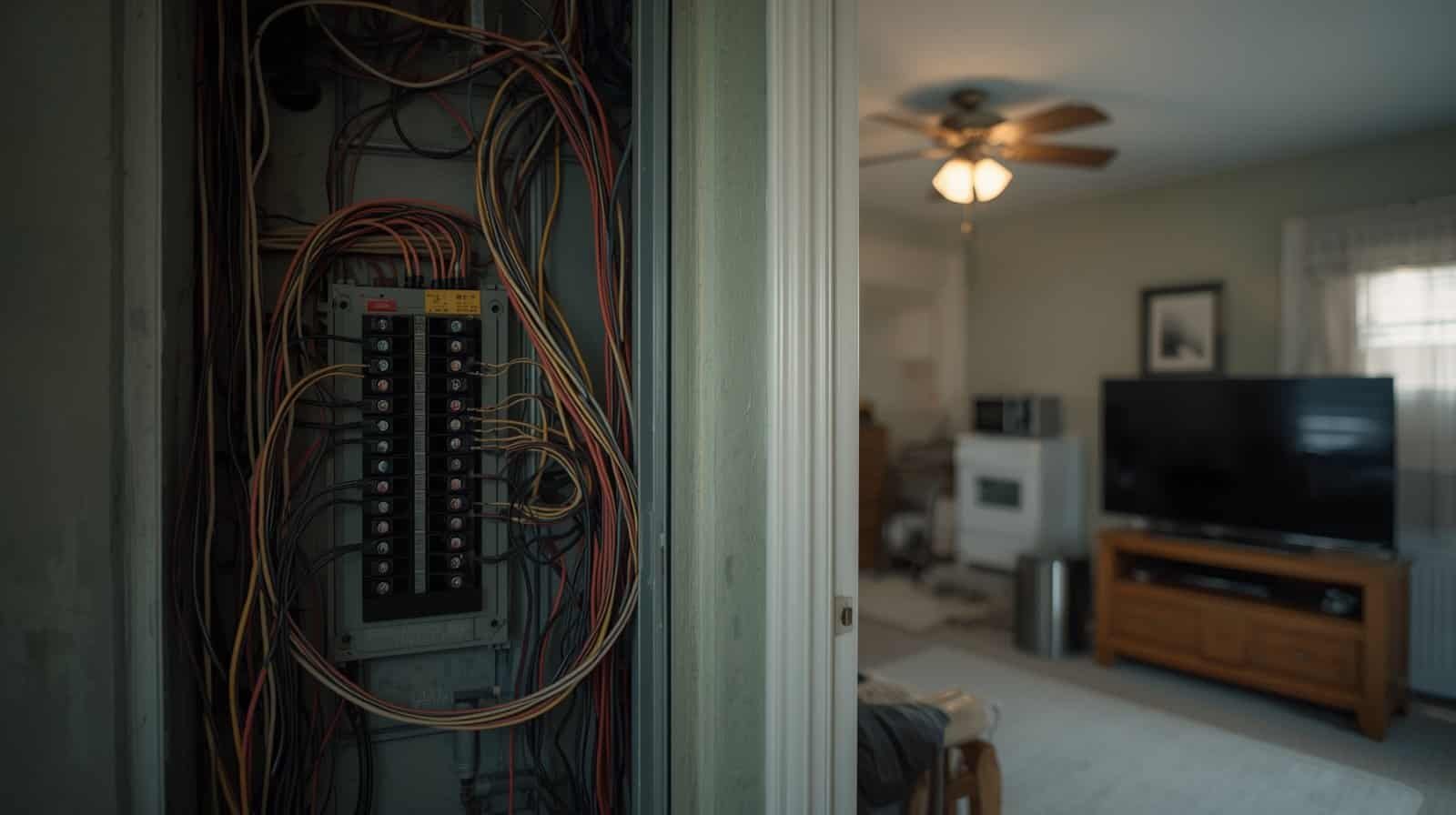
Many homes built decades ago still rely on electrical circuits designed for a very different way of living. At the time those systems were installed, households used fewer appliances, fewer high-wattage devices, and far less equipment that ran continuously. Modern electrical use has quietly changed those assumptions, placing steady pressure on older circuits that were never designed for today’s demand.
This mismatch rarely causes immediate failure. Instead, it creates long-term stress that builds slowly inside wiring, connections, and breakers. Understanding why this happens helps homeowners recognize early warning signs and avoid unnecessary safety risks.
How Household Electrical Demand Has Changed Over Time
When many older homes were wired, electricity supported lighting, refrigeration, and a limited number of plug-in devices. Power use was intermittent, and circuits had time to cool between periods of demand. Electrical layouts reflected that simpler pattern of use.
Today’s homes operate very differently. Multiple rooms contain electronics that draw power throughout the day, from routers and computers to entertainment systems and chargers. Even when individual devices seem modest, their combined demand can exceed what older circuits were built to handle.
This is why “nothing is wrong” can still be an unsafe conclusion. The system may continue working, but it may be working closer to its comfort limit than it was ever meant to.
Why Older Circuits Were Designed for Lighter Loads
Older residential circuits were built around predictable and limited usage. Fewer outlets were installed per circuit, and fewer high-demand appliances were expected to run at the same time. Safety margins existed, but they were based on the realities of that era.
As household technology evolved, those design assumptions slowly became outdated. Circuits that once handled brief, low-demand loads are now expected to support longer and heavier usage. The wiring may still function, but it can end up operating closer to its maximum practical capacity.
This isn’t about blame or “bad wiring.” It’s about a system that was designed for one lifestyle now being asked to support another.
Load Stacking and Shared Circuits
Load stacking occurs when multiple devices draw power from the same circuit at the same time. In older homes, it is common for several rooms or outlet groups to share one circuit, even if that is not obvious to the homeowner.
If you’ve ever wondered why a kitchen appliance can make lights in another room dip, the layout itself may be the reason. This is especially common in older homes where circuits were grouped broadly and outlet counts were lower. For a clear explanation of how that happens, see why multiple rooms can share one circuit (and why it matters for safety).
Individually, devices can seem harmless. Together, they can push a circuit into a repeated stress pattern that shows up as heat, nuisance tripping, or “weird” performance under certain routines.
Continuous Power Use Versus Occasional Demand
Older appliances typically cycled on and off, allowing circuits to cool between periods of use. Modern electronics often draw power continuously, even when they appear idle. Routers, streaming devices, chargers, smart speakers, and standby power supplies can create a steady baseline load throughout the day.
That baseline matters because it reduces the circuit’s cooling time. When a high-wattage appliance turns on, the circuit may already be operating warm. Over time, that “always somewhat loaded” condition can shrink the safety margin older systems rely on.
This is one reason older homes can feel fine most of the time, then suddenly feel strained when normal routines stack up.
How Heat and Wear Build Gradually
Electrical current naturally produces heat, but sustained or concentrated heat is a warning sign. In older systems, insulation materials, device terminals, and connection points may already be decades old, making them more sensitive to long-term stress.
As heat builds, materials expand and contract, which can loosen connections and increase resistance. Higher resistance creates even more heat, allowing damage to accumulate slowly and quietly. If you want the “why it happens” story in plain English, the next gap article is reserved here: why electrical heat damage builds over months, not moments.
Even when nothing trips, this is how a system can drift from “aging but OK” into “aging and unsafe.”
Why Breakers Don’t Always Protect You From Slow Heat Damage
Homeowners often assume a breaker will trip the moment something becomes dangerous. In reality, breakers respond primarily to current (amperage), not to localized heat at a single weak point. A connection can run hot while the total circuit current remains under the breaker’s trip threshold.
That’s why you can have a warm outlet plate, a faint “electrical smell,” or intermittent dimming without ever seeing a breaker trip. If you want a deeper explanation of the mechanism, this related article is helpful: how electrical resistance creates heat long before breakers trip.
The practical takeaway is simple: “The breaker didn’t trip” is not proof that a circuit is operating safely.
Early Warning Signs Homeowners Should Take Seriously
When older circuits are being pushed too hard, the early clues often show up during ordinary routines. You might notice lights dim when a microwave runs, a plug that feels warmer than usual, or a breaker that trips more often when multiple devices are on.
Some homeowners also notice buzzing, crackling, or a faint burning odor near a device or outlet. These are not “normal old-house quirks.” They are signals that heat may be building where it shouldn’t.
When patterns repeat under similar loads, that repeatability is information. It suggests the circuit is being asked to do more than it can comfortably handle.
How Panel Capacity Limits Can Make the Problem Worse
Even when individual branch circuits are the immediate issue, the broader system can contribute. Homes with limited panel capacity, crowded breaker spaces, or older equipment can be less forgiving when modern loads increase. When the whole system is operating near its practical ceiling, small problems can show up more often and escalate faster.
The next gap article in this sequence is reserved here: how panel capacity limits affect everyday electrical safety.
If that URL is the one you plan to publish under, keep it consistent across these cross-links and you’ll avoid the “none of the links work” problem going forward.
When Professional Evaluation Is the Right Call
Homeowners should not attempt to diagnose or repair electrical circuits themselves. Electrical systems involve hidden risks that require proper training and equipment, and the most dangerous problems are often inside boxes or walls where you can’t see them.
If warning signs persist or worsen, a licensed electrician can assess load distribution, circuit capacity, and connection health. If you want a simple checklist of escalation signs and how to decide quickly, link out here: when to call an electrician after an outage.
Understanding the limits of older circuits helps you respond early, before routine stress becomes heat damage or a true safety hazard.