


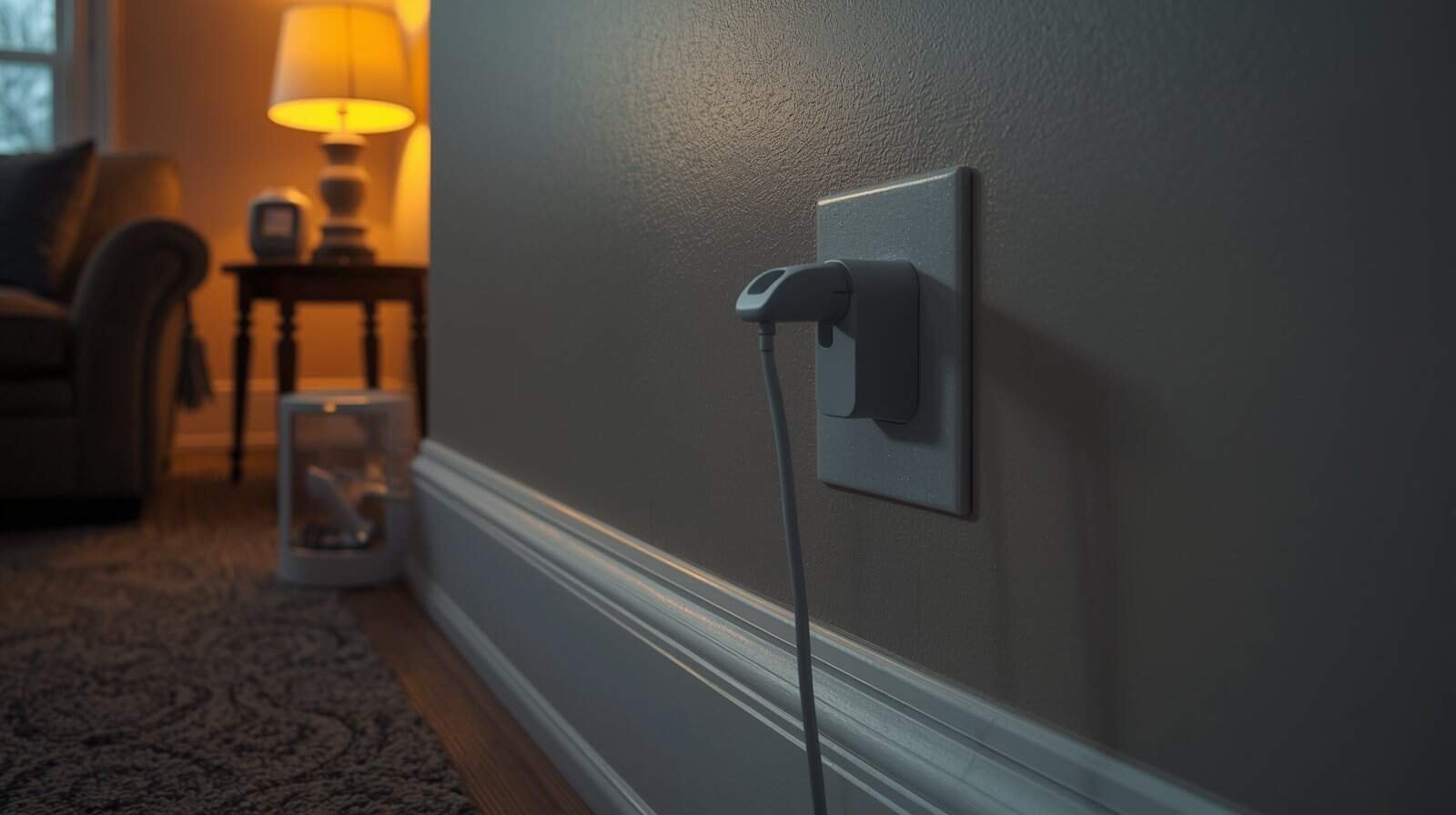
Winter is not just colder. It is electrically heavier. As temperatures drop, electrical demand rises across nearly every room in the home. Space heaters run longer, lighting stays on earlier, appliances cycle more frequently, and outlets carry sustained current for hours at a time. In many homes, especially older ones, this seasonal stacking quietly increases fire risk.
Electrical fires rarely begin with a dramatic spark. More often, they develop from repeated heat buildup at stressed connection points. Winter creates the perfect conditions for that stress to accelerate. Understanding the patterns behind winter electrical fire risk allows homeowners to recognize warning signs early and act before damage escalates.
Pattern 1: Sustained High-Draw Heating Devices
Portable electric heaters are among the highest continuous loads used in residential settings. Unlike short-use appliances, heaters often operate for hours without interruption. That sustained current increases conductor temperature not just at the panel, but at every connection point along the circuit.
In homes with aging receptacles or shared circuits, this can expose weaknesses that remained dormant for years. If you have already experienced repeated breaker trips, dimming lights, or warm outlets during heater use, that pattern matters. For a deeper look at one of the most common winter warning signs, see Space Heater Keeps Tripping the Breaker: What It Means and Safer Next Steps.
The heater itself is not always the root problem. Often, it is the sustained load revealing stressed wiring, worn receptacles, or circuits that were never intended for continuous heating demand.
Pattern 2: Load Stacking in Bedrooms and Living Areas
Bedrooms frequently become winter load hubs. Heaters, heated blankets, phone chargers, lamps, and sometimes humidifiers all draw from the same limited outlet count. Older homes commonly have shared bedroom circuits, which means multiple rooms may rely on a single breaker.
This stacking effect increases heat at plug blades and receptacle contacts. Even when the total wattage appears reasonable, small resistance increases at connection points can compound over time. If you want a broader understanding of how electrical load translates into fire risk gradually rather than instantly, review How Electrical Load Problems Turn Into Fire Risks Over Time.
Winter risk builds through repetition. The same stressed outlet used nightly for months experiences far more thermal cycling than one used occasionally.
Pattern 3: Aging Infrastructure Meets Modern Demand
Many homes built decades ago were not designed for today’s density of devices. Even if the main panel has been updated, branch circuits inside walls may still reflect older load assumptions. Winter intensifies that mismatch because heating devices dramatically increase sustained current draw.
This is especially true where aluminum wiring, aging insulation, or older receptacles are present. For context on how aging infrastructure compounds seasonal stress, see Why Electrical Problems Are More Common in Older Homes (And Why They’re Easy to Miss).
The risk is not only overload. It is prolonged heating at marginal connections that were already operating close to their safe limits.
Pattern 4: “No Breaker Trip” False Confidence
A common misconception is that if the breaker does not trip, everything must be safe. Breakers respond to defined thresholds, but dangerous heat can accumulate below those limits. Loose connections, degraded contacts, or resistance at plug interfaces may generate localized heat that protection devices do not detect immediately.
This is why winter fire risk often develops without dramatic electrical events. You may not see sparks. You may not smell smoke. Instead, damage progresses slowly until insulation fails or a connection arcs.
To understand why circuits can overheat without obvious breaker activity, review Overloaded Circuits Without Tripped Breakers: Why It Happens and Why It’s Dangerous.
Escalation Thresholds: When Winter Patterns Become Dangerous
Winter electrical stress becomes dangerous when warning signs repeat or intensify. Breakers that trip more frequently, outlets that feel warm during normal use, buzzing sounds from receptacles, or discoloration around plug points are not issues to monitor casually. They indicate elevated risk.
If multiple warning patterns appear at once—such as dimming lights combined with warm outlets and repeated resets—the home’s electrical system may be operating beyond its safe margin. Continuing high-draw heater use in that environment increases fire probability.
The Winter Safety Mindset
Winter electrical fire risk is rarely about one mistake. It is about repeated seasonal stress applied to circuits that may already be aging or shared across multiple rooms. Recognizing patterns—sustained heater use, stacked loads, aging infrastructure, and silent heat buildup—allows homeowners to reduce risk before failure occurs.
Electric heat can be used safely, but it must be treated as a high-impact load. Pay attention to early signals, reduce stacking where possible, and escalate when patterns suggest the system is operating too close to its limits. Winter should bring warmth, not preventable electrical emergencies.