


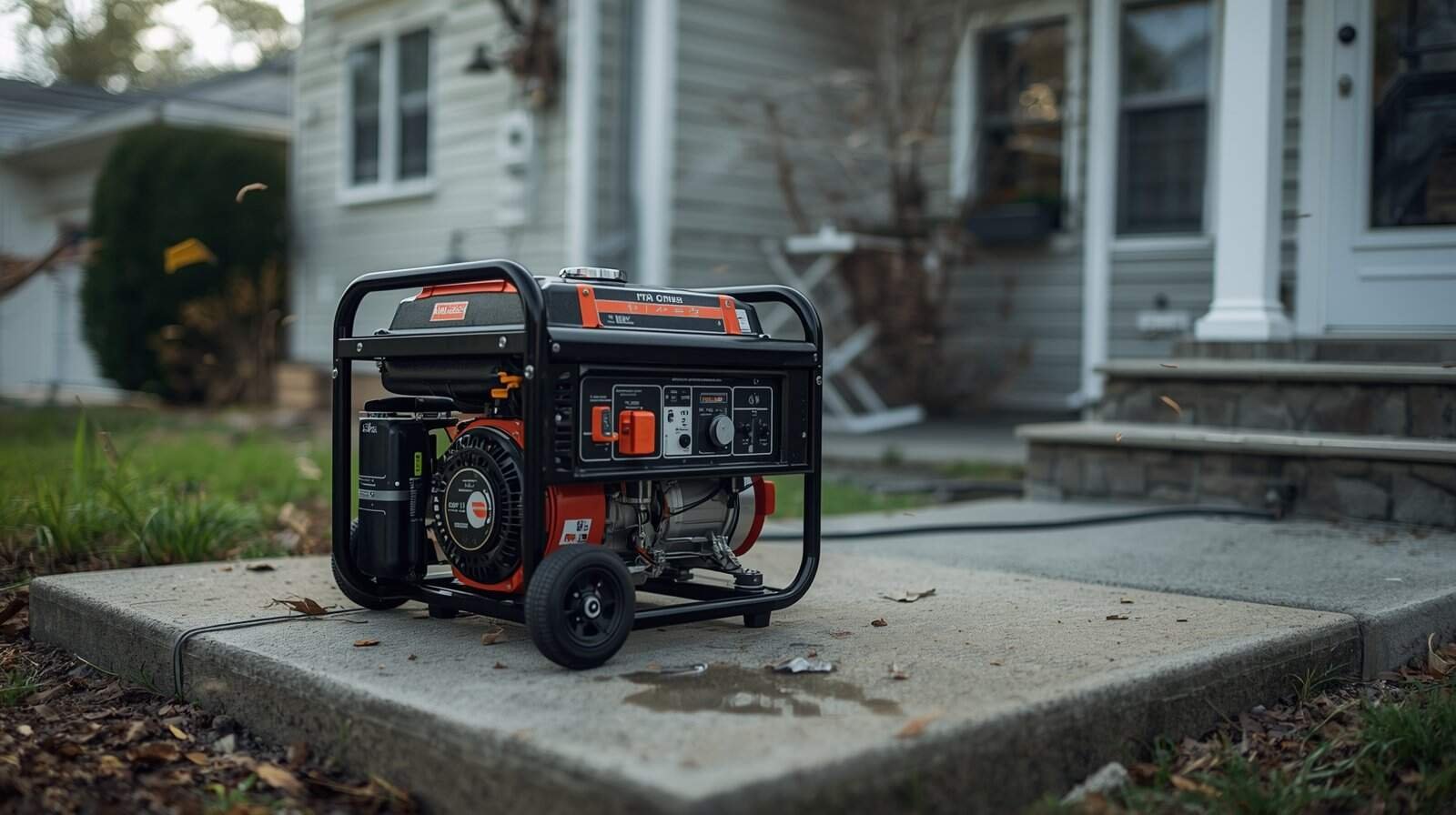
Strong winds often accompany storms that cause power outages. While generators are designed for outdoor use, high-wind conditions introduce risks that go beyond rain or snow. Wind can destabilize equipment, redirect exhaust gases, and create hazards that aren’t obvious during calm weather.
Why High Winds Change Generator Safety
Portable generators are heavy, but they are not immune to tipping. Uneven ground, vibration, and sudden gusts can shift a generator’s position, especially when fuel tanks are partially full or cords create tension.
Wind also affects how exhaust gases move. Instead of dispersing safely, exhaust can be pushed back toward the home, increasing the risk of carbon monoxide entering living spaces.
Tip-Over Risks and Unstable Surfaces
Generators placed on soil, grass, or sloped surfaces are more vulnerable during windy conditions. Soft ground can shift, and vibration can slowly walk a generator out of position.
Generators should always be placed on a firm, level surface such as concrete or compacted gravel. Avoid raised platforms that can act as sails or amplify movement.
Exhaust Drift and Carbon Monoxide Hazards
Wind direction plays a major role in exhaust safety. Gusts can carry exhaust toward windows, doors, or vents—even when the generator meets recommended distance guidelines.
This is why safe placement involves both distance and orientation. For baseline placement rules, review how far a generator should be from the house and ensure exhaust faces away from occupied structures. For a deeper look at how exhaust gases behave and why even brief exposure is dangerous, see generator carbon monoxide safety.
Anchoring and Securing a Generator Safely
While generators should never be permanently anchored during operation, simple steps can reduce movement. Position cords to avoid pulling, keep fuel containers away from airflow, and remove loose debris that could strike the unit.
Do not attempt to strap or tie a running generator to fixed objects. Restricting movement improperly can increase vibration damage or interfere with ventilation.
Electrical Connections During Windy Conditions
High winds can tug on extension cords and inlet connections. Strain on electrical connections increases wear and may expose conductors.
For safer electrical connections, review generator inlet boxes and understand why backfeeding is dangerous during unstable conditions.
When High Winds Make Generator Use Unsafe
There are times when running a generator during high winds becomes unsafe. Flying debris, shifting ground, or exhaust drifting toward the home should prompt shutdown until conditions improve.
In severe wind events, reducing electrical load or waiting for calmer conditions may be safer than continuing generator operation.
Conclusion
High winds introduce unique generator risks that require careful placement and constant awareness. Stable footing, proper orientation, and attention to exhaust drift are essential for safe operation when storms bring strong winds.