


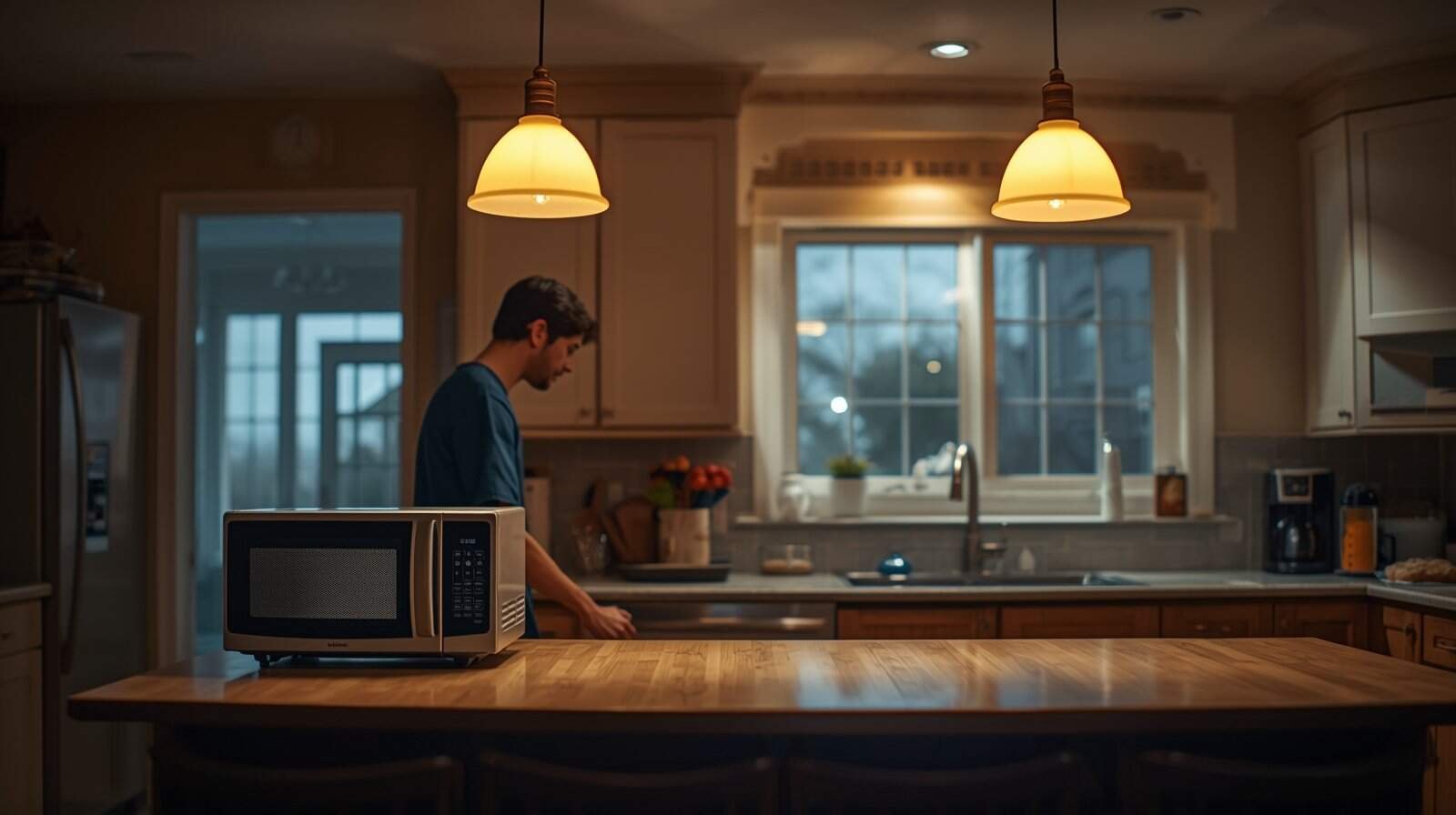
Lights that briefly dim when a refrigerator starts, a microwave kicks on, or an air conditioner cycles can feel like a small mystery. Many homeowners wonder if it’s a sign that something is “wrong” with the wiring, or if it’s simply how homes behave when large appliances draw power.
Most of the time, a quick, subtle dip in brightness is a normal side effect of how electrical loads start up. The goal is to understand what normal looks like, what patterns are more concerning, and what you can do safely without turning your home into a DIY electrical experiment.
Important distinction: If lights only started dimming after a power outage or immediately after power was restored, the cause — and the urgency — can be different. Post-outage dimming is often linked to utility conditions or stressed electrical components.
For outage-specific causes and safety guidance, see: Lights Dim When Appliances Turn On After an Outage: Causes, Risks, and Safe Next Steps.
What’s Actually Happening When Lights Dim
Many appliances don’t draw a steady amount of electricity the moment they turn on. Motors and compressors often need a brief “startup surge” to begin moving. That surge lasts a fraction of a second, but it can temporarily pull more current through the circuit.
When that surge happens, the voltage available to other devices on nearby circuits can dip slightly. Lights are very good at “revealing” small voltage changes because your eyes notice brightness shifts faster than you notice anything else. In other words, the lights are not always the problem—they’re often the indicator.
Appliances Most Likely to Cause Brief Dimming
Dimming is most common with devices that contain motors, compressors, or high-watt heating elements. These loads ask for a lot of power at the moment they start, even if they run normally once they’re up to speed.
Common culprits include refrigerators and freezers, window and central air conditioners, dehumidifiers, well pumps and sump pumps, microwaves, and some power tools. If you have a device that cycles on and off throughout the day, you may notice the dimming pattern repeatedly even though nothing is “failing.”
When Brief Dimming Is Usually Normal
A quick dip that lasts less than a second and then immediately returns to normal brightness is often within the range of normal behavior, especially in older homes or homes with long circuit runs. Many households notice it more in the evening when lights are the primary visible load and the home is quieter.
It can also be more noticeable when multiple things are running at once. For example, if the microwave is already running and the refrigerator compressor starts, the combined load can create a more visible dip than either appliance would create alone.
Patterns That Suggest a Deeper Electrical Issue
The more important question is not “did the lights dim?” but “what does the dimming pattern look like over time?” A warning-sign pattern tends to feel different than normal startup surge behavior.
If lights dim for several seconds, repeatedly pulse, or get worse over weeks or months, that can point to resistance somewhere in the system. Resistance can come from aging connections, loose terminations, or a circuit that is running too close to its comfortable capacity. These problems may not trip a breaker right away, which is why the pattern matters.
Why Loose Connections Can Make Dimming Worse
When a connection is tight and healthy, electricity flows smoothly. When a connection is loose or degraded, it behaves more like a bottleneck. As current demand rises—like when an appliance starts—that bottleneck can cause a larger voltage drop, which shows up as more noticeable dimming.
Loose connections can be difficult for homeowners to detect because they may produce intermittent symptoms that come and go. If your dimming is accompanied by occasional buzzing, warmth, or “sometimes it happens, sometimes it doesn’t” behavior, it’s worth understanding why loose connections are taken seriously: Loose Electrical Connections in the Home: Why They’re Dangerous and Hard to Detect.
Overloaded Circuits Can Dim Lights Without Tripping Breakers
Some homes can run close to the edge of a circuit’s practical capacity without obvious failure. In that situation, adding one more startup surge can cause a noticeable dip, even though nothing shuts off. That’s especially true on circuits that feed kitchens, laundry areas, or rooms where multiple high-demand devices are used together.
Overload doesn’t always look like an instant breaker trip. Sometimes it looks like repeated dimming, warm plugs, and “everything mostly works, but it feels strained.” If you want the plain-English version of how overload can exist quietly, this guide connects the dots: Overloaded Circuits Without Tripped Breakers: Why It Happens and Why It’s Dangerous.
Why Older Homes Notice This More Often
Older homes were not designed for today’s electrical lifestyle. Even if your wiring is code-compliant for its era, modern households tend to run more devices at the same time—multiple chargers, kitchen appliances, space heaters, office gear, and entertainment equipment all drawing power together.
In addition, older wiring methods and aging insulation can reduce the system’s margin for heavy, repeated startup surges. If your home is older and you’re seeing more dimming than you used to, it may be helpful to understand the common wiring-era risks that make modern loads feel “heavier” than they should: Older Home Wiring Risks: Knob-and-Tube, Aluminum, and Aging Insulation.
Safe Observations You Can Make Without Opening Anything
You don’t need to touch wiring to gather useful information. Start by noticing whether the dimming is tied to one appliance, one room, or one predictable pattern. For example, “lights dim when the refrigerator starts” is a different scenario than “lights dim randomly throughout the house.”
Also notice whether the dimming is localized. If only one room dims, that points toward a specific circuit or branch. If multiple rooms dim at once, you may be dealing with a broader load interaction issue—or a connection problem affecting larger portions of the system. The goal is to observe patterns that help you make a safe decision, not to force the system into failure by repeated testing.
When This Becomes Home-Safety Relevant
Most brief dimming is not an emergency. But persistent, worsening, or widespread dimming can be an early sign that something is heating up or degrading in the background. That’s why it belongs in the Home Safety lane: it’s an early-warning behavior that can precede more obvious symptoms.
If you’re noticing dimming alongside warmth, odor, buzzing, frequent breaker activity, or a growing sense that the system is “struggling,” treat that as a decision boundary. This capstone lays out the broader escalation signals and why they matter: When Home Electrical Systems Become a Fire Risk: Clear Signs You Shouldn’t Ignore.
Conclusion
Lights that briefly dim when appliances turn on are often the visible side effect of normal startup surges. In many homes, it’s simply how power demand and voltage behave for a moment as motors and compressors begin running.
What matters is the pattern. If dimming becomes longer, stronger, more frequent, or spreads across the home, it can point to loose connections or overloaded circuits—problems that are easier to address early than after they escalate. Calm observation and smart boundaries are the safest way to decide what comes next.