


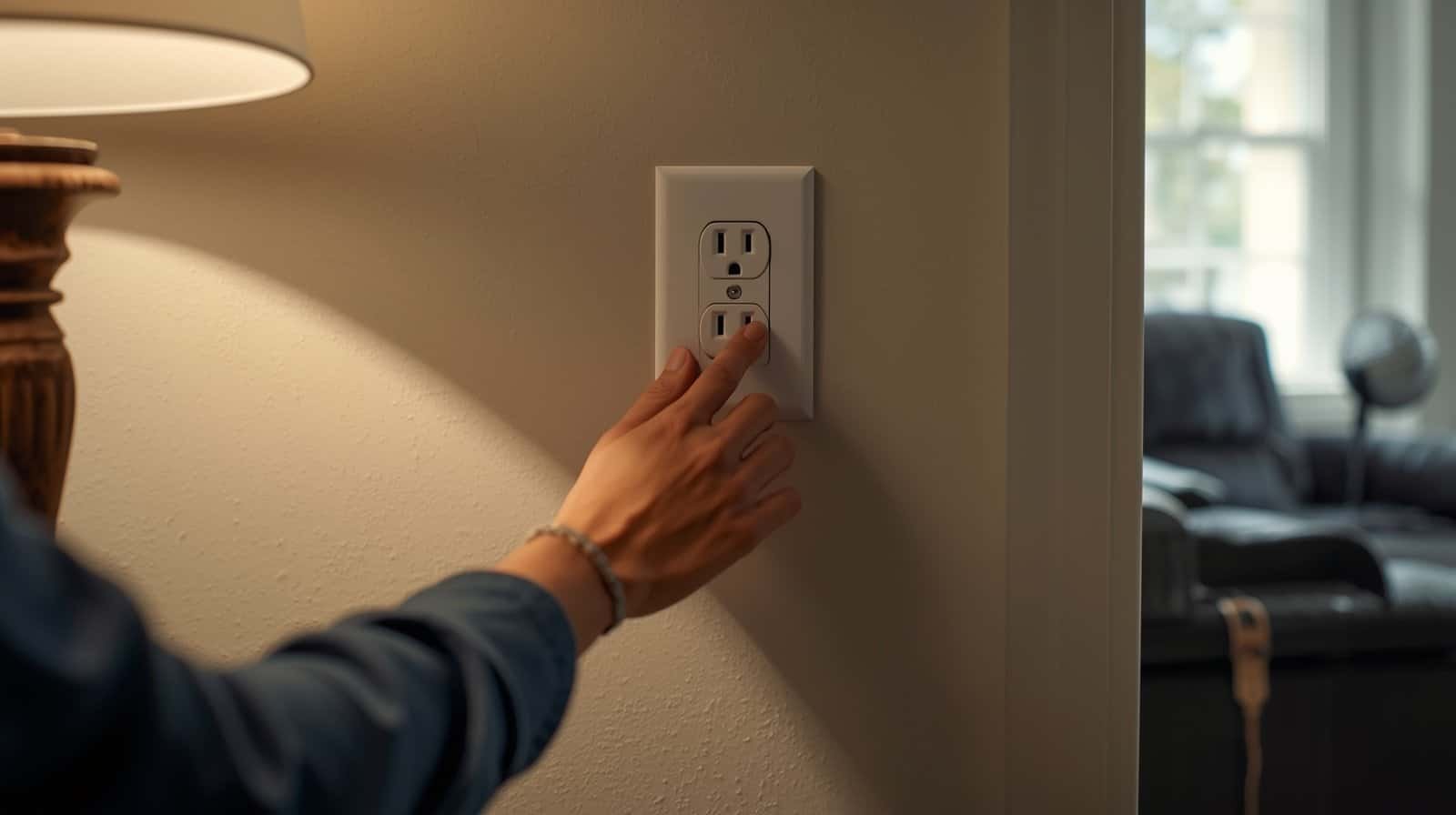
Noticing warmth at an outlet or light switch can stop you in your tracks. Most people expect electrical devices to stay at room temperature, so even a small change can raise a fair question: is this normal, or is something heating up in a way that could become dangerous?
The reassuring truth is that some warmth can be normal in everyday use. The important part is learning how to tell ordinary “working warmth” from warning-sign heat that points to resistance, overload, or a connection problem behind the wall.
Why Electrical Devices Can Feel Warm
Whenever electricity flows through a device, a small amount of energy is lost as heat. That’s normal physics, and it’s why items like phone chargers, dimmer switches, and power adapters can feel slightly warm when they’ve been running for a while.
Outlets and switches are designed to handle normal loads without getting noticeably hot. If you can feel warmth through the wall plate, it usually means either (1) the device is carrying meaningful current for a sustained period, or (2) something is adding extra resistance, which converts more electricity into heat than intended.
Situations Where Mild Warmth Can Be Normal
Some scenarios naturally create a little warmth even when everything is functioning correctly. A common example is a wall switch controlling multiple lights, especially older incandescent or halogen bulbs, where current draw is higher than modern LED lighting.
Another example is an outlet used for a moderate continuous load, like a lamp plus a small fan, or a TV setup running for hours. In these cases, the device may feel slightly warm, but the warmth should remain stable, localized, and never drift toward “hot.”
Warmth That Should Make You Pay Attention
Warning-sign warmth usually has one of three patterns: it gets worse over time, it shows up only when certain devices run, or it appears alongside other clues like buzzing, odor, or discoloration. These patterns matter because they suggest the heat is coming from stress—not just normal electrical work.
A helpful way to think about it is this: normal warmth tends to be predictable and steady. Problem warmth tends to be “conditional” (it shows up during certain loads) or progressive (it’s becoming more noticeable month by month).
Resistance Heat: The Most Common Hidden Reason
Electrical resistance is like a bottleneck in the flow of electricity. When resistance is higher than it should be, more energy is converted to heat at that point. In a home, the most common cause of abnormal resistance is a connection that isn’t as tight or healthy as it should be.
Loose or degraded connections can be tricky because they may still “work” for a long time while quietly generating heat. If you want the plain-English explanation of why electricians take this seriously, read: Loose Electrical Connections in the Home: Why They’re Dangerous and Hard to Detect.
Overload Heat: When a Circuit Runs Near Its Practical Limit
Some outlets and switches get warm because the circuit is doing a lot of work—sometimes more than people realize. Space heaters, window AC units, kitchen appliances, and workshops can push a circuit near its comfortable capacity, especially when multiple devices run at the same time.
Overload doesn’t always announce itself with a dramatic breaker trip. In many homes it shows up as subtle strain: repeated dimming, warm plates, and plugs that feel “too warm for comfort.” This guide explains how that can happen: Overloaded Circuits Without Tripped Breakers: Why It Happens and Why It’s Dangerous.
How to Think About “Warm” vs “Hot” Safely
You don’t need tools to make smart decisions here. The safest approach is to treat heat as a spectrum and focus on decision boundaries. Mild warmth that is stable and predictable is one thing. Heat that feels uncomfortable, spreads beyond the plate, or shows up with other symptoms should move you into “stop and reassess” mode.
If you notice warmth along with discoloration on the wall plate, that’s not a normal-use quirk. Discoloration is evidence that heat has been present long enough to change materials, and it deserves a closer look: Scorch Marks or Discoloration Around Outlets: What They Mean.
What You Can Do Without Opening Anything
Keep your actions observational and low-risk. First, note what was running when you noticed the warmth. Was it a space heater, a hair dryer, a microwave, or a long-running appliance? Next, see if the warmth reduces when that specific load is not in use. This helps you distinguish “load-driven warmth” from “always warm” conditions.
If the warmth is localized to one outlet or one switch and it’s becoming a recurring pattern, that’s useful information for a professional. The goal isn’t to keep testing until something fails—it’s to gather enough pattern clarity to choose the safest next step.
Why This Matters for Long-Term Home Safety
One reason electrical warmth deserves respect is that heat can be an early warning sign. Small amounts of abnormal heat, repeated over months or years, can degrade insulation and materials inside the wall. That’s how “it worked fine for years” stories sometimes end with costly repairs.
If you want the broader view of how small warning signs fit into long-term risk, this capstone puts everything in context: When Home Electrical Systems Become a Fire Risk: Clear Signs You Shouldn’t Ignore.
Conclusion
An outlet or switch that feels slightly warm during normal use isn’t automatically dangerous. In many homes, mild warmth can be a normal side effect of steady electrical load—especially in circuits that do a lot of daily work.
What matters is the pattern. Heat that is uncomfortable, worsening, or paired with odor, buzzing, or discoloration should be treated as a clear decision boundary. When in doubt, it’s safer to step back and get a qualified set of eyes on it than to normalize heat you can feel through the wall.