


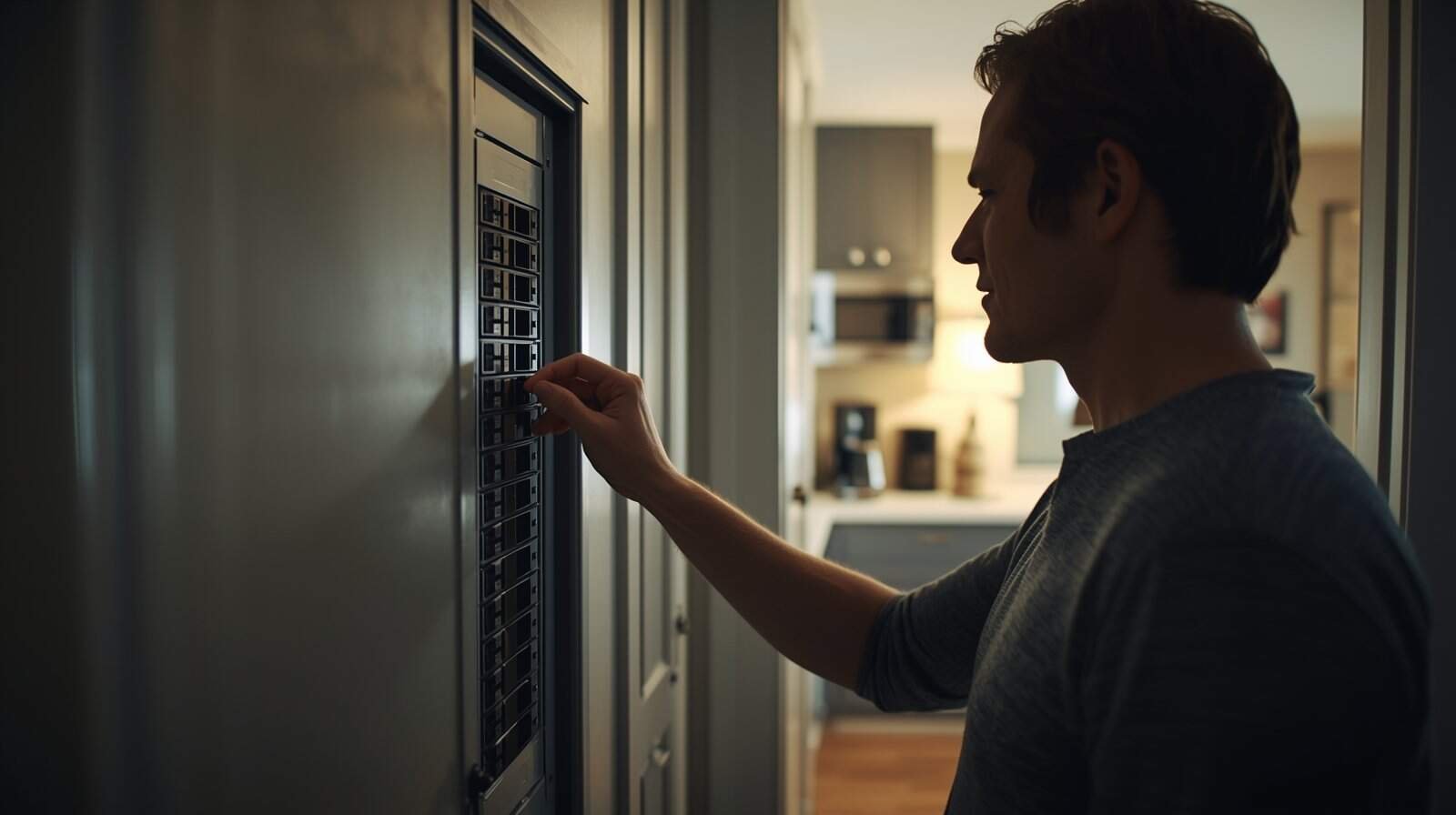
“Load management” sounds technical, but the idea is simple: you’re deciding what runs, when it runs, and how much runs at once so your home’s electrical system stays within safe limits.
What “Electrical Load” Means in Plain English
Electrical load is simply the amount of electricity your home is asking the system to deliver at a given moment. The more devices you run at once—especially devices that make heat or spin motors—the higher the load.
Most homeowners run into load issues in a familiar way: something trips. But not all overload patterns trip immediately, and not all strain looks dramatic. Some problems show up as warm outlets, dimming lights, or equipment that behaves unpredictably.
If you want a deeper, plain‑English explanation of how loads behave (and why issues don’t always trip breakers right away), read How Home Electrical Loads Really Work (And Why Problems Don’t Always Trip Breakers).
Why Modern Homes “Stack” Load Without You Noticing
Modern electrical use is less about one huge appliance and more about many medium‑to‑high draws running together. A kitchen might have a microwave, toaster oven, coffee maker, air fryer, under‑cabinet lighting, refrigerator cycling, plus phone chargers and a laptop—all while the HVAC blower starts.
That stacking effect is why a home can feel fine most of the day and then suddenly trip a breaker at breakfast, dinner, or laundry time. It’s also why some homes experience subtle warning signs like brief dimming when a compressor kicks on or a heater ramps up.
Older circuit layouts can amplify this problem, because a single breaker may feed multiple rooms or multiple “zones” you don’t mentally connect.
Older Circuit Layouts: The Hidden Reason Load Feels Worse
Many homes have circuits that serve more than one room, or a room plus a nearby hallway, closet, or adjacent area. That means you can be adding load from different places without realizing they share the same limit.
This is why a bedroom space heater can trip a breaker that also powers a living room TV setup, or why a kitchen counter device can knock out power to a dining room outlet. It’s not random—it’s shared circuit design.
For a clear explanation of how and why this happens, see Why Multiple Rooms Can Share One Circuit (And Why It Matters for Safety).
Common High‑Load Culprits That Push Circuits to the Edge
Some devices draw a lot of power by design. Others draw more than expected because they start with a surge (motors and compressors) or because they run as heat sources.
High‑load culprits often include:
- Space heaters and portable heaters
- Microwaves, toaster ovens, air fryers, electric kettles
- Hair dryers and styling tools
- Vacuum cleaners (especially larger models)
- Window AC units or dehumidifiers
- Refrigerators/freezers during compressor start
- Power tools and shop vacs in garages
None of these are “bad” devices. The risk comes from running them in combination on a circuit that’s already serving other loads.
Why Older Homes Hit Limits Faster Than Newer Homes
Older homes often have fewer circuits, fewer dedicated appliance circuits, and electrical components that have seen decades of heat cycles, vibration, and oxidation. Even if everything is still “working,” the margin for error is smaller.
That’s why modern usage patterns can stress older wiring in ways homeowners don’t expect. The issue isn’t always one dramatic overload. It can be repeated near‑limit operation—day after day—that gradually increases heat stress at weak points like loose connections.
If you want the bigger safety context behind this shift, read Why Modern Electrical Use Pushes Older Home Circuits to Their Limits.
Load Management That Homeowners Can Do Safely
Good load management is about reducing simultaneous demand and avoiding “stacking” high‑draw devices on the same circuit.
Spread high‑draw devices across time
If your breaker trips around predictable routines (breakfast, dinner, laundry), staggering devices can help. For example, avoid running a space heater while also using a hair dryer in the same part of the home, or avoid running a microwave and toaster oven together on the same counter area.
Reduce simultaneous startup loads
Motors and compressors often draw more power when they start. If you notice dimming when a device cycles, try not to stack multiple starts at the same moment (for example, a vacuum plus a dehumidifier plus a microwave).
Use dedicated outlets when you know they exist
Some homes have dedicated circuits for refrigerators, microwaves, or laundry equipment. If you know an outlet is dedicated, avoid plugging additional high‑draw devices into that same circuit through power strips or extension cords.
Why “Panel Capacity” Still Matters Even When Breakers Aren’t Tripping
Load management isn’t only about individual circuits. It’s also about overall capacity—what your service and panel can safely support when multiple circuits are active.
Homes can run into situations where the system feels strained even without frequent trips: voltage dips under heavy demand, lights that dim when major equipment starts, or multiple circuits that seem “touchy” during high‑use periods.
For the safety perspective on how panel limits affect everyday reliability, see How Panel Capacity Limits Affect Everyday Electrical Safety.
When Load Issues Are a Warning Sign, Not a Convenience Problem
Load management helps when the issue is simply “too much at once.” But some symptoms suggest a problem that needs professional evaluation.
Escalate to a licensed electrician if you notice:
- Outlets or switches that feel warm or hot
- Buzzing, crackling, or popping sounds
- Burning smells or discoloration near outlets, switches, or the panel
- Breakers that won’t reset or trip repeatedly with normal use
- Lights dimming broadly across the home (not just one lamp on one circuit)
Bottom Line
Electrical load management is a homeowner‑friendly way to reduce strain: run fewer high‑draw devices at the same time, avoid stacking loads on shared circuits, and treat repeated trips as signals rather than nuisances.
If the patterns you’re seeing go beyond simple overuse—especially if heat, smell, noise, or visible damage is involved—escalation is the safest choice. A licensed electrician can identify the underlying cause before a minor issue becomes a serious hazard.