


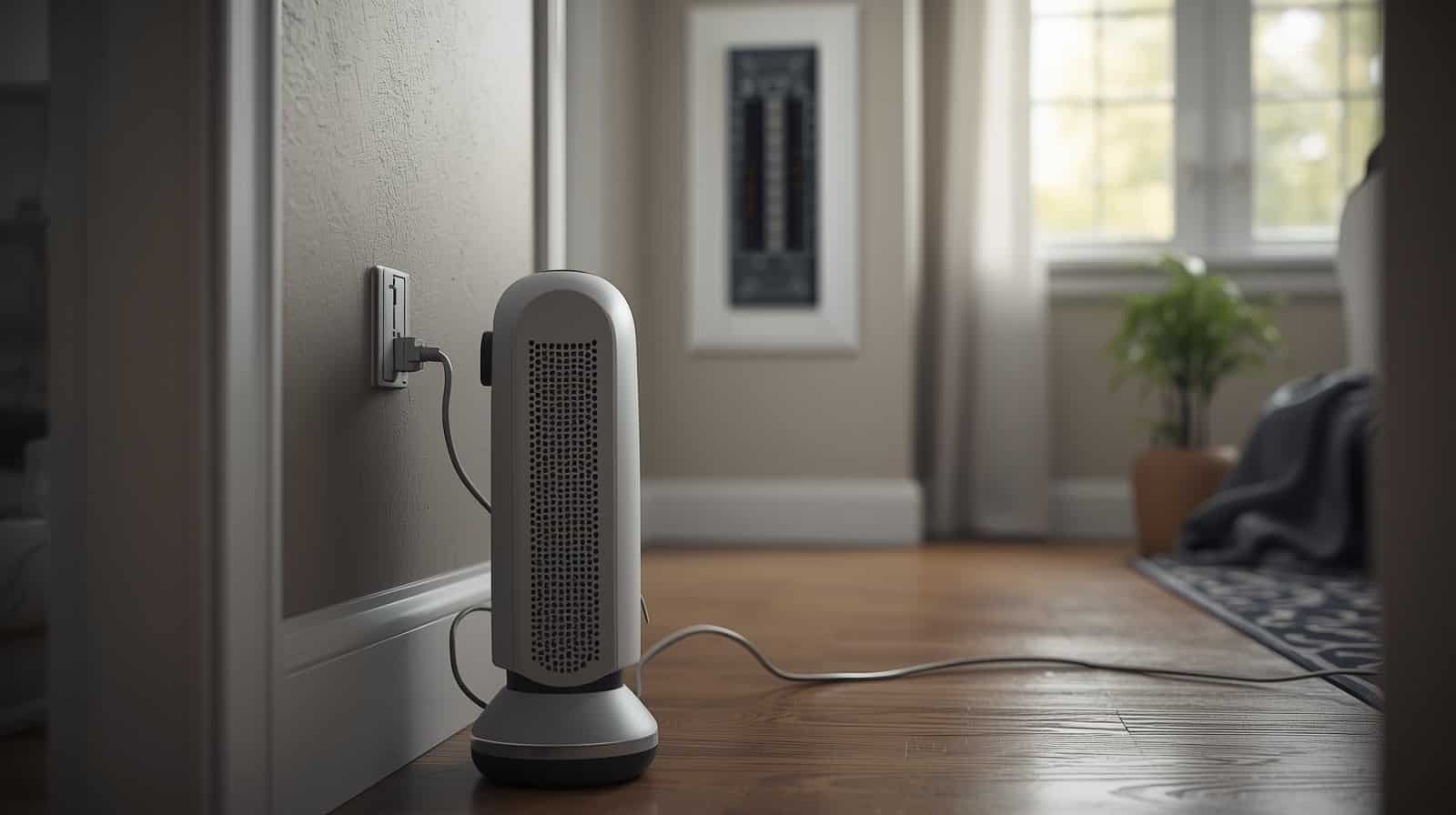
Space heaters are one of the most common reasons homeowners discover a circuit is close to its limits. A heater may run fine for a few minutes and then trip a breaker, or it may trip immediately when you switch it on.
Pay attention to these warning signs at the outlet or cord:
- Outlet faceplate feels warm or hot
- Plug fits loosely or wiggles
- Crackling sounds when the heater cycles
- Visible discoloration, scorching, or a “hot plastic” odor
If you’ve ever wondered how much warmth is normal versus concerning, this guide helps you interpret the difference: Why Outlets or Switches Get Warm During Normal Use.
Quick checks homeowners can do safely
You don’t need tools to reduce risk. Focus on observation and load reduction—things that don’t involve opening panels or modifying wiring.
- Reduce the total load: Turn off or unplug other high-draw devices on the same circuit before running the heater.
- Use the heater on a lower setting: Many heaters draw less current on low/eco modes (but still treat it as a high-load device).
- Inspect the cord and plug: Look for damage, stiffness, or melting. If anything looks off, stop using it.
- Feel for abnormal warmth: After a short period, carefully check for warmth at the plug and outlet faceplate. Warmth is information.
If a circuit seems overloaded even when nothing else is running, that may point to shared circuits, hidden loads, or connection issues. This article explains why overload risk can exist even without an obvious breaker trip: Overloaded Circuits Without Tripped Breakers.
Safer heating choices during outages and cold snaps
During outages, people often turn to alternative heat sources, and that can create new hazards—especially when households mix generators, portable heaters, and improvised setups. Even outside of outages, the safest approach is to treat space heaters as temporary, closely monitored devices rather than “all night, every night” solutions.
Good safety habits include:
- Keep heaters away from curtains, bedding, and upholstered furniture
- Never run a heater through a questionable extension cord (overheating risk rises fast)
- Don’t leave a heater running unattended or while sleeping unless the unit is specifically designed for that use and you follow manufacturer guidance
When a tripping breaker is a “call an electrician” moment
If the breaker trips once because you accidentally ran the heater and another high-load device together, that’s a clear signal to reduce load. But if trips keep happening, or if any warning signs appear at outlets, switches, or cords, it’s time to escalate.
Consider professional help if:
- The breaker trips repeatedly even after reducing other loads
- The heater only trips the breaker in one specific outlet or room
- You notice heat, odor, buzzing, crackling, or discoloration
- Lights dim noticeably when the heater cycles on
- You feel uncertain about what you’re seeing
This flagship escalation guide helps you decide when to stop testing and bring in a pro: When to Call an Electrician After an Outage: Clear Signs You Shouldn’t Ignore. Even if your issue isn’t outage-related, the same “heat, odor, sound, repeated tripping” logic applies.
In most homes, it’s cheaper—and far safer—to confirm capacity and connection health than to keep resetting a breaker and hoping the pattern goes away.