


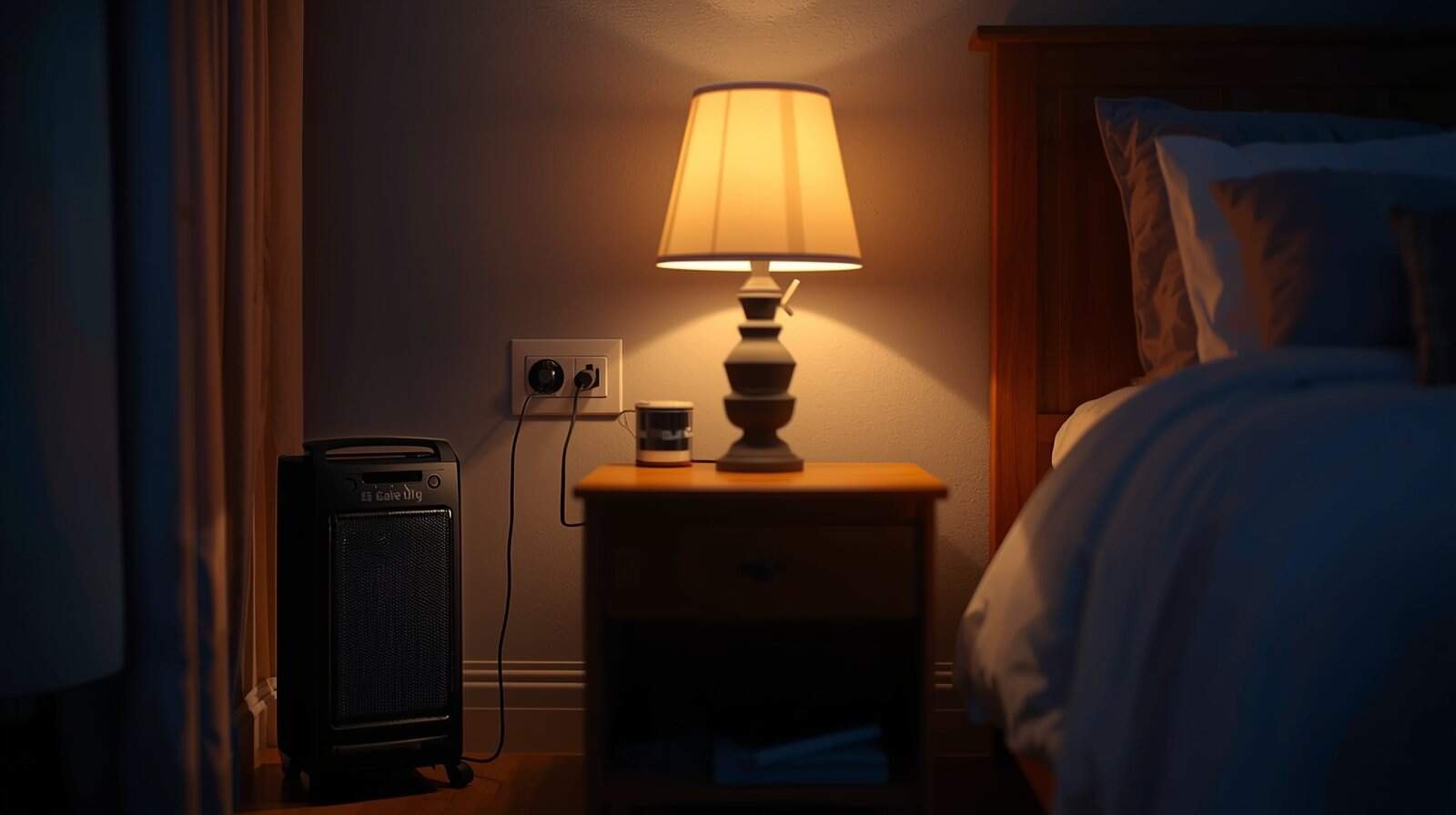
Bedrooms often become unexpected electrical stress points during the winter months. While kitchens and laundry rooms are traditionally associated with high power usage, bedrooms can quietly accumulate continuous electrical load over long periods of time. When space heaters, lamps, chargers, and electric blankets operate together overnight, the combination can create conditions that increase heat buildup at outlets and connection points.
Unlike brief high-draw appliances that cycle on and off, many bedroom devices run continuously for hours while occupants sleep. This steady demand can expose weaknesses in older wiring, worn receptacles, or overloaded branch circuits. Understanding why bedrooms are particularly vulnerable during winter helps homeowners recognize risk patterns before they escalate into more serious hazards.
Why Winter Changes Bedroom Electrical Behavior
Winter introduces a new layer of electrical demand inside bedrooms that often does not exist during warmer months. Portable heaters are frequently added to supplement central heating, especially in older homes where certain rooms feel colder than others. These heaters can draw significant wattage for extended periods without interruption.
At the same time, shorter daylight hours increase reliance on bedside lamps and decorative lighting. Phone chargers, tablets, heated blankets, and white-noise machines may also operate overnight. While each device may seem modest on its own, the combined load can place sustained stress on a single branch circuit.
This type of steady, continuous draw differs from a microwave or hair dryer that runs for only a few minutes. Continuous winter heating increases the potential for gradual heat buildup within outlet contacts and wiring connections. Over time, that heat accumulation becomes more important than the total wattage number alone.
Bedrooms Often Share Circuits With Other Areas
In many homes, especially those built decades ago, bedroom outlets are not on isolated circuits. It is common for multiple bedrooms or hallway outlets to share a single breaker. This means the electrical load from one room may already be partially consuming available capacity before a heater is even plugged in.
When a portable heater is added to the mix, it may push the circuit closer to its limit without immediately triggering a breaker trip. Breakers are designed to protect against extreme overload and short circuits, not every instance of gradual heat buildup. As explained in Overloaded Circuits Without Tripped Breakers: Why It Happens and Why It’s Dangerous, overheating can occur at connection points even when a breaker remains engaged.
This shared-circuit design becomes more significant during winter, when several rooms may simultaneously use space heaters. Even if a single bedroom seems lightly equipped, the broader circuit may already be under strain.
Continuous Heater Use and Resistance Heat
Space heaters convert electricity directly into heat, which means they are intentionally high-draw devices. When operating for extended periods, they place consistent demand on wiring and outlet contacts. Any slight looseness or resistance at a plug connection can generate additional localized heat.
Resistance heat does not require a dramatic overload event to develop. A slightly worn receptacle, aging wiring, or a fatigued extension cord can warm gradually over hours of operation. That warming may not be noticeable immediately, especially overnight.
Over time, repeated winter heater use can accelerate wear on bedroom outlets. This is particularly true when heaters are plugged into the same receptacle night after night.
Extension Cords and Power Strips Increase Risk
Bedrooms are frequently arranged in ways that make outlet access inconvenient. Furniture placement may encourage the use of extension cords or power strips to reach nightstands or opposite walls. While this may seem harmless, added connections increase resistance points where heat can develop.
Plugging a space heater into a power strip compounds the issue by routing high current through additional internal components. As discussed in Can You Plug a Space Heater Into a Power Strip? Why It’s Dangerous, this setup significantly increases the risk of overheating and fire. Even heavy-duty extension cords can become stress points if used continuously.
The more connections involved, the more potential contact surfaces exist where small imperfections can generate heat. Bedrooms, because of their layout and nighttime use patterns, often accumulate these connection layers quietly.
Load Stacking Happens While You Sleep
One of the most concerning aspects of bedroom overload risk is timing. Many of the highest-demand combinations occur while occupants are asleep. A heater running near full output, a bedside lamp left on, and multiple devices charging can overlap for six to eight uninterrupted hours.
This sustained load stacking increases the opportunity for gradual warming inside walls or at outlet contacts. Unlike daytime use, there is little monitoring of sounds, smells, or subtle temperature changes. Minor warning signs may go unnoticed until damage has progressed.
Even if a breaker eventually trips, repeated tripping events should not be dismissed. If this pattern is occurring, see Space Heater Keeps Tripping the Breaker: What It Means and Safer Next Steps for context on why it may indicate circuit stress rather than a simple nuisance trip.
Older Bedrooms Face Additional Challenges
Older homes often have fewer outlets per room and wiring that was not designed for modern device density. A single bedroom outlet may have been sufficient decades ago for a lamp and clock radio. Today, that same outlet might support a heater, smart devices, chargers, and additional lighting.
Wiring insulation can also degrade over time, especially if subjected to repeated heating and cooling cycles. While this does not automatically mean danger is present, it does reduce tolerance for sustained high-load conditions. Bedrooms in older homes are particularly vulnerable to this type of gradual stress accumulation.
Understanding overall household load patterns is essential, which is why Electrical Load Management at Home: How to Reduce Strain, Prevent Trips, and Stay Safe serves as the central reference point for evaluating cumulative demand.
When Bedroom Electrical Behavior Crosses Into Risk
Not every bedroom heater setup is dangerous. However, certain patterns indicate that electrical stress may be exceeding safe margins. Warm wall plates, buzzing sounds, flickering lights when a heater cycles, or visible discoloration around outlets should be treated as warning signs.
Repeated breaker trips, especially during cold nights, suggest the circuit is operating near its design limit. Even if power can be restored, recurring trips signal that load distribution may not be sustainable. Ignoring these signs increases the probability of insulation breakdown or outlet failure.
Bedrooms feel low-risk because they are quiet, familiar spaces. During winter, however, they can become concentrated electrical stress zones. Recognizing that pattern early allows homeowners to reduce load, reposition devices, and seek professional evaluation before minor heat buildup becomes a larger safety concern.