


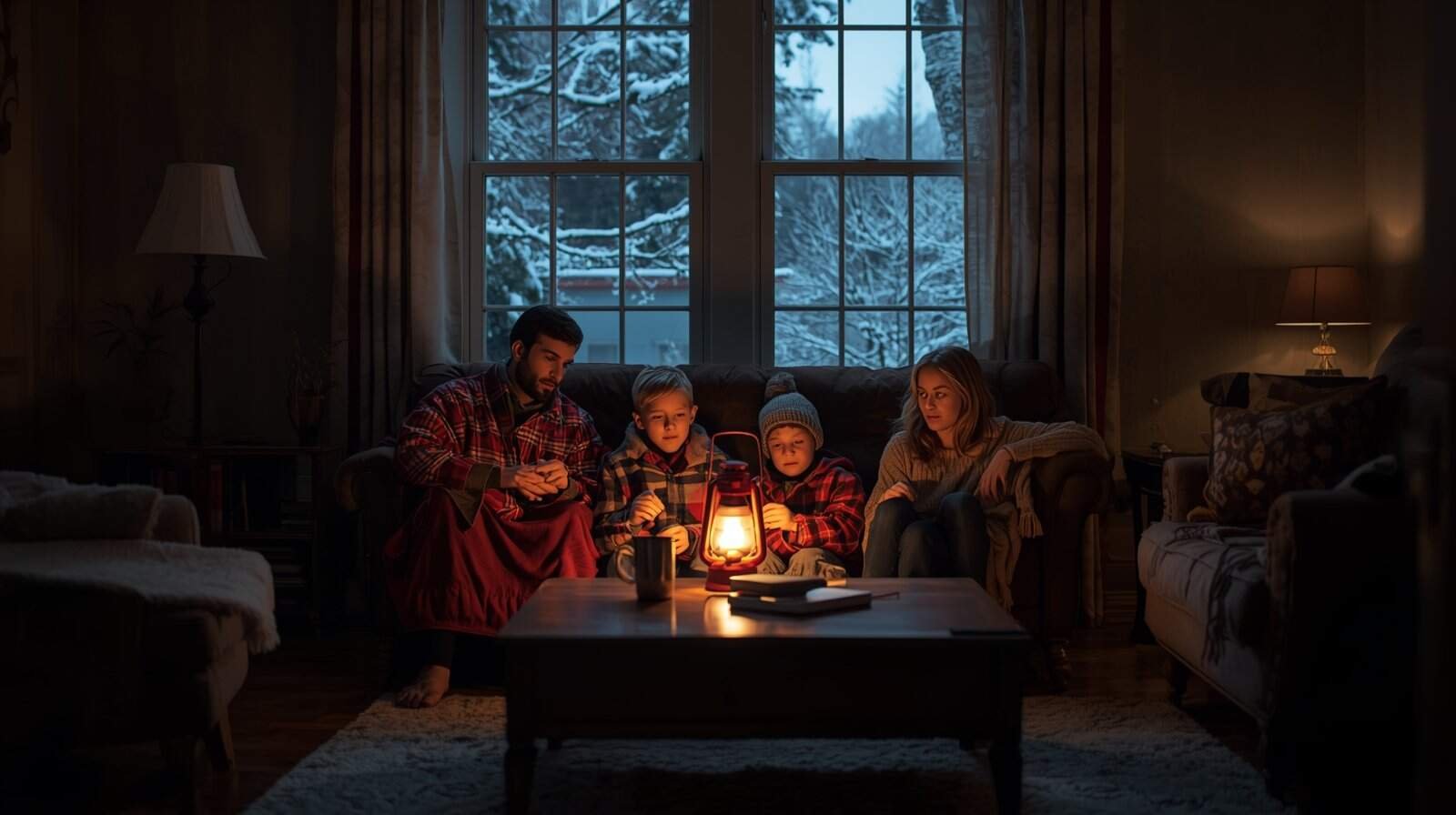
Winter outages create a dangerous tension: you need heat, but the fastest ways to generate warmth often carry fire or carbon monoxide risk. The goal during a cold-weather power outage is not to recreate normal comfort — it’s to preserve safe body temperature while avoiding secondary emergencies.
This guide explains how to retain warmth safely, what heating shortcuts to avoid, and when cold exposure becomes a medical risk. For a broader survival framework, review How to Safely Live Through a Multi-Day Power Outage at Home.
First Principle: Conserve Heat Before You Create Heat
The safest warmth is retained warmth. Start by consolidating everyone into one insulated room. Close doors, block drafts with towels, and use curtains to reduce window heat loss. Smaller spaces retain body heat more efficiently than open floor plans.
Layer clothing rather than relying on a single heavy coat. Base layer (dry), insulation layer (fleece/wool), outer layer (wind-resistant) is safer than overheating with external devices. Hats and socks matter because extremities lose heat first.
Safe Indoor Heating Hierarchy
Not all heating methods are equal. Some increase fire risk dramatically or introduce carbon monoxide hazards.
- Layered clothing and blankets
- Body heat consolidation in one room
- Battery-powered heating pads (if manufacturer-approved)
- Properly ventilated, manufacturer-approved indoor-rated heaters
- Charcoal grills
- Outdoor propane heaters not rated for indoor use
- Gas ovens used as heat sources
- Vehicles running in attached garages
If considering combustion heat, review Indoor Heaters During Power Outages: Carbon Monoxide Risks Homeowners Miss and Generator Carbon Monoxide Safety before use.
Electrical Heating During Outages
If using a generator to power electric heaters, remember that high-wattage heaters can overload circuits or strain generators. Avoid extension cord stacking and never operate heaters unattended. Maintain safe clearance from bedding, curtains, and upholstered furniture.
Electric space heaters should be plugged directly into properly rated outlets. Avoid power strips or undersized extension cords, as these increase fire risk significantly.
Cold Exposure Warning Signs
Mild hypothermia begins with shivering and confusion. As body temperature drops, shivering may stop — which is a dangerous sign. Elderly individuals and young children are more vulnerable because they lose heat faster.
If someone becomes lethargic, confused, or stops shivering in a cold environment, escalate immediately. Seek medical guidance. Do not wait for conditions to improve passively.
Plan Before the Next Winter Storm
Preparation reduces risk dramatically. Keep blankets accessible, maintain CO detectors with battery backups, and stage safe lighting. Review your broader preparedness strategy using Emergency Preparedness for Power Outages: A Practical Home Readiness Checklist.
Staying warm safely is about discipline. The fastest solution is not always the safest. Preserving warmth without introducing fire or CO risk protects your household from turning a power outage into a preventable emergency.