


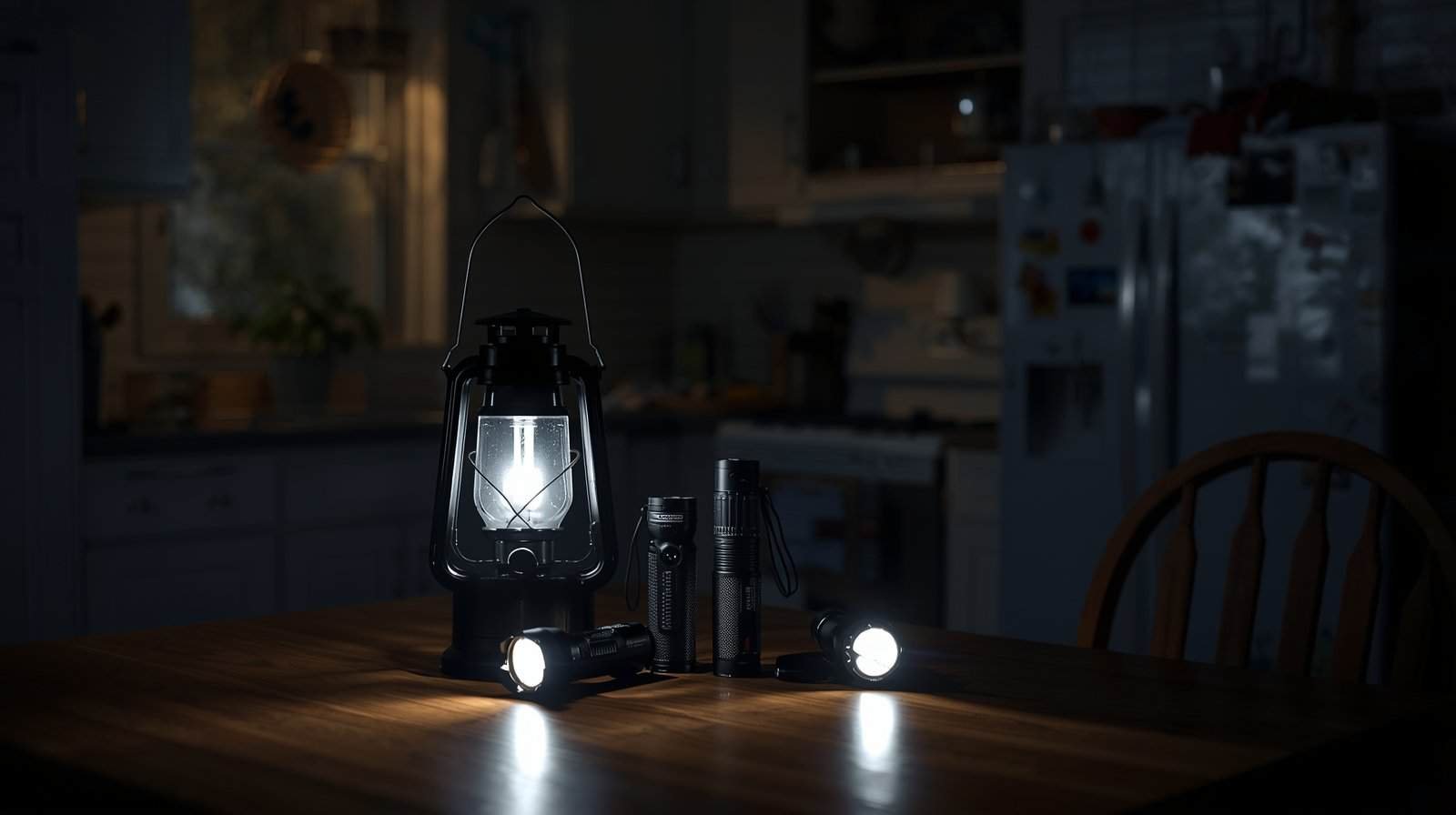
When the power goes out at night, lighting becomes both essential and surprisingly risky. Many household fires during outages start not because of electrical failure — but because of improvised lighting choices. The safest lighting plan reduces fire risk, protects children and pets, and avoids overloading backup systems.
If you are building a broader outage survival plan, start with How to Safely Live Through a Multi-Day Power Outage at Home and use this guide specifically for lighting safety decisions.
The Safest Lighting Options (Lowest Fire Risk)
Battery-powered LED flashlights and lanterns are the safest primary lighting choice. They generate minimal heat, do not rely on open flames, and can safely operate around children, pets, and fabric surfaces.
Rechargeable lanterns and power-station-powered LED lamps are also generally safe when used according to manufacturer guidance. LED technology produces very little heat compared to older incandescent bulbs.
- Keep one flashlight in every bedroom.
- Store spare batteries in a dry, accessible location.
- Test devices before storm season.
- Use lanterns in central rooms to reduce unnecessary movement in the dark.
Candles: Why They Create Hidden Risk
Candles remain common during outages, but they are one of the leading causes of preventable fires. An open flame placed near curtains, bedding, paper, or even wall décor can ignite quickly. The risk increases dramatically if someone falls asleep or leaves the room.
In households with children or pets, the risk multiplies. A knocked-over candle can start a fire in seconds. Even stable holders cannot eliminate human error.
If safer lighting is available, candles should not be your primary solution.
Oil Lamps and Combustion Lighting
Oil lamps and similar combustion lighting devices introduce both fire and indoor air quality risks. While they may feel traditional or reliable, they require ventilation awareness and stable placement. Any device that burns fuel indoors increases complexity and potential hazard.
When simplicity reduces risk, choose simplicity.
Generator-Powered Lighting Considerations
Using a generator to power household lights can restore normal visibility, but it introduces separate safety boundaries. Generators must always remain outdoors and far from windows and doors to prevent carbon monoxide exposure. Extension cords must be rated appropriately and not run under rugs or through door gaps.
If you are running generators for lighting, review your overall generator safety posture. Avoid unnecessary load stacking, and do not power more circuits than necessary for basic lighting.
Lighting and Household Movement Safety
Strategic lighting reduces fall risk. Place lanterns in hallways, stairways, and bathrooms. Avoid placing bright light directly at eye level, which reduces night vision adaptation.
If you are also managing cold conditions, coordinate lighting placement with your safe warming room strategy. See Staying Warm Safely During a Winter Power Outage for room consolidation guidance.
Escalation Threshold: When Lighting Becomes a Fire Risk
- A candle or flame source tips or flickers near fabric.
- You smell burning material unrelated to cooking.
- A cord becomes warm to the touch.
- You feel tempted to leave a flame unattended.
During extended outages, fatigue increases. Fatigue leads to oversight. Oversight leads to accidents. Conservative lighting choices reduce that chain reaction.
Build Lighting Into Your Preparedness Plan
Safe lighting should be staged before storms arrive. Keep flashlights accessible, batteries rotated, and lanterns charged. If you are refining your supply plan, review Power Outage Supply Planning and integrate lighting into your checklist.
Power outages remove convenience. They should not remove safety. The right lighting choice keeps visibility high and fire risk low.