


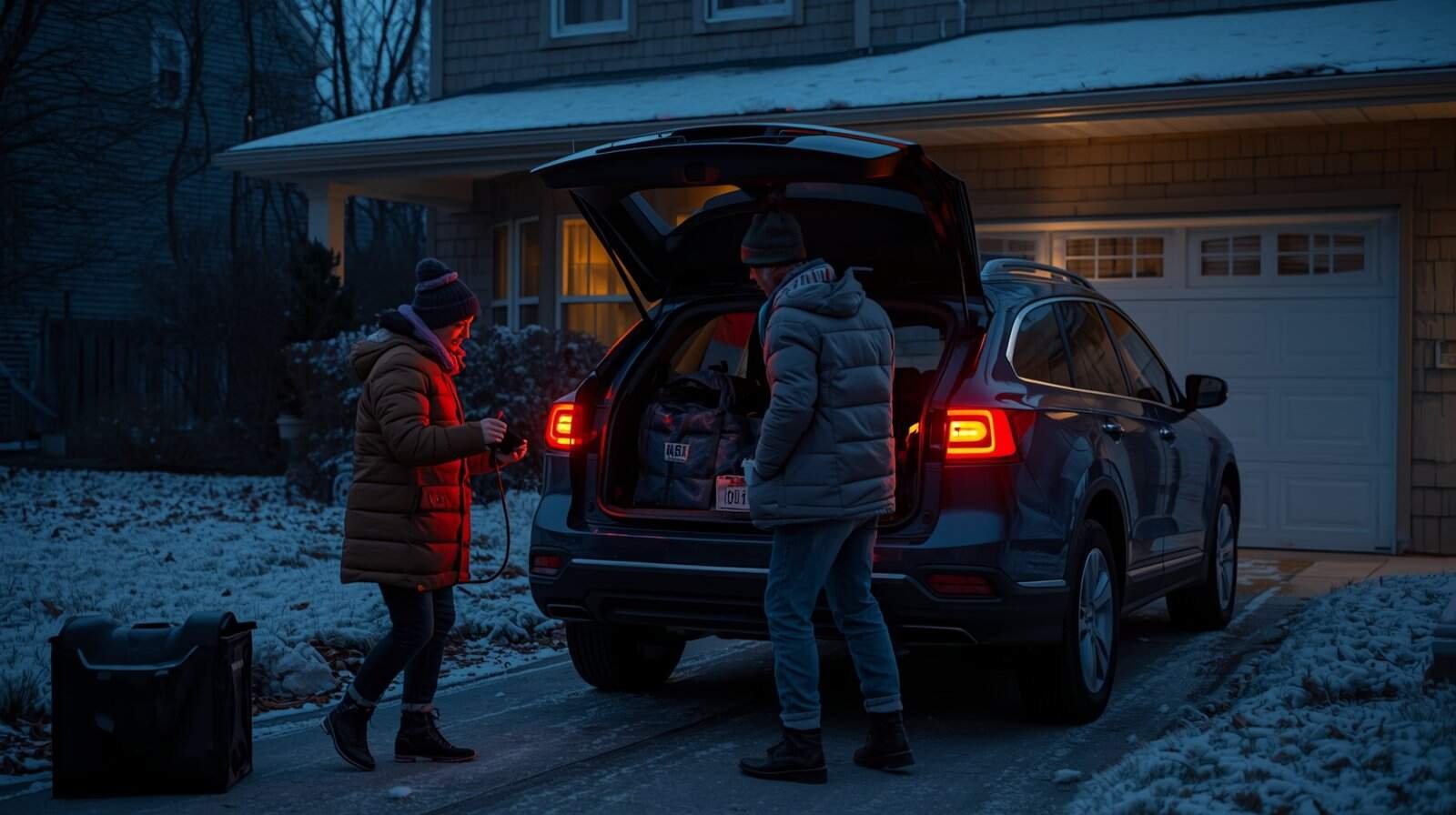
Most power outages are uncomfortable, not dangerous. The problem is that conditions can shift quietly — a house cools hour by hour, food and water safety deteriorates, and fatigue makes judgment worse. A “stay put” mindset is useful until it isn’t. Knowing when to leave is one of the most important safety decisions a household can make during an extended outage.
This guide gives clear, conservative thresholds that signal your home may no longer be safe. If you want the full multi-day survival framework (heat, food, lighting, and planning), start with How to Safely Live Through a Multi-Day Power Outage at Home. Use this article as the decision point for when conditions cross the line.
Start With the Right Mindset: “Leave Early” Is Often Safer Than “Wait It Out”
People often wait too long because leaving feels inconvenient, expensive, or uncertain. But extended outages also reduce outside resources. Roads become worse, fuel becomes harder to find, warming centers fill, and medical support gets strained. Leaving earlier — while you still have clarity and mobility — can be safer than waiting until conditions are desperate.
This doesn’t mean you must leave immediately. It means you should define your thresholds in advance and treat them seriously. A household that decides “we’ll leave if the house drops below X” makes better decisions than a household that improvises under stress.
Threshold 1: Indoor Temperature Drops Into Unsafe Territory
Cold exposure is one of the most common reasons an outage becomes dangerous. Homes cool gradually, and the risk increases for infants, older adults, and people with cardiovascular or respiratory conditions. Cold also increases fall risk and reduces coordination.
As a conservative rule, sustained indoor temperatures below 50°F increase safety risk, especially overnight. If you cannot maintain safe warmth without using risky heating methods, it may be time to relocate. The decision should be earlier for medically vulnerable people.
Threshold 2: Carbon Monoxide Alarms, Symptoms, or “Improvised Heat”
Carbon monoxide (CO) risk spikes during outages because people try to heat and cook with devices that are not indoor-safe. CO is especially dangerous because it can cause confusion and sleepiness — which makes people less likely to take action.
If a CO alarm sounds, treat it as an emergency. Leave the home, get into fresh air, and do not re-enter until the source is identified and addressed by a professional. If you suspect CO exposure or you are tempted to use unapproved indoor heating, stop and reset your plan immediately.
If you are using indoor heaters during outages, review Indoor Heaters During Power Outages: Carbon Monoxide Risks Homeowners Miss and treat CO detectors as a non-negotiable safety layer.
Threshold 3: Medical Dependency or Medication Risk
Outages become higher stakes when health depends on electricity, refrigeration, or reliable communication. CPAP, oxygen concentrators, powered wheelchairs, refrigeration-dependent medications, and even certain feeding or monitoring devices can turn an outage into a medical emergency if backup plans fail.
If you are unsure whether your current backup plan can maintain safe operation overnight, do not gamble. A “borderline” plan is not a plan when the consequences are high. It is often safer to relocate to a place with reliable power than to stretch batteries and hope nothing goes wrong.
For medical-specific planning, review Backup Power for Medical Devices During Outages: What to Plan For. If your household is medically vulnerable, your leaving threshold should be earlier than average.
Threshold 4: Water and Sanitation Break Down
Lack of safe drinking water and failing sanitation can become dangerous quickly, especially for children and older adults. Dehydration, gastrointestinal illness, and poor hygiene conditions spread faster during community-wide disruptions.
If you cannot confidently access safe drinking water, if a boil-water advisory is issued and you cannot comply safely, or if bathroom sanitation becomes unmanageable, relocation may be the safer option.
Use Water and Sanitation During Power Outages to assess whether your household can stay stable or whether conditions are deteriorating beyond safe management.
Threshold 5: Fire Risk Signals You Cannot Control
Extended outages increase the chance of fire because people rely on open flame, overloaded extension cords, and risky heating. If you smell burning material, see smoke, notice unusual heat from cords or devices, or lose the ability to monitor a heat source safely due to fatigue, treat it as a serious escalation.
During large outages, emergency response may be slower. That means you must be more conservative, not less. If your safety relies on “perfect attention,” it will eventually fail.
If You Decide to Leave: A Practical Exit Plan
Leaving safely requires a calm plan, not a panic move. Decide where you will go (family, hotel, warming center) and what you will bring. If conditions are deteriorating, leave before roads become dangerous or fuel becomes scarce. Communicate your plan to someone outside the home if possible.
- Warm clothing and blankets
- Medications, medical devices, and chargers
- Water and simple shelf-stable snacks
- Phone power bank or charging plan
- Important documents (if time allows)
- Pet supplies if applicable
The Safe Goal: Avoid the “Too Late” Moment
During outages, the highest-risk decisions often happen when people are exhausted and trying to avoid inconvenience. The safer approach is to treat leaving as a protective action, not a failure. If your home is cooling into unsafe temperatures, a CO alarm activates, medical support becomes unstable, or water and sanitation fail, leaving is often the best safety move you can make.
Define your thresholds early, act decisively when they are crossed, and remember that the goal is not to “tough it out.” The goal is to keep your household safe.