


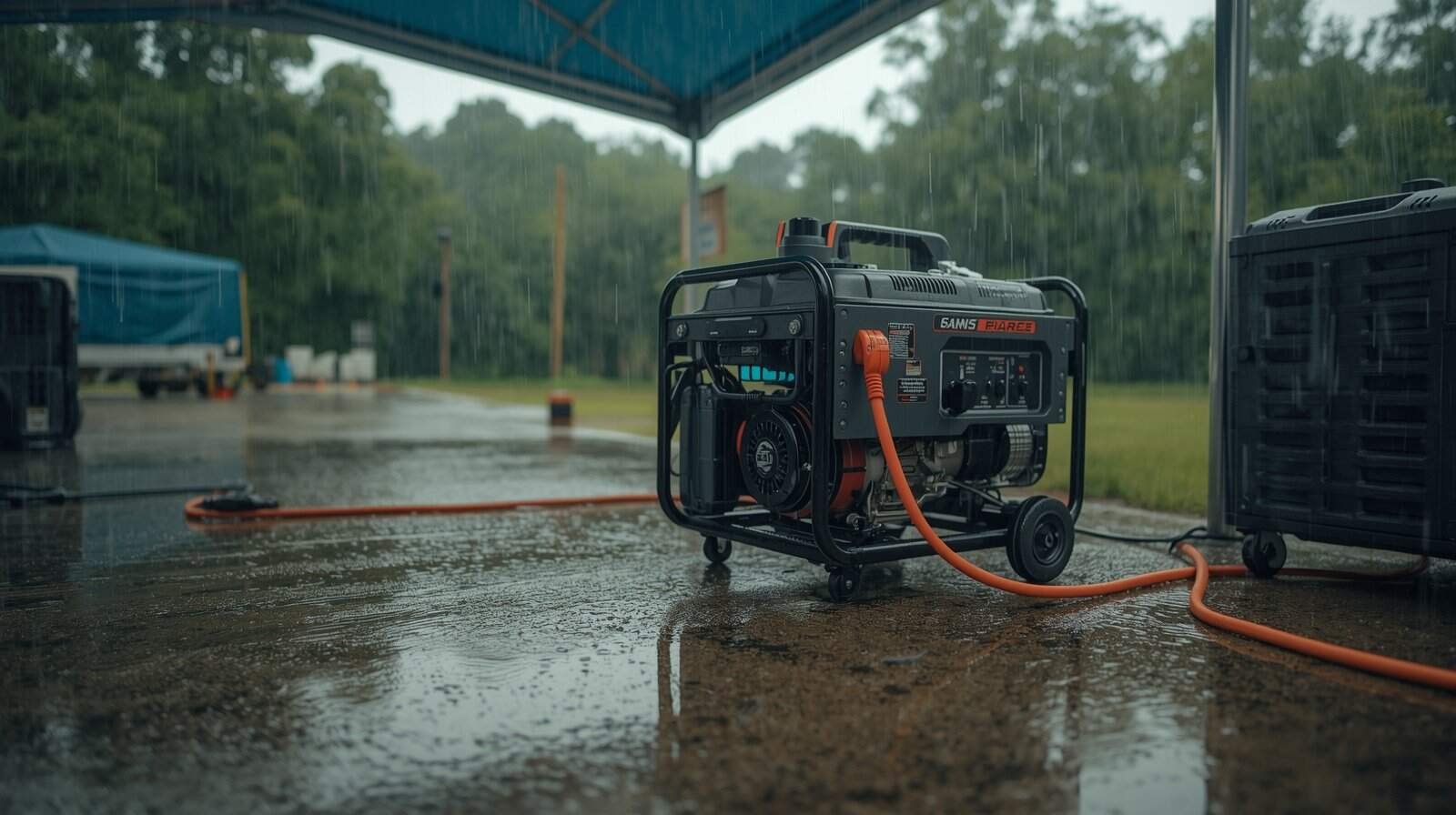
Short answer: Wet weather can make generator power problems worse because moisture increases the chance of weak electrical contact, added resistance, and unstable voltage delivery at plugs, cords, and connection points. Rain does not just create a shock hazard—it can also make already-marginal power behave more erratically under load.
Many homeowners think of rain mainly as a placement problem: keep the generator dry, keep it outside, and do not run it in standing water. That is all true. But there is a second layer of risk that gets less attention. Wet weather can also make generator power quality worse by affecting the places where electricity has to move cleanly through the setup.
This guide explains why moisture makes voltage problems worse, why electronics and motors may behave more strangely during rainy operation, and when a wet-weather setup has crossed from inconvenient into unsafe.
Wet Weather Affects More Than Just Generator Placement
Most discussions about rain and generators focus on the obvious risks: electrical shock, carbon monoxide shortcuts, and protecting the unit from direct water exposure. Those issues matter, but they are not the whole picture. Wet weather also changes how well the rest of the setup performs.
When connection points get damp or cords sit in poor conditions, resistance can increase and the power path becomes less reliable. That is especially important when the system is already near its limit or when sensitive electronics are connected.
For the primary placement and weather-protection rules, start with: Can You Run a Generator in the Rain? Safe Weather Protection Options.
Why Moisture Makes Voltage Problems Worse
Electricity moves best through clean, solid connections. Moisture interferes with that in several ways. It can reduce contact quality at plug ends, encourage corrosion over time, and make already-marginal connection points behave worse under load.
That does not always show up as an immediate failure. More often, it shows up as unstable behavior: lights dimming more than expected, chargers disconnecting, electronics resetting, or appliances acting weaker than they did in dry conditions.
If you want the broader foundation for why stable voltage and frequency matter in the first place, read: Generator Power Quality Explained: Voltage, Frequency, and Why Electronics Get Damaged.
Where Wet-Weather Problems Usually Show Up First
Moisture-related power instability usually does not begin inside the appliance. It starts at the exposed parts of the setup—the places most likely to suffer from poor contact, added resistance, or compromised delivery.
Plug and cord junctions
These are common weak points because they are exposed, movable, and easy to route poorly during storms.
Adapters and temporary connection points
Every added junction is another opportunity for poor contact or dampness to affect delivery.
Cords routed through wet areas
Even outdoor-rated cords should not be treated as “rainproof everywhere.” Wet ground, puddling, and bad routing can all make problems more likely.
Why Rainy Conditions Make Electronics and Motors Behave Strangely
Electronics and motors respond differently to unstable power, but both can show problems sooner in damp conditions if the setup is already weak. Electronics may reset, flicker, or disconnect because small voltage dips affect them quickly. Motors may hum, struggle, or draw extra current if the voltage reaching them has dropped.
That is why a setup that “mostly worked fine last time” may feel noticeably worse during rain, even if the generator itself still sounds normal.
Extension Cords Become Even More Critical in Wet Weather
Wet weather makes good cord practices more important, not less. Long, undersized, or poorly routed cords already cause voltage drop in dry conditions. Add moisture, weak plug contact, or wet ground routing, and the odds of unstable delivery rise further.
That is why cord selection, routing, and connection protection are part of weather safety—not separate from it. For the core cord rules, review: Generator Extension Cords: What’s Safe, What’s Not, and Why It Matters.
Do Not “Fix” Wet-Weather Power Problems by Moving the Generator Closer
One of the most dangerous mistakes homeowners make is trying to shorten cord paths or avoid rain exposure by moving the generator closer to the house. That may seem practical when electronics are misbehaving, but it creates a much bigger risk: carbon monoxide exposure near doors, windows, vents, or attached structures.
If the setup is unstable in wet weather, the answer is not unsafe placement. The answer is improving the outdoor setup—or stopping use for sensitive devices until stability returns. Safe placement distance still matters, even when you are trying to reduce cord-related losses. Review: How Far Should a Generator Be From the House? Safety Distances Explained.
When to Stop Using the Setup in Wet Weather
Wet-weather generator use becomes unsafe when moisture-related stress starts showing up in the way the system behaves. Stop using the setup for appliances and electronics if you notice:
- Repeated resets, flicker, or unstable charging
- Warm plug ends or buzzing adapters
- Visible moisture collecting at connection points
- Erratic behavior that gets worse as conditions get wetter
- Pressure to move the generator closer to the house just to keep things working
At that point, the safer choice is to simplify, shut down sensitive loads, or pause generator use until conditions and setup quality improve.
Conclusion: Rain Makes Weak Setups Weaker
Wet weather does not just add shock risk. It also makes weak generator setups more likely to show unstable voltage, erratic device behavior, and poor connection performance. That is why rainy operation needs more than “keep it covered.” It requires solid connection management, good cord practices, and a willingness to stop if the system becomes unstable.
If the setup starts acting worse in wet conditions, believe what it is telling you. Rain often reveals the weak points that were already there.