


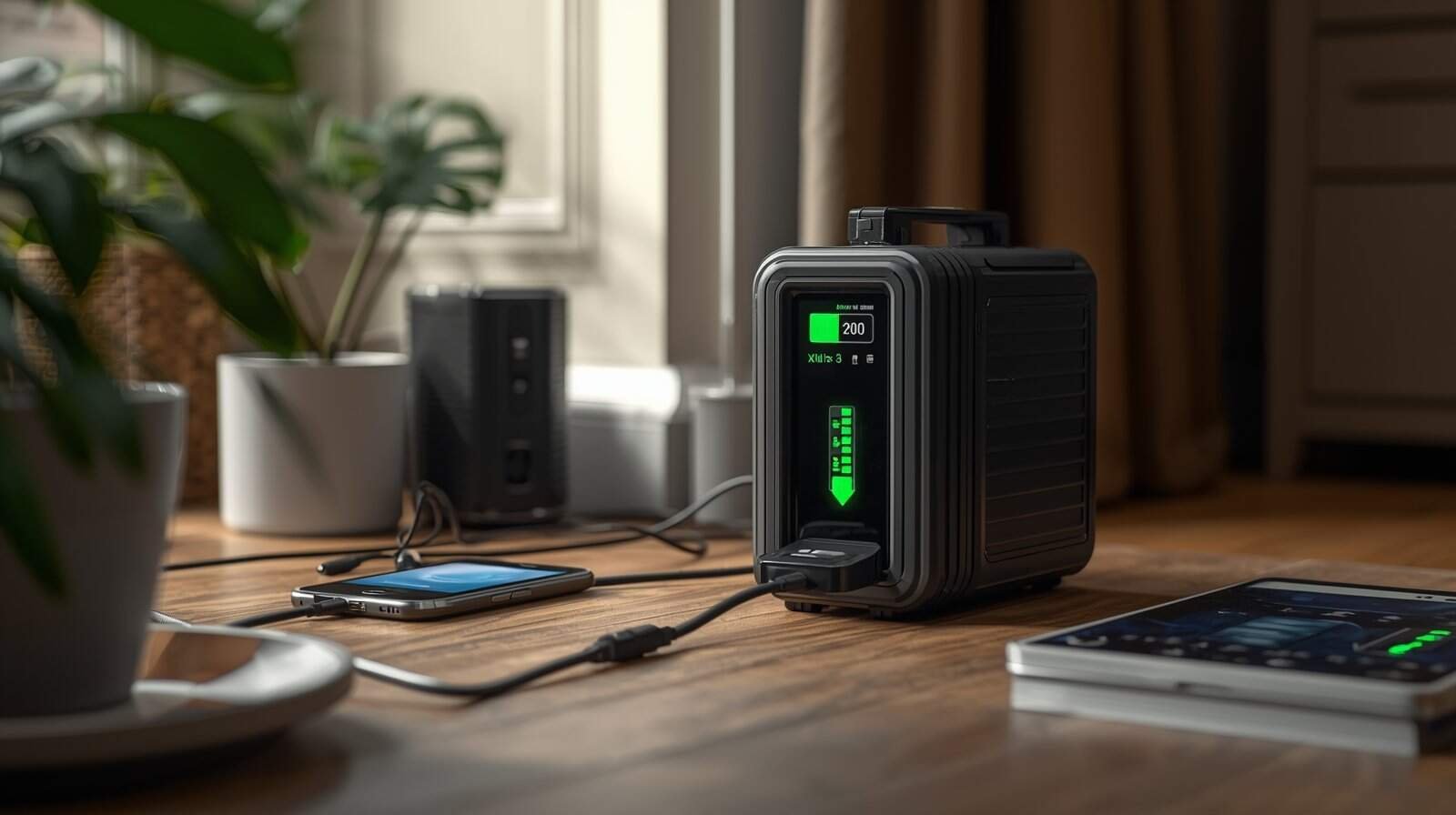
Many homeowners are surprised when a portable power station drains far faster than expected. While marketing materials often highlight large battery capacities, real-world runtime depends on how power is drawn, converted, and managed. A fast-draining battery does not always indicate a defective unit.
Why Power Stations Drain Faster Than Expected
Portable power stations store energy in batteries, but the usable runtime is affected by several efficiency factors. Understanding these limits helps set realistic expectations and prevents unnecessary returns or replacements.
Load size and continuous draw
Devices with high wattage demands drain batteries quickly. Appliances with heating elements, compressors, or motors consume far more energy than electronics like phones or routers. Continuous loads shorten runtime even if they appear modest at first glance.
Inverter efficiency losses
Power stations convert stored DC energy into AC power using an inverter. This process is not 100 percent efficient. Inverter losses can reduce usable capacity by 10–20 percent, depending on design and load type.
Phantom and idle power consumption
Some devices continue drawing small amounts of power even when not actively in use. Displays, standby electronics, and inefficient adapters can contribute to faster-than-expected battery drain.
Battery protection limits
Power stations are designed to protect battery health. Many systems reserve a portion of capacity to prevent deep discharge, which can make the usable runtime appear shorter than advertised.
How to Accurately Estimate Runtime
Calculate total wattage
Add the wattage of all connected devices to determine total load. Compare this figure to the power station’s continuous output rating.
Account for surge power
Devices with motors may briefly draw more power at startup. These surges increase energy consumption and can shorten overall runtime.
Plan for efficiency losses
Reducing expected capacity by 15–25 percent provides a more realistic runtime estimate.
Ways to Extend Power Station Runtime
Prioritize essential devices
Limit usage to critical equipment such as refrigeration, medical devices, and communication tools.
Use DC outputs when possible
Powering devices directly from DC ports avoids inverter losses and improves efficiency.
Recharge strategically
Solar panels, vehicle charging, or intermittent grid access can significantly extend usable power if applied early rather than after full depletion.
When a Power Station May Not Be the Right Tool
For extended outages or high-wattage demands, battery-based systems may struggle to keep up. In these cases, comparing options can help. See our guide on portable power stations versus generators for a deeper comparison.
If your unit is not charging properly at all, review our troubleshooting guide on what to do when a power station won’t charge.
Understanding Runtime Expectations
Battery-based systems are best suited for short to moderate outages. For longer runtimes, fuel-powered generators may be more appropriate. Our guide on how long a generator can run safely explains the differences in sustained power strategies.
Conclusion
A fast-draining power station is usually a sign of high demand or normal efficiency limits rather than a failure. Matching load expectations to battery capacity helps ensure reliable backup power when it is needed most.