


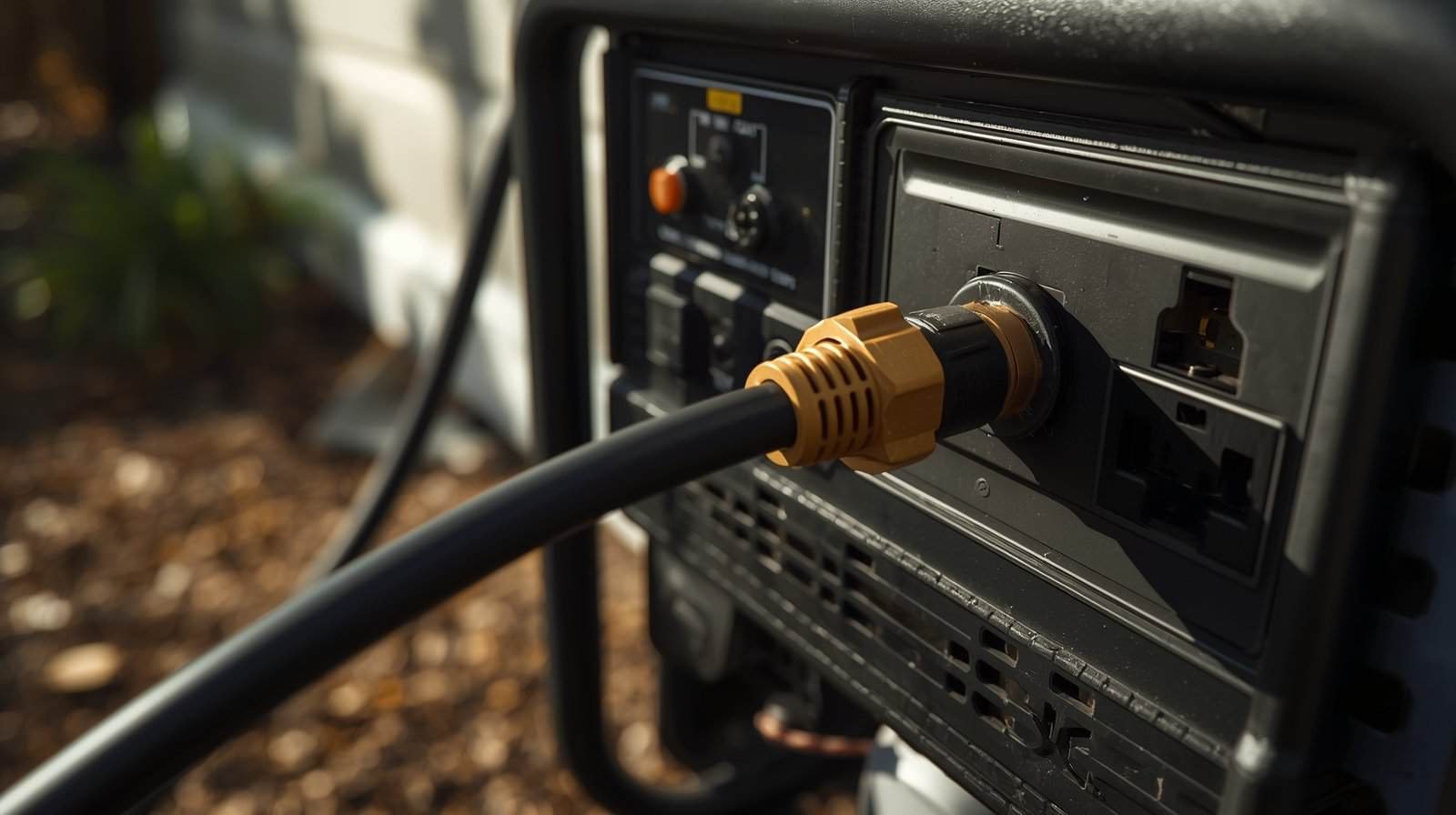
Short answer: For generator use, choose an outdoor-rated, grounded extension cord that’s thick enough (low AWG number) and as short as practical. A cord that’s too thin or too long can cause voltage drop, overheating, and appliance damage—sometimes without tripping a breaker.
Extension cords are often treated as an afterthought during outages, but cord sizing is part of the power delivery system. The wrong cord can create problems that look like “generator failure” even when the generator is operating normally.
For broader setup safety (beyond sizing), see Generator Extension Cords: What’s Safe, What’s Not, and Why It Matters.
Important: Cords don’t just “carry power.” They add resistance. Resistance creates voltage drop and heat—the two biggest generator cord hazards.
Why Extension Cord Sizing Matters
Generators produce a limited amount of usable power. Any resistance between the generator and your appliance reduces the voltage that actually reaches the device.
When cords are undersized or overly long, appliances—especially motors and compressors—may struggle to start, run hotter, or cycle erratically. That extra strain can shorten appliance lifespan and make power feel unstable even though the generator is running.
If you are also trying to estimate whether the generator itself has enough capacity for your essential loads, the Generator Sizing Calculator can help you make a rough planning estimate before you compare that load against cord ratings, appliance labels, and the generator’s wattage limits.
Understanding Extension Cord Gauge (AWG)
Extension cord thickness is measured in American Wire Gauge (AWG). Lower numbers mean thicker wire, which can safely carry more current with less heat buildup.
Common generator cord gauges
- 10-gauge (10 AWG): Best for higher loads and longer runs
- 12-gauge (12 AWG): Common for moderate loads and shorter runs
- 14-gauge (14 AWG): Light loads only; often inadequate for generator use
Using a thinner cord than the load requires increases resistance. Resistance creates heat at the cord and plug ends and can cause voltage to sag when the appliance tries to start.
How Cord Length Affects Safety
Length matters as much as gauge. The longer the cord, the more resistance you introduce—and the more voltage drop you create. Even a thick cord can become problematic if it’s run much farther than necessary.
Keeping cords short improves performance, reduces heat buildup, and helps motors start more reliably.
Signs your cord may be too long or too thin
- Lights dim noticeably when a device turns on
- Motors hum, struggle, or fail to start
- Electronics reset or behave erratically
- The cord or plug ends feel warm
Many “some devices work, others don’t” scenarios are cord- and voltage-drop-related. This visual guide shows the common patterns and safe next steps: Why a Generator Powers Some Devices but Not Others (And What to Do Safely).
Overheating and Fire Risks
Heat buildup is one of the biggest dangers tied to generator extension cords. Overheating is more likely when cords are thin, long, damaged, or tightly coiled.
Coiled cords trap heat. Damaged insulation can expose conductors. Loose plug ends create resistance at connection points—often the first place where melting or scorching begins.
Safer cord handling practices
- Fully uncoil cords during use
- Keep cords out of door pinch points and high-traffic walkways
- Inspect plug ends and insulation before each use
- Keep connections elevated and away from standing water
Stop using a cord immediately if: it feels hot, smells like melting plastic, shows damaged insulation, or causes flicker/erratic appliance behavior.
Placement and Electrical Safety Still Matter
Proper cord sizing works hand-in-hand with safe generator placement. Don’t shorten cord length by moving the generator closer to the home or into sheltered spaces. That tradeoff can increase carbon monoxide risk and create dangerous exhaust exposure.
Placement guidance is covered here: How Far Should a Generator Be From the House?.
Extension Cords and Backfeeding Risks
Extension cords are meant to power individual devices—not to energize home wiring through improvised connections. Never use cords to feed power into household outlets or circuits.
For a plain-English explanation of why this is dangerous, see Generator Backfeeding Explained.
Conclusion
Choosing the right extension cord gauge and keeping runs as short as practical are two of the most effective ways to reduce generator-related overheating and voltage drop.
Correct sizing protects your appliances, reduces fire risk, and makes generator power feel steadier during outages—without changing the generator itself.