


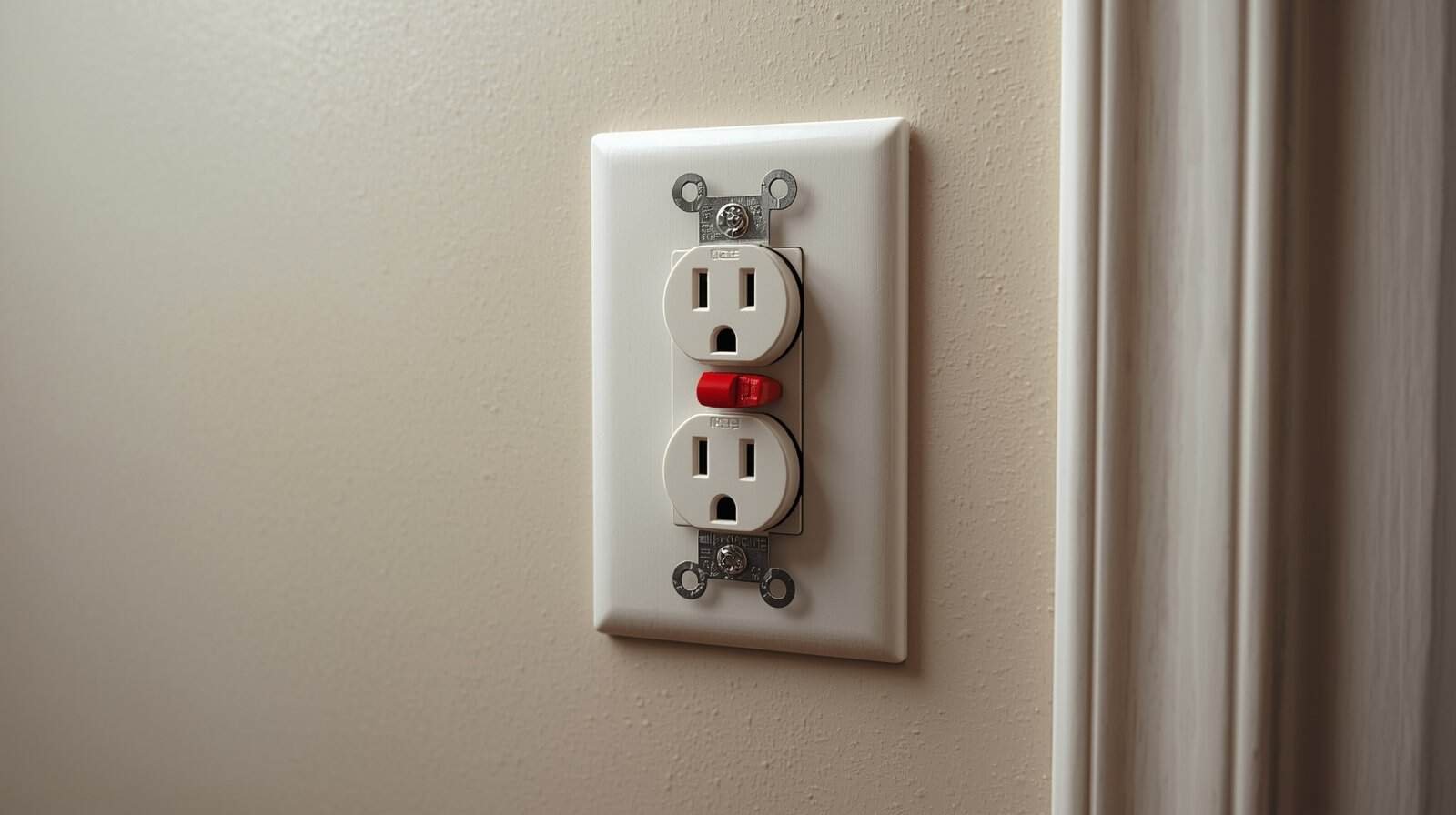
After a power outage, a GFCI outlet may begin tripping repeatedly—even if it worked normally before. This can be confusing and frustrating, especially when nothing obvious appears to be wrong.
In most cases, repeated tripping after an outage is not random behavior or a “bad outlet.” It’s the GFCI responding to conditions that changed during the outage or power restoration process.
Why GFCIs Are Especially Sensitive After Outages
GFCI outlets constantly monitor the balance between incoming and outgoing electrical current. If they detect even a small difference, they trip to prevent shock.
Power outages and restoration events can expose issues that weren’t apparent under normal conditions. Moisture intrusion, brief surges, and stressed wiring connections can all create the type of imbalance a GFCI is designed to detect.
Moisture Intrusion as a Common Cause
Moisture is one of the most frequent reasons GFCIs trip repeatedly after outages—particularly after storms, snow melt, or periods of high humidity.
Outdoor outlets, garages, basements, crawlspaces, kitchens, and bathrooms are especially vulnerable. Moisture does not need to be visible or pooled to cause problems. Condensation, damp debris, or water inside a weather cover can create enough leakage current to trigger repeated trips.
This is why GFCIs may behave normally during dry conditions but trip consistently after weather-related outages.
Downstream Devices and Shared Circuits
Many GFCI outlets protect additional outlets downstream on the same circuit. A fault at any one of those locations can cause the GFCI to trip—even if the GFCI outlet itself appears fine.
For example, a damp exterior outlet, a garage receptacle with debris, or a bathroom outlet with moisture exposure can all cause repeated tripping upstream.
Related behavior is explained in some outlets work but others don’t after an outage, which often appears alongside GFCI issues.
Appliances and Equipment Causing Ground Faults
Appliances, extension cords, and outdoor equipment can also introduce ground faults after an outage. Power restoration surges may damage internal insulation or electronics, even if the device still appears to operate.
Common culprits include outdoor tools, refrigerators, sump pumps, dehumidifiers, battery chargers, and extension cords that were exposed to damp conditions.
A single compromised device can cause repeated tripping every time it is plugged in—even though the outlet itself is functioning correctly.
Safe Troubleshooting Steps
Safe checks should remain limited and observational. The goal is to isolate obvious causes without bypassing safety systems.
- Unplug all devices connected to the GFCI-protected circuit
- Reset the GFCI once, firmly
- If it resets, reconnect devices one at a time
- Stop immediately if the GFCI trips again
If the outlet will not reset at all—even with everything unplugged—guidance in GFCI won’t reset can help clarify whether you’re dealing with a different category of problem.
When Repeated Tripping Signals a Hazard
Repeated GFCI tripping is not something to “push through.” In some cases, it’s the only warning you’ll receive before a more serious electrical failure.
Stop troubleshooting and treat the situation as a safety concern if you notice:
- Warm outlet covers or wall plates
- Burning or plastic odors
- Buzzing or crackling sounds
- Tripping that occurs immediately after reset
These signs suggest active leakage current, heat buildup, or wiring damage that should not be ignored.
When to Call an Electrician
If a GFCI continues to trip after basic isolation checks, professional evaluation is the safest next step. This is especially true when moisture exposure, aging wiring, or multiple outlets are involved.
Clear escalation guidance is provided in when to call an electrician after an outage, which helps define when troubleshooting should stop.
Conclusion
A GFCI that keeps tripping after an outage is usually responding to a real condition—most often moisture intrusion, downstream faults, or a compromised device.
If you find yourself tempted to keep resetting “just to see if it holds,” pause and follow this post-outage electrical safety flowchart first. It highlights clear stop conditions and helps you choose the safest next step.