


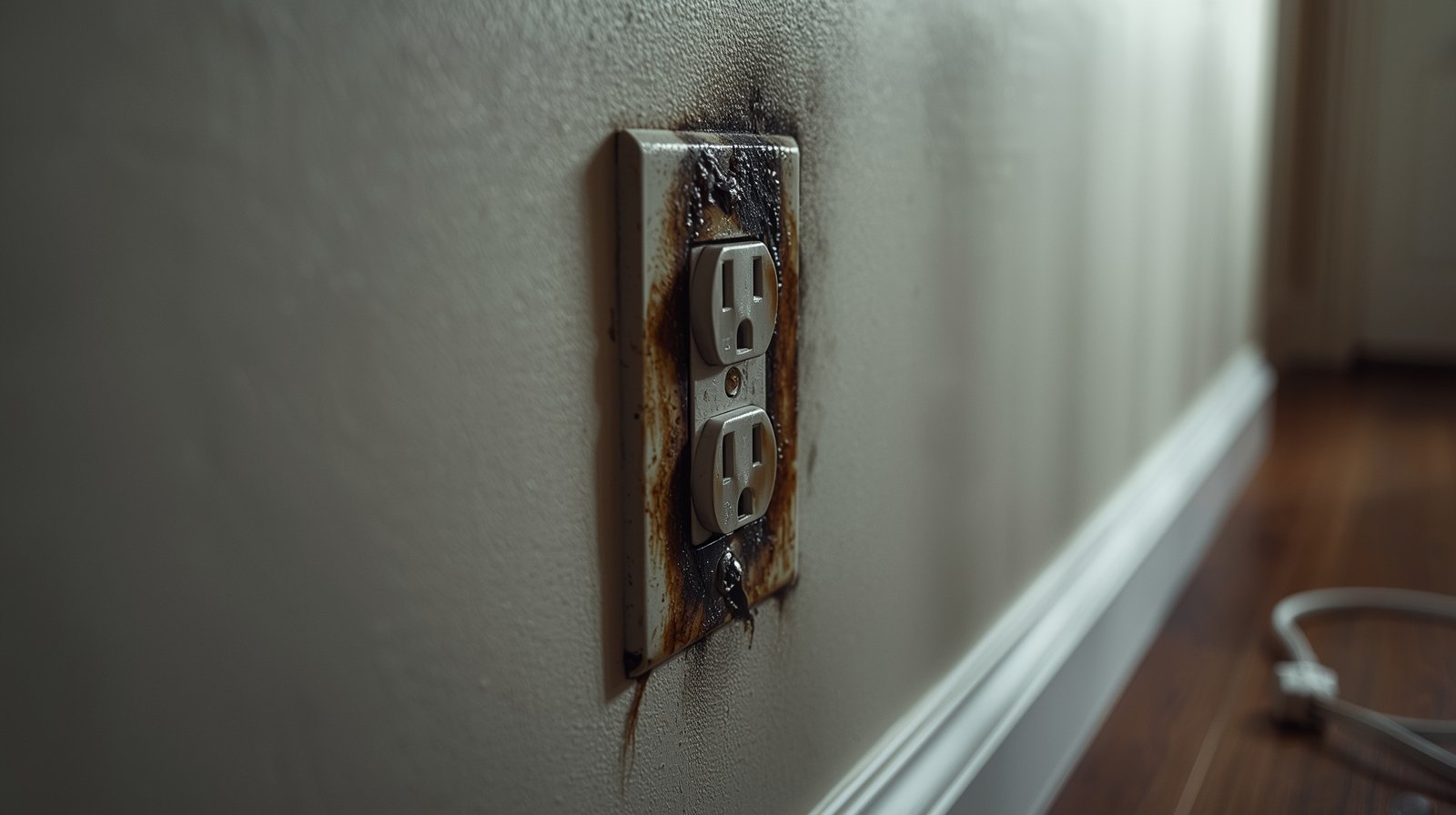
Short answer: Scorch marks or dark discoloration around an outlet should always be treated as a real warning sign. Even if the outlet still works, visible heat damage means something has already overheated, arced, or failed inside the outlet box or nearby wiring.
Scorch marks are not cosmetic. They are evidence that the outlet or wiring has already been stressed enough to leave visible damage on the faceplate, wall surface, or outlet opening itself. That makes this a fire-risk issue, not a “watch and wait” issue.
This guide explains what outlet scorching usually means, the most common causes, what to do immediately, and when to stop using the circuit and escalate.
What Scorch Marks Around an Outlet Usually Mean
Scorch marks form when heat builds up over time because electricity is not flowing cleanly through the outlet and its connections. Instead of staying cool under normal load, the outlet begins creating heat from resistance, arcing, or overloaded internal contacts.
That heat can darken paint, stain the cover plate, warp plastic, or leave brown or black residue around the receptacle openings. In some cases, homeowners first notice discoloration only after an outage or surge event, when weakened components are forced to carry load again.
Why Visible Discoloration Is More Serious Than It Looks
An outlet is designed to operate without producing noticeable surface heat. When scorch marks appear, that means heat has already been concentrated enough to damage surrounding materials.
Even if the outlet still powers a lamp or charger, internal parts may already be compromised. The danger is that the next high-load use—such as a heater, vacuum, microwave, or kitchen appliance—can push that damaged outlet into a more serious failure.
Common Causes of Outlet Scorching
Loose wiring connections
Inside the box, conductors must stay tightly secured to the outlet terminals. When those connections loosen from age, vibration, thermal expansion, or wear, electrical resistance increases.
Resistance creates heat. Over repeated use, that heat can damage the outlet body, wire insulation, and the surrounding box area before any breaker trips.
Arcing inside the outlet box
Arcing happens when current jumps across a gap instead of flowing smoothly through a solid connection. This can occur at loose terminals, failing internal contacts, or damaged plug connections.
Arcing creates extremely high localized temperatures. Even short arcing events can leave burn marks, and repeated arcing greatly increases fire risk inside the wall.
Overloaded or worn outlet contacts
Outlets that repeatedly power high-draw devices can wear down internally over time. Space heaters, window AC units, kitchen appliances, and other heavy loads are common contributors.
If internal contacts weaken, they may no longer grip plugs tightly. That poor contact can create heat every time the outlet is used.
Damage exposed during outage or restoration events
Power outages, surges, and restoration instability do not always create damage from scratch—but they often reveal weak points that were already developing. An outlet that was “almost failing” before the outage may finally show scorching once power returns and normal load resumes.
Why Scorch Marks Are a Serious Fire Risk
Visible scorching means heat has already affected materials inside or around the outlet box. Continued use allows that heat damage to worsen, increasing the chance of ignition behind the wall.
Electrical fires often begin out of sight. Insulation, dust, wood framing, or surrounding materials can smolder long before flames become obvious. That is why visible outlet scorching should always be treated as a stop sign rather than a minor defect.
Immediate Safety Steps to Take
If you notice scorch marks, stop using the affected outlet right away. Unplug any connected devices and do not keep testing it with other appliances.
If it is safe to do so, turn off the breaker that supplies that outlet. This helps prevent additional heating while you wait for professional evaluation.
- Unplug all devices from the outlet
- Do not plug anything else into it
- Turn off the circuit breaker if you can identify it safely
- Do not paint over, clean, or cover the scorch marks
- Do not remove the outlet cover unless you are qualified
How Scorch Marks Relate to Other Warning Signs
Scorching is often the final visible result of earlier warning signs. In many cases, homeowners noticed heat, odor, or sound before the discoloration became obvious.
Those earlier signs matter because they often point to the same failure pattern. If you noticed a burning odor before the marks appeared, see Burning Smell After a Power Outage: What It Means and What to Do. If the outlet felt warm or hot before discoloration appeared, use Warm or Hot Outlet After an Outage: Is It Dangerous?. If there was buzzing or humming, see Buzzing or Humming From Outlets or Switches After Power Is Restored.
When to Call an Electrician
Any outlet with visible scorch marks should be inspected by a licensed electrician. Even if the outlet still supplies power, internal damage may be significant and unsafe.
Visible heat damage is one of the clearest escalation triggers a homeowner can see. For broader stop-and-escalate guidance, review When to Call an Electrician After an Outage: Clear Signs You Shouldn’t Ignore.
What Not to Do
When people see scorch marks, they sometimes make the problem harder to diagnose—or more dangerous—by trying to treat the symptom instead of the cause.
- Do not keep using the outlet “until someone can look at it”
- Do not paint over discoloration
- Do not assume the outlet is safe because it still works
- Do not replace it yourself unless you are properly qualified
- Do not ignore related heat, odor, or sound elsewhere on the same circuit
Why Early Action Matters
Scorch marks are not an inconvenience. They are visible evidence that heat has already compromised part of the electrical system.
Acting quickly helps prevent fire, limits repair scope, and reduces the chance that a damaged outlet will harm wiring, connected devices, or surrounding materials. The earlier the issue is addressed, the better the chances of preventing a larger and more expensive problem.
Conclusion
Scorch marks around an outlet are one of the clearest visual signs that something electrical has already gone wrong. Whether the cause is loose wiring, arcing, overloaded contacts, or outage-related stress, the result is the same: the outlet is no longer safe to trust.
Stop using it, remove power if safe, and get professional evaluation. Visible heat damage is always worth taking seriously.