


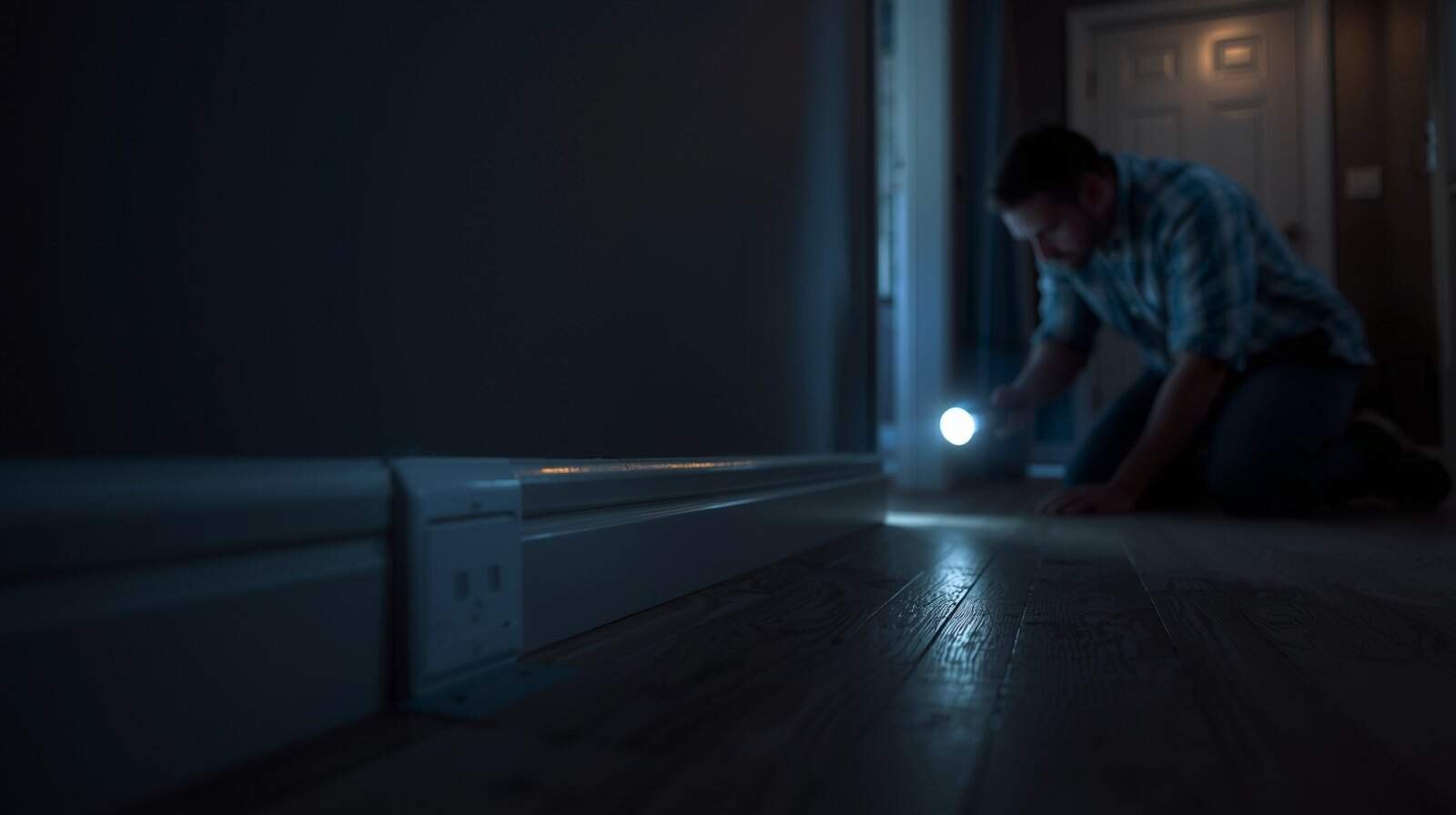
Short answer: Wiring hidden inside walls can overheat for long periods without producing dramatic warning signs. That makes it especially dangerous. By the time homeowners notice burning odor, warm wall areas, scorch marks, or repeated electrical oddities, the wiring may already have been under heat stress for a long time.
Electrical wiring inside walls is one of the hardest household hazards to spot early. Unlike a damaged outlet or a breaker that visibly trips, overheated in-wall wiring often develops quietly behind drywall, insulation, and junction boxes where homeowners cannot see it.
This guide explains why wiring inside walls overheats, the subtle warning signs people often miss, why the risk is serious, and when professional inspection becomes the safest next step.
Why Wiring Inside Walls Overheats
Electrical wiring overheats when current encounters resistance or when a circuit is forced to carry more load than it was designed to handle. In visible devices like outlets and switches, some warning signs may show up sooner. In-wall wiring is different because heat is trapped inside enclosed spaces where it cannot dissipate easily.
That means insulation, connectors, and nearby materials may be exposed to repeated heat cycles without any immediate outward clue. Over time, those repeated heat cycles can degrade wire insulation, damage connectors, and increase the chance of arcing or ignition.
Common Causes of In-Wall Overheating
Loose or aging electrical connections
Loose connections are one of the most common causes of hidden overheating. When a conductor is not tightly secured, electricity no longer moves through the connection cleanly. Instead, resistance increases and part of the energy is converted into heat.
That heat may stay concentrated at a junction, outlet box, switch box, or splice point for months or years before the problem becomes obvious.
Voltage imbalance and neutral problems
Some overheating problems are connected to unstable voltage conditions rather than simple overload. Loose or compromised neutral paths can cause uneven electrical behavior across parts of the home, putting wiring and connected devices under unpredictable stress.
Those system-level warning signs are explained further in Loose Neutral Wire Symptoms.
Overloaded circuits over time
Some circuits operate close to their thermal limit for years, especially in older homes that now support more devices than they were originally designed for. Even if a breaker never trips, repeated high demand can slowly increase heat inside hidden wiring runs.
This becomes more concerning when insulation is older, connections are weak, or the same circuit repeatedly serves multiple heavy loads.
Damage exposed by outages or restoration events
Power outages and restoration events do not always create wiring damage from scratch, but they often expose weak points that were already developing. When current returns and multiple appliances restart at once, stressed wiring may finally begin producing noticeable heat or odor.
Subtle Warning Signs Homeowners Often Miss
In-wall overheating rarely announces itself with one dramatic symptom at first. More often, it shows up through small warning signs that seem easy to dismiss until they begin repeating.
Faint burning odors with no obvious source
A light hot-plastic or insulation-like smell that comes and goes can be one of the earliest clues. Because the odor may fade when the load changes, people often assume it was nothing important.
If odor has already become part of the picture, see Burning Smell After a Power Outage: What It Means and What to Do.
Warm outlet covers, switches, or wall areas
Slight warmth on a faceplate or nearby wall surface can indicate heat building up behind the surface. It may only appear when certain appliances are running, which makes it easy to miss unless someone touches the area at the right time.
Discoloration or scorch marks around outlets
Darkening, browning, or scorch marks near outlets are often late-stage clues that heat has already been present for some time. Visible damage on the surface usually means the internal condition has been developing longer than it appears.
For more detail on that warning sign, see Scorch Marks or Discoloration Around Outlets.
Intermittent flicker or inconsistent behavior
Lights that flicker, devices that cut out unpredictably, or power that feels “off” in a way that is hard to explain can also point to hidden heating at weak connection points. These symptoms may appear and disappear, which is exactly why they are often underestimated.
Why Overheated Wiring Inside Walls Is a Serious Fire Risk
Heat trapped inside walls can ignite insulation, dust, wood framing, or other nearby materials long before flames become visible in the room. Electrical fires often begin in concealed spaces where smoke and heat build quietly before anyone realizes what is happening.
That delay is what makes hidden overheating so dangerous. The earliest warning signs may be the only practical chance to respond before damage becomes much more serious.
How Hidden Overheating Connects to Broader Electrical Risk
In-wall overheating is often not a one-point problem. It may be part of a larger pattern involving aging connections, overloaded circuits, unstable voltage behavior, or ongoing heat stress in multiple parts of the system.
That is why hidden overheating should not be treated as an isolated mystery. It often reflects the same broader system-level concerns described in Loose Electrical Connections in the Home.
When to Call an Electrician
If you notice recurring odors, unexplained warmth, flickering, intermittent outlet behavior, visible discoloration, or repeated electrical symptoms that never fully make sense, it is time for professional evaluation. These conditions do not reliably resolve on their own.
A licensed electrician can identify whether the warning signs point to loose connections, hidden heat damage, overloaded circuits, or another internal issue that cannot be safely diagnosed from the surface.
Why Early Response Matters
Overheated wiring inside walls is dangerous precisely because it is easy to overlook. Homeowners often wait for a bigger, clearer sign, but by the time that sign appears, insulation or surrounding materials may already be damaged.
Taking subtle warning signs seriously and involving a professional early helps reduce fire risk, limit repair scope, and restore confidence that the system is safe to keep using.
Conclusion
In-wall wiring can overheat for a long time without dramatic surface evidence. That makes faint odor, unusual warmth, intermittent flicker, and outlet discoloration more important than they may seem at first.
When those signs repeat, the safest assumption is not that they are harmless—it is that hidden heat may already be present. Early professional inspection is often the best way to catch the problem before it turns into visible damage or fire.