


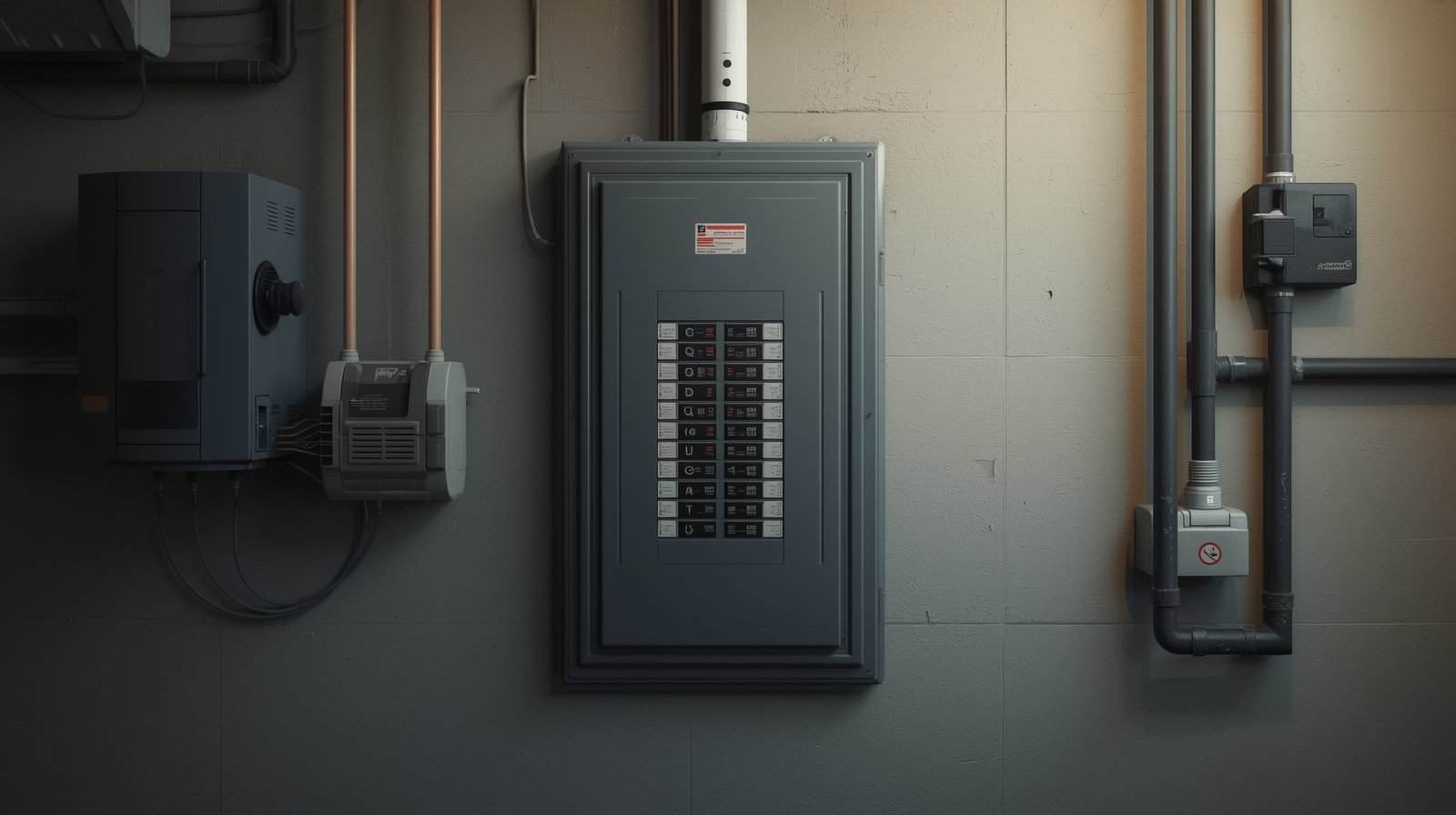
Short answer: Breaker panels do not need to fail completely to become unsafe. An aging panel can still appear to “work” while its breakers trip too slowly, internal connections heat up, or protective performance degrades under real fault conditions. That makes panel aging a safety issue, not just an inconvenience issue.
Electrical breaker panels are designed to protect a home by interrupting power when something goes wrong. But like any mechanical and electrical system, panels age—and when they do, their ability to protect can quietly decline even while the lights still come on and the circuits still seem usable.
This guide explains why breaker panels become less reliable over time, the warning signs homeowners should take seriously, and when panel concerns should trigger professional evaluation.
Why Breaker Panels Become Less Reliable Over Time
Breaker panels contain both electrical and mechanical components. Every time a breaker carries load, heats up, cools down, or trips, parts inside the system experience stress. Over many years, repeated heat cycles, vibration, corrosion, oxidation, and material fatigue can reduce reliability.
As panels age, breakers may begin tripping inconsistently, connections may loosen, corrosion may interfere with clean electrical contact, and internal parts may stop performing the way they did when new. The panel can still deliver power while becoming less trustworthy as a protective device.
Why an Aging Panel Can Be Dangerous Even If It Still “Works”
Many homeowners assume a panel is fine as long as circuits still have power and breakers do not trip constantly. The problem is that an aging panel can continue operating in a way that feels normal while becoming less effective during overloads, short circuits, or other abnormal conditions.
That is what makes panel aging deceptive. The danger is often not everyday operation. The danger is what happens when the system is asked to protect the home during the exact moment protection matters most.
Warning Signs of an Aging or Unsafe Panel
Panel problems rarely announce themselves in one dramatic way. More often, they show up through repeated or inconsistent warning patterns.
Frequent or inconsistent breaker behavior
Breakers that trip without a clear pattern—or fail to trip even when loads seem excessive—can point to internal wear, weak connections, or degraded protective response.
Inconsistent breaker behavior matters because it suggests the system may no longer be reacting predictably under stress.
Physical signs of deterioration
Rust, corrosion, discoloration, staining, or a musty odor around the panel can suggest moisture exposure, aging materials, or environmental damage. Even if the panel still powers the home, these conditions can weaken component integrity over time.
Heat buildup near the panel
A panel that feels noticeably warm—or a wall area around it that seems warmer than expected—can signal loose internal connections, overstressed breakers, or components operating too close to their limit.
Heat is one of the most important warning signs because electrical systems are not supposed to create obvious surface warmth under normal conditions.
Limited capacity for modern electrical demand
Older panels were installed for homes with fewer appliances, fewer electronic devices, and lower sustained electrical demand. Modern households often add kitchen equipment, HVAC loads, chargers, home office equipment, window AC units, and other devices that place more continuous stress on older systems.
Even if the panel was once adequate, today’s usage patterns may push it closer to its limit more often.
How Panel Aging Interacts With Other Electrical Risks
Panel aging rarely exists in isolation. Older or weakened panels often appear alongside other system-level issues such as poor grounding, loose connections, overloaded circuits, and unstable fault clearing.
That overlap matters because the risks compound. A system with an aging panel and poor grounding, for example, has less margin for safe fault response than a healthy system. Related risks are explained further in Poor Electrical Grounding in Homes and Overloaded Circuits Without Tripped Breakers.
Why Aging Panels Increase Fire Risk
When breakers do not interrupt unsafe conditions promptly, heat can build in conductors, breaker bodies, bus connections, and terminations. Over time, that heat can damage insulation, weaken connections, and increase the chance of arcing or ignition.
This is one reason panel problems can become serious before homeowners realize anything is wrong. The system may keep working while hidden heat slowly raises the risk level.
Why Age Alone Is Not the Only Factor
Not every older panel is automatically unsafe, and not every newer panel is automatically trouble-free. What matters most is the combination of age, condition, environment, load demand, and warning signs.
A panel that is older but stable, dry, professionally maintained, and not showing warning signs is a different situation from a similarly aged panel that is warm, corroded, overloaded, or behaving unpredictably. The key is understanding when age has moved from “old” to “reduced protective reliability.”
When Panel Concerns Should Trigger Professional Evaluation
Because breaker panel condition cannot be fully judged from casual visual inspection, repeated symptoms or age-related concerns should trigger professional evaluation. This is especially true if panel concerns appear alongside flickering lights, unusual breaker behavior, odor, heat, or broader system irregularities.
Professional evaluation becomes more important—not less—when symptoms seem inconsistent. Inconsistent protection is still a safety issue.
If panel aging is showing up alongside broader electrical warning signs, it may be part of a larger fire-risk pattern. For that bigger-picture escalation guidance, see When Home Electrical Systems Become a Fire Risk.
Why Early Action Matters
Panel problems are easier to address before they become heat damage, widespread instability, or a fire hazard. Waiting until a panel shows obvious severe damage often means waiting until the system has already been under stress for too long.
Early evaluation helps identify whether the panel is still providing dependable protection, whether loads are exceeding safe practical limits, and whether hidden connection or breaker issues are already developing.
Conclusion
Breaker panels do not last forever, and they do not need to stop working completely to become unsafe. As panels age, their protective reliability can decline quietly, especially when modern electrical demand is higher than the system was originally designed to handle.
Recognizing warning signs early—especially heat, corrosion, inconsistent breaker behavior, and broader electrical symptoms—helps prevent a declining panel from becoming a much larger fire-risk problem.