


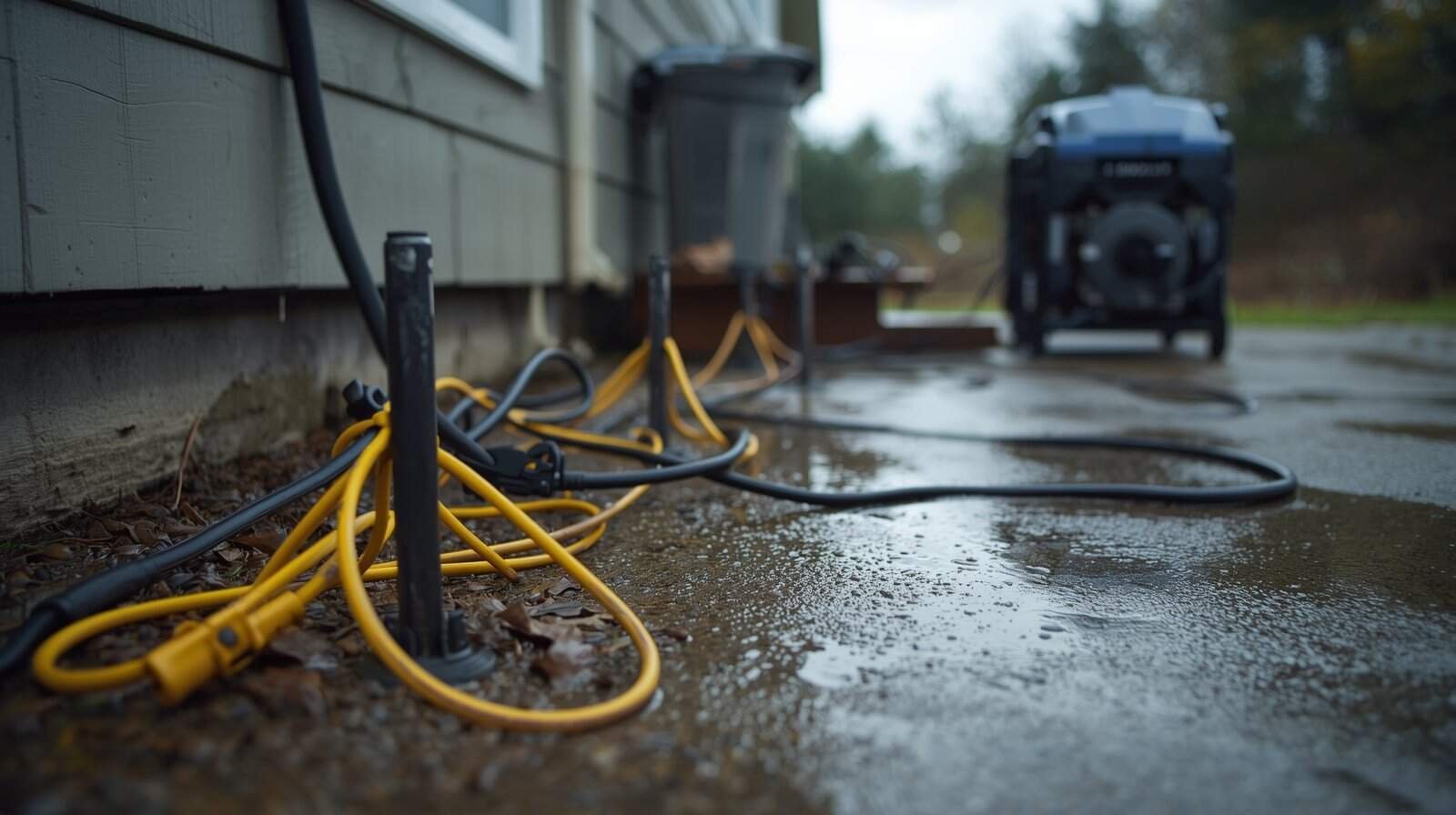
Extension cords are a critical link between a generator and the appliances it powers. During storms and outages, those cords are often exposed to rain, puddles, or saturated ground. When moisture enters the equation, shock and fire risks rise sharply.
Why Wet Extension Cords Are Especially Dangerous
Electricity and water are a dangerous combination. Moisture lowers electrical resistance, allowing current to travel along surfaces it normally wouldn’t. When extension cords become wet, damaged insulation or exposed conductors can energize surrounding surfaces.
This risk increases when cords lie directly on wet ground, snow, or standing water. Even cords labeled for outdoor use are not designed to operate while submerged.
How Generator Power Increases Shock Risk
Generators produce electricity independently of the utility grid. Without proper grounding and protection, faults may not clear as quickly as they would with household wiring.
If a wet cord develops a fault, current can travel through puddles, metal surfaces, or nearby objects. Anyone touching the cord, appliance, or generator frame may receive a severe shock.
The Role of GFCI Protection
Ground-fault circuit interrupters (GFCIs) are designed to cut power when a current imbalance is detected. While GFCI protection reduces risk, it does not make wet conditions safe.
If a GFCI trips repeatedly during generator use, moisture intrusion may be the cause. Review why a GFCI won’t reset to understand when water exposure has compromised safety.
Safer Extension Cord Setup During Wet Conditions
Whenever possible, cords should be routed to stay elevated above wet ground. Use cord stands, hooks, or temporary supports to keep cords dry and reduce strain on connectors.
Select cords properly rated for generator use and sized correctly for the electrical load. See extension cord sizing for generators to avoid overheating and voltage drop.
Outdoor-Rated Cords vs. Improvised Solutions
Only heavy-duty outdoor-rated extension cords should be used with generators. Household cords, power strips, and indoor-rated equipment increase fire and shock risk—especially when wet.
For a full overview of safe cord types, review generator extension cord safety.
Weather Conditions That Make Generator Use Unsafe
There are times when wet conditions make generator use unsafe regardless of precautions. Flooding, standing water, or continuously saturated ground should prompt shutdown.
For broader weather guidance, review running a generator in the rain and reassess conditions before continuing operation.
Conclusion
Wet extension cords dramatically increase the risk of shock and electrical injury when using a generator. Keeping cords dry, properly rated, and elevated—along with recognizing when conditions are unsafe—can prevent serious accidents during outages.