


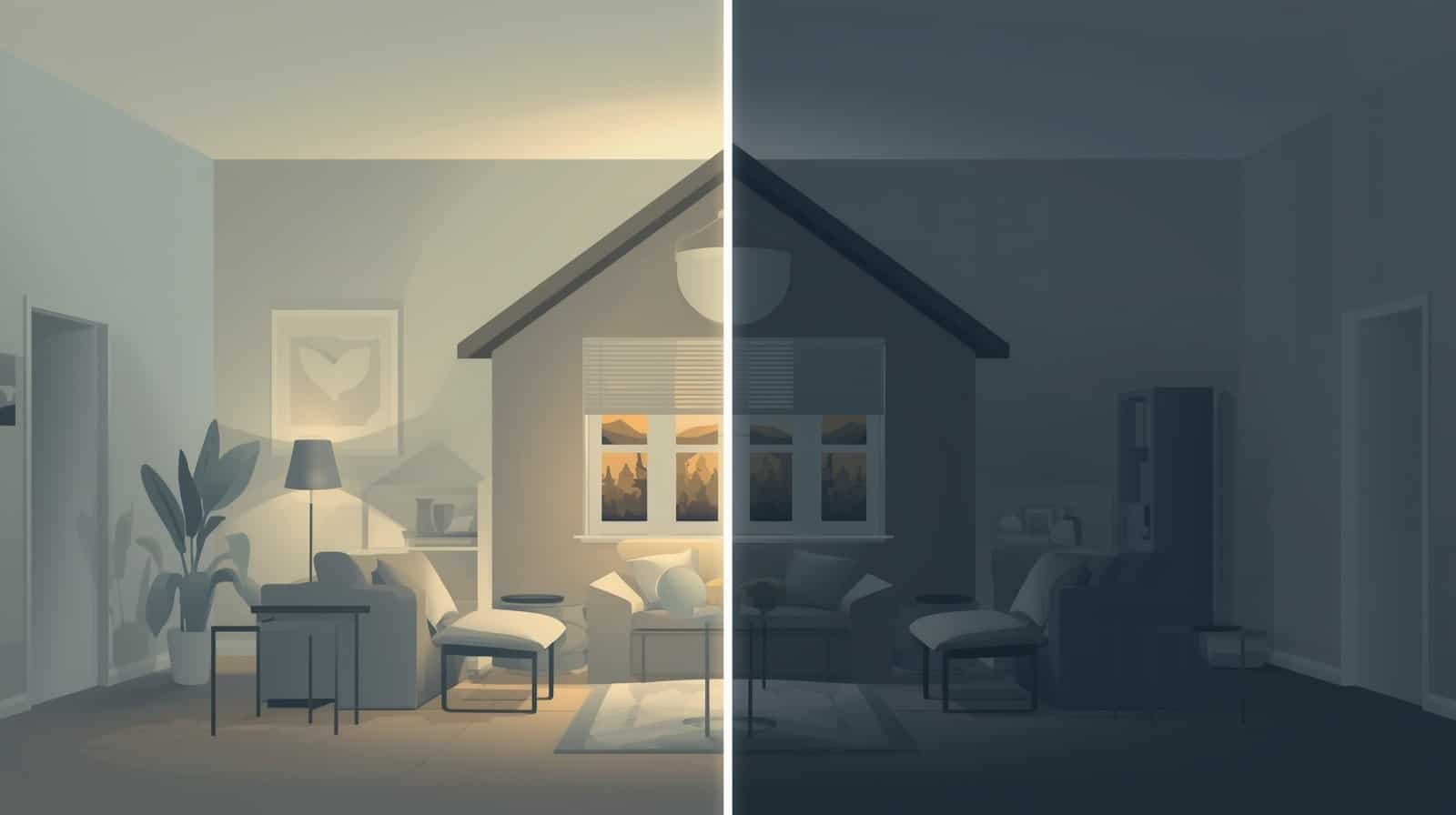
Power is back, but something’s still wrong? If lights and outlets work in some rooms but not others, you may be dealing with partial power. This Visual Guide helps you spot danger signs, understand what “half the house” often means after an outage, and choose the safest next step—without guesswork or repeated resets.
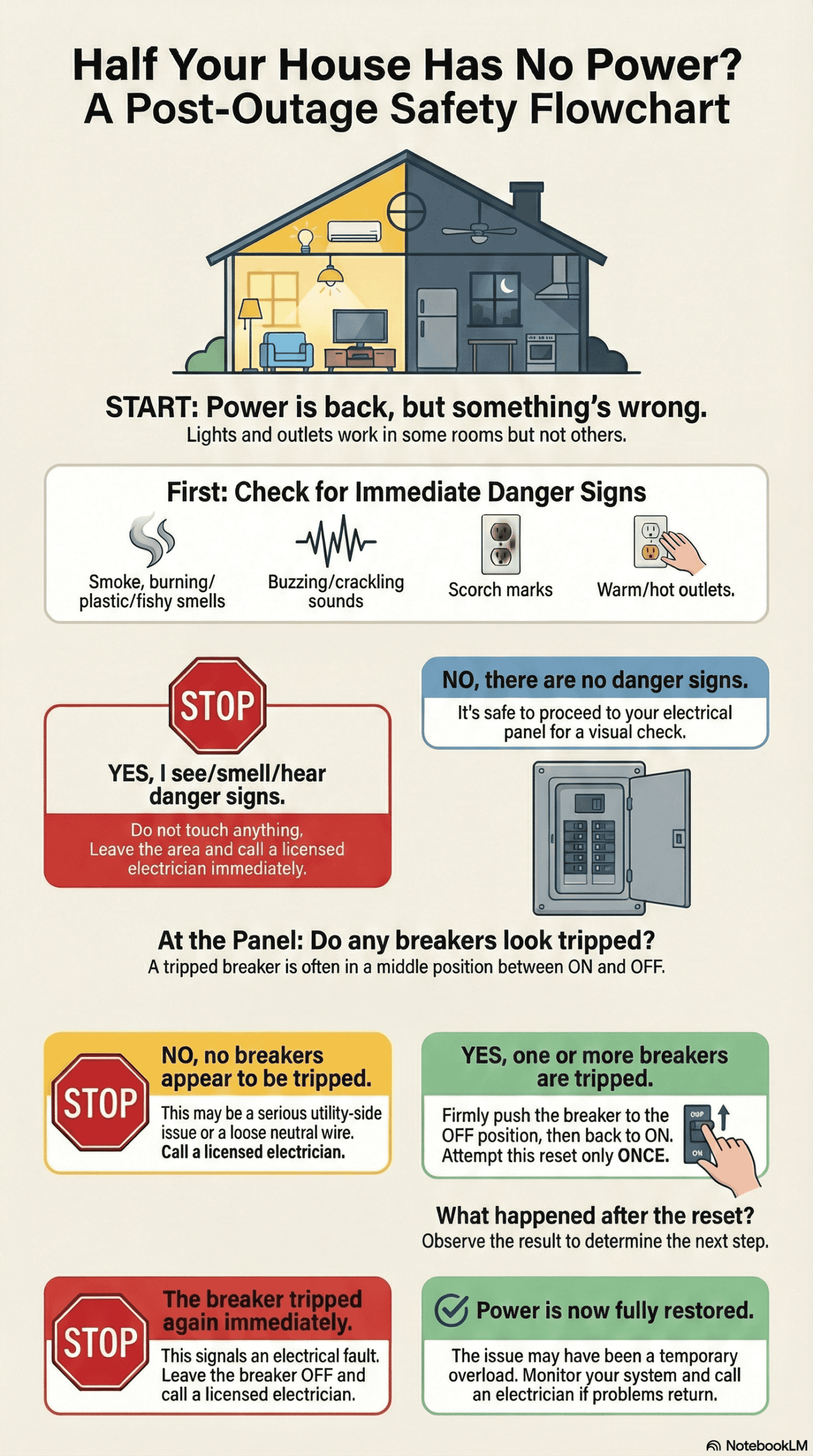
If you notice a burning smell, smoke, buzzing/crackling sounds, warm or hot outlets/switches, visible scorch marks, or repeated breaker trips, stop troubleshooting. Leave the affected breaker OFF if it is already off and contact a licensed electrician.
How Partial Power Differs From a Full Outage
A full outage is usually straightforward: the home goes dark and you wait for utility restoration. Partial power is different. Some rooms may work normally while others are dead—or power may be present but feel “unstable.”
That mixed pattern is exactly why partial power creates confusion. It can look like a minor nuisance, but it can also signal a service-level problem that should not be ignored.
This Visual Guide is not a repair tutorial. It’s designed to help you recognize patterns, perform only safe surface-level checks, and know when to stop and escalate.
Common Reasons “Half the House” Happens After an Outage
Partial power after an outage usually falls into a few broad buckets. The goal is to recognize which bucket you’re in—without turning the situation into a DIY electrical project.
- A single tripped breaker affecting one side of the home or a cluster of rooms.
- Power restored with instability that triggers protective devices or exposes weak connections.
- A service-side or neutral-related issue where power delivery is uneven (higher risk).
- A “looks normal” panel while certain areas remain dead, which can indicate the problem is not a simple branch-circuit reset.
If lights are unusually bright or dim, multiple rooms behave oddly, or electronics act erratically, treat it as higher risk. Unstable voltage can damage appliances and may indicate a neutral/service issue.
What This Flowchart Helps You Decide
- Is this immediately unsafe? Danger signs mean you stop and escalate.
- Is a breaker actually tripped? Some breakers trip to a middle position and can be missed.
- Did one reset restore normal power? If power returns, don’t keep forcing resets “just to be sure.”
- Is this bigger than a breaker? If the pattern is widespread or doesn’t match a simple trip, it may be service-side.
Common Mistakes to Avoid With Partial Power
Partial power makes people want to “try a few things.” That instinct is understandable, but repeated testing can make a bad situation worse. Avoid these common mistakes:
- Repeatedly resetting breakers. A breaker that trips again is telling you something important.
- Assuming “some power” means it’s safe. Mixed or unstable power can signal deeper problems.
- Ignoring heat, smells, or buzzing. Sensory warning signs are not “normal after an outage.”
- Chasing the issue room-by-room. The problem may be upstream at the service level.
FAQ
Is it normal for partial power to happen right after an outage?
It can happen, especially if restoration includes brief instability. But “possible” doesn’t mean “safe.” Confirm there are no danger signs, avoid repeated resets, and escalate if the pattern persists.
What if the panel looks normal but half the house is still out?
If no breakers appear tripped and multiple areas are affected, don’t assume it’s a single outlet issue. That pattern can indicate a larger service-level problem that needs professional evaluation.
What if a breaker trips again immediately?
Stop. A repeat trip suggests a persistent fault. The safest choice is to leave the breaker off and contact a licensed electrician rather than trying multiple resets.
Should I keep using outlets in the rooms that still have power?
If anything seems unstable (flicker, buzzing, heat, odors, devices behaving strangely), stop using power until the situation is evaluated. If everything appears stable, proceed cautiously and monitor.
Helpful Next Reads
- Half the House Has Power: Causes, Safe Checks, and What It Means
- Power Outage but Neighbors Have Power: What’s Happening and What to Check
- Loose Neutral Wire Symptoms: Why Voltage Fluctuations Become Dangerous
- When to Call an Electrician After an Outage: Clear Signs You Shouldn’t Ignore
Quick Reminder
This Visual Guide is for homeowner safety and orientation. If the situation feels unsafe, if power behavior is erratic, or if breakers trip repeatedly, the safest next step is professional evaluation.