


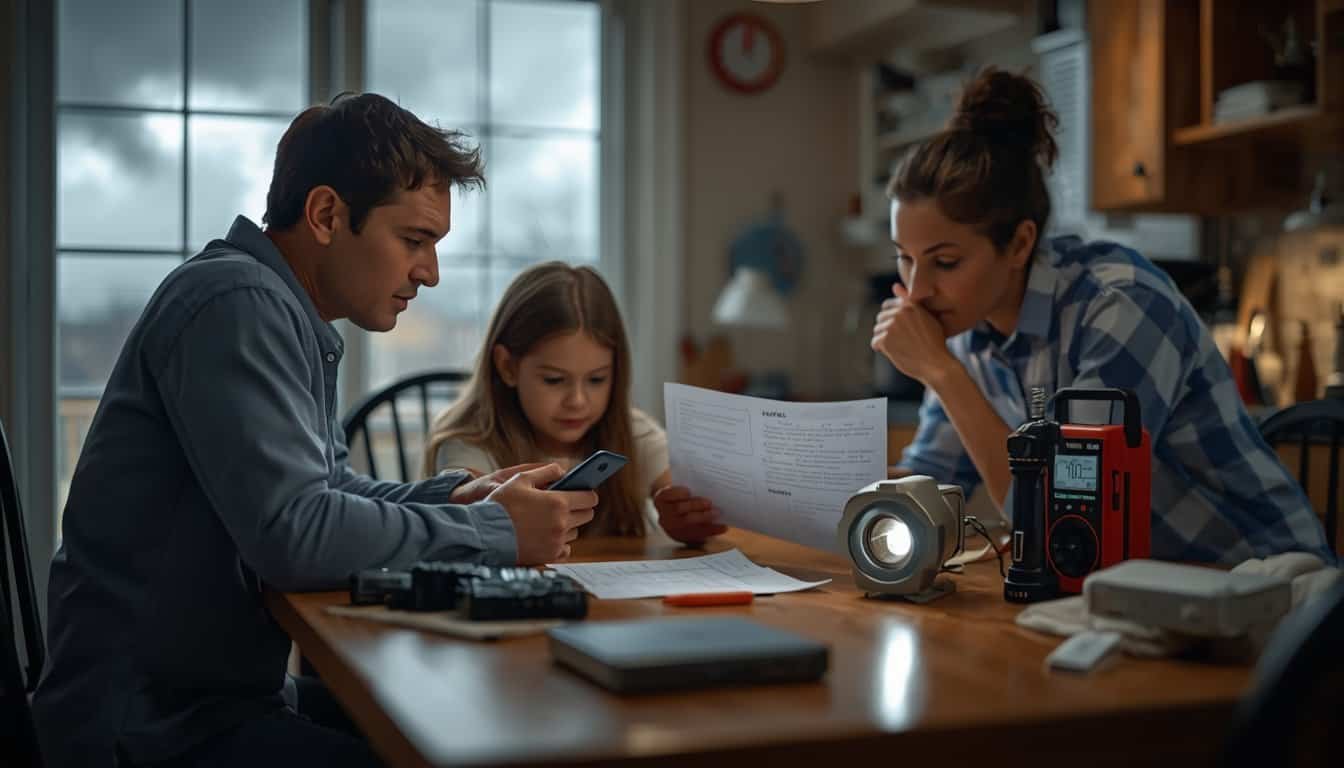
Severe weather planning often focuses on supplies, flashlights, and backup power, but families can still struggle when the most basic question is not settled in advance: how will everyone know what is happening and what they are supposed to do? Storms create confusion quickly, especially when warnings come in fast, power fails, or family members are not all in the same place when the weather turns dangerous. That is why severe weather alerts and family communication plans deserve the same attention as emergency kits and outage supplies.
A good communication plan does not need to be complicated. It needs to be clear enough that each person in the household understands where alerts will come from, what kind of message means “pay attention,” what kind means “move now,” and how the family will reconnect if phones, internet, or normal routines are disrupted. The best plans reduce hesitation, repeated calls, and last-minute confusion when time matters most.
An alert system tells you that dangerous weather may affect your area. A family communication plan tells each person what to do with that information. When those two pieces work together, households respond faster and with less confusion.
Why one alert source is not enough during severe weather
Many people assume their phone alone is enough for storm alerts, but severe weather does not always cooperate with that assumption. Phones can be silenced, batteries can run low, service can become inconsistent, and people can miss notifications when they are asleep, driving, or focused on something else. A stronger system uses more than one path for receiving urgent information.
For most families, that means combining phone-based alerts with at least one additional source, such as a weather radio, local emergency notification system, or another reliable household method for relaying urgent information. Redundancy matters because severe weather events often come with the same disruptions that make communication less dependable. If one channel fails or is missed, another should still help move the household toward action.
This is especially important in households where one person tends to monitor the weather while others assume they will be informed later. That arrangement can work on calm days, but it is weaker during a fast-moving event. Every adult in the home should understand how alerts are received and what a serious weather warning means for the household plan.
Set up alerts in a way your household will actually use
The best severe weather alert setup is not the one with the most apps or the most notifications. It is the one your household will actually notice and trust. If too many alerts arrive with no clear purpose, people start ignoring them. If too few arrive, the family may not react early enough. The goal is to create a system that is noticeable without becoming meaningless background noise.
Start by deciding which alert sources are primary and which are backup. For many families, the phone is the primary source because it is always nearby, while a weather radio or second adult in the home acts as backup if service fails or if someone misses the first alert. Families in hurricane-prone or multi-storm regions may also want to review hurricane power outage preparation, since long-duration storm events often require a broader communication and power strategy than short warnings alone.
Keep the plan practical. Choose alert settings that are easy to hear, make sure devices stay charged when severe weather is expected, and decide ahead of time which alerts require immediate household action. The point is not to become glued to the forecast all day. The point is to avoid losing time because no one is sure whether an alert is routine or urgent.
Use plain language for household trigger points
One of the easiest ways to strengthen a communication plan is to agree on simple trigger phrases. For example, one message may mean “monitor conditions,” while another may mean “come home now,” and another may mean “go to the shelter area immediately.” These phrases do not need to be clever. They need to be clear and consistent.
Households often waste time because people interpret alerts differently. One person thinks the situation is serious, another thinks there is still time, and another assumes someone else is overreacting. A simple shared language reduces debate and helps each person understand the next step without waiting for a longer explanation.
Build a family communication plan before the storm season gets busy
A family communication plan should answer a few basic questions clearly. Who receives alerts first? Who checks on children, older adults, or relatives? What happens if one person is at work, one is at school, and one is already at home? And if service becomes unreliable, what is the fallback method for checking in?
These questions are easier to answer in a calm moment than during an active storm warning. Write down a small set of contact numbers, meeting expectations, and next-step instructions in a form that can still be used if a phone battery is low or internet access is unreliable. Even a simple printed contact sheet can be valuable when people are tired, stressed, or working from memory.
It also helps to align this planning with your broader household readiness setup. If your family is still building the basics, this 72-hour emergency kit for power outages is a practical companion because communication tools, chargers, flashlights, batteries, and printed contact information all fit naturally into the same readiness system.
Plan for separation, not just togetherness
Many families build communication plans as if everyone will already be home together when a storm warning arrives. In real life, that is often not the case. Adults may be commuting, children may be at school or activities, and one person may be running errands or helping another family member. A stronger plan assumes separation is possible and gives each person a simple way to act without waiting for perfect coordination.
That does not mean creating a long emergency binder. It means making sure each person knows the main contact points, the main decision-maker if needed, and the basic household rule for when to move, when to stay put, and when to confirm status. Communication plans work best when they are realistic enough to survive a messy day instead of only a perfectly organized one.
How communication changes when power or service becomes unreliable
Storm communication becomes harder when electricity is out, mobile data slows down, or chargers become limited. That is why power planning and communication planning should not be treated as separate topics. A dead phone or an uncharged battery bank can weaken the entire household response, even if everyone knew the plan earlier in the day.
During severe weather periods, charge devices early and keep battery banks ready before the first warning arrives. Use text messages when possible rather than long calls if networks become overloaded, and avoid burning through battery life with constant unnecessary updates. The family does not need nonstop chatter. It needs reliable contact at the moments that matter most.
When an outage is already underway, households benefit from a short, structured response sequence. This power outage checklist for the first 15 minutes, first 4 hours, and first 24 hours can help families shift from storm reaction to practical communication, lighting, charging, and household stabilization after the immediate weather threat has passed.
Do not let communication attempts pull attention away from protective action. If a warning requires immediate sheltering, get to the safer location first and send updates only when it is safe to do so. A perfect check-in is less important than moving the household out of danger.
Teach each family member what to do when an alert arrives
A household plan is only useful if the people in it know how to use it. Adults should not assume children, teens, or even other adults interpret alerts the same way. In many homes, one person follows weather information closely while others only half-listen until the situation becomes urgent. That gap can lead to dangerous delay.
Walk through the plan in plain language. Show people which alerts matter, where they come from, and what the next action should be when a message or warning arrives. Families with tornado risk should also connect this directly to sheltering expectations, which is why it helps to pair this article with tornado preparedness for homeowners so the communication plan and shelter plan reinforce each other.
It also helps to rehearse one short version of the plan. Not a dramatic drill, but a quick run-through of who contacts whom, who brings what, and where people go if a warning is issued. Familiarity reduces hesitation, and hesitation is often what turns an ordinary plan into an unusable one during an actual storm.
Good storm communication is calm, brief, and repeatable
Families do not need a complex emergency command system to communicate well during severe weather. They need a small number of reliable alert sources, a shared understanding of what urgent messages mean, and a fallback plan for times when power or mobile service become unreliable. When those pieces are in place, households are much more likely to respond with focus instead of confusion.
The real value of a severe weather communication plan is that it removes unnecessary decision-making during stressful moments. Everyone knows where information comes from, what the household trigger points are, and how to reconnect if normal routines break down. That kind of clarity is often what turns a tense storm day into a more manageable one.