


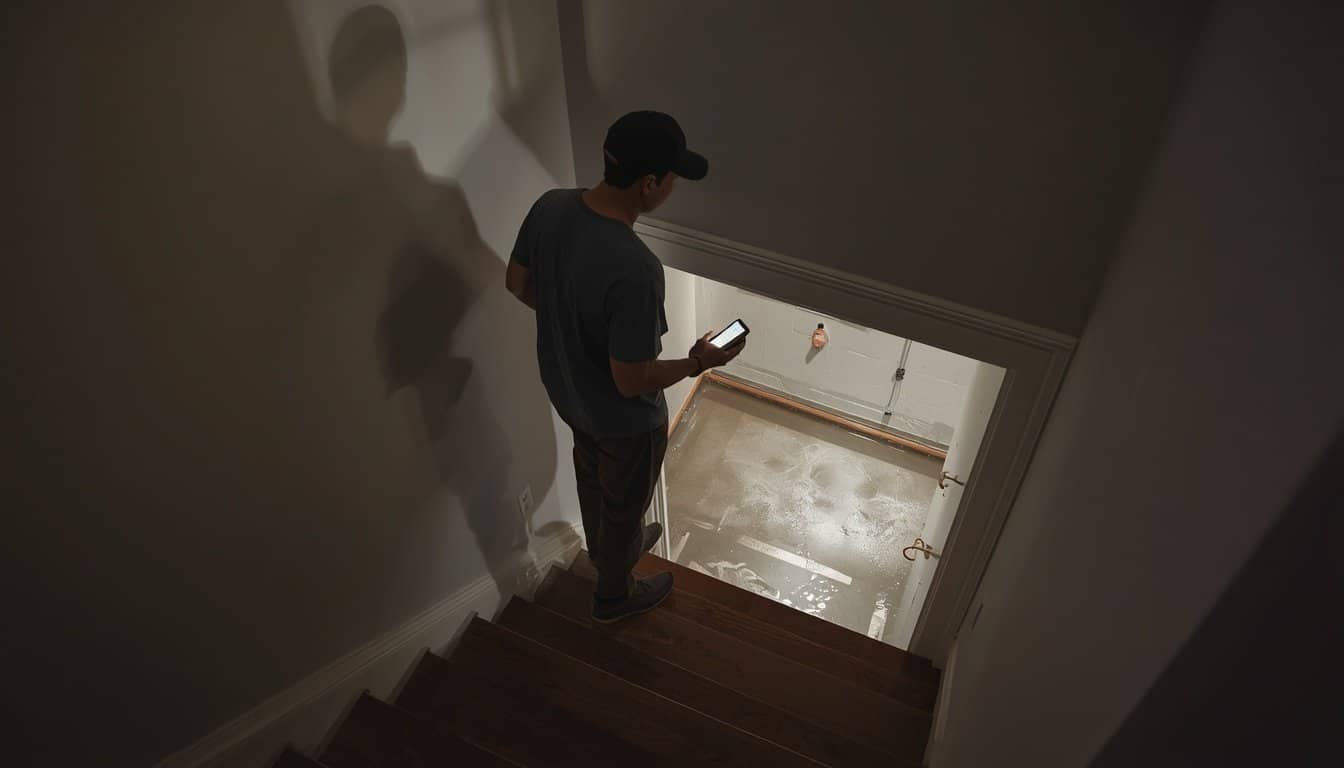
A basement that starts flooding during a power outage can become dangerous quickly because water, electricity, darkness, and storm stress all arrive at the same time. The safest first move is not to rush downstairs with a pump or extension cord, but to stop, assess from a dry location, and avoid entering water that may be near electrical equipment.
If your basement starts flooding during a power outage, stay out of standing water if electricity may be present, keep people and pets away, use a flashlight from a dry area, call the utility or emergency services if electrical hazards are involved, and only use pumps, generators, or cleanup equipment when they can be operated safely. Protecting people comes before protecting stored items, appliances, or flooring.
Stop Before You Step Into the Basement
The first decision is whether it is safe to enter at all. During a power outage, it can be tempting to hurry downstairs to move boxes, unplug equipment, or check the sump pump. That is exactly when mistakes happen. If there is standing water, poor visibility, or any chance water is near electrical equipment, stay on dry ground.
Use a flashlight from the top of the stairs or a dry doorway. Look for water depth, where the water is spreading, whether outlets or cords are nearby, whether the sump pit is overflowing, and whether water is approaching the electrical panel, furnace, water heater, freezer, washer, dryer, or plugged-in devices.
If the water is still shallow and clearly away from electricity, you may be able to take limited safe actions. If water is near electrical equipment, treat the basement as unsafe. For more background on the electrical risks after storms, review Water Damage and Electricity After a Storm before making cleanup decisions.
Keep People and Pets Away From the Water
Once water is present, the basement should not become a traffic area. Keep children, pets, older adults, and anyone with mobility limits away from the stairs and basement entrance. A wet basement floor can hide electrical hazards, slippery surfaces, sharp debris, contaminated water, or sudden changes in depth.
Close the basement door if that helps prevent accidental entry. If multiple people are home, clearly say that no one should go downstairs until the electrical risk is understood. In an outage, people may assume the power is off and the water is harmless, but utility power can return unexpectedly or parts of the home may still be energized.
If someone has already entered the water and reports tingling, shock, dizziness, burning smell, buzzing, or sparking, treat it as an emergency. Do not go in after them unless it is safe to do so. Call emergency services and keep others away.
Do Not Touch the Electrical Panel From Standing Water
Turning off power may be important during flooding, but it must be done safely. Do not walk through water to reach the electrical panel. Do not touch breakers, fuses, switches, outlets, cords, appliances, or plugged-in equipment while standing on a wet surface.
If the electrical panel is dry, accessible, and you can reach it without standing in water, shutting off power may reduce risk. If the panel is in the flooded area or you are unsure, leave it alone and call the electric utility, emergency services, or a qualified electrician. The right answer may be to have power disconnected from outside the home.
This is one of the hardest moments for homeowners because shutting off power feels like something you “should” do. But if reaching the panel requires stepping into water, the safer move is to stay out and call for help.
Check Whether the Sump Pump Is the Problem
If the basement is flooding during an outage, the sump pump may have stopped because it lost power, the backup battery failed, the discharge line is blocked, or the pump cannot keep up with the amount of water entering the pit. Understanding which situation you have helps you decide what can be done safely.
From a dry location, listen for alarms, pump noise, or water running into the pit. If you can see the sump basin safely without entering water, check whether the water level is rising and whether the pump appears to be cycling. Do not reach into the pit, touch the pump, or adjust cords if the floor is wet or the area may be energized.
If the battery backup is still operating, use the Sump Pump Backup Runtime Estimator to estimate how much protection may remain based on battery capacity, pump wattage, cycle length, and cycles per hour. During an active storm, repeat the estimate if the pump begins cycling more often because runtime can shrink quickly as water inflow increases.
After the immediate situation is safe, use Sump Pump Power Outage Plan to build a better prevention setup with battery backup, water alarms, generator planning, and discharge checks. During an active flood, though, safety comes first.
Use a Generator Only If It Can Be Done Safely
A generator may be able to power a sump pump or utility pump, but it can also create serious carbon monoxide and electrical hazards if used in a rush. The generator must stay outdoors and away from windows, doors, garages, vents, porches, and enclosed or partly enclosed areas. Never bring it into the basement, garage, or doorway because rain is falling or the pump needs power.
If you use a generator, the pump and cord setup must also be safe. The cord should be outdoor-rated, heavy-duty, properly sized, and routed away from standing water. Do not run cords through puddles, across wet floors, under rugs, through tight pinch points, or near places where people may trip in the dark.
For cord planning after the emergency, review Extension Cord Sizing for Generators. During active basement flooding, do not improvise with thin indoor cords or unsafe routing just to get the pump running faster.
Decide Whether Pumping Water Is Safe Yet
Removing water may be possible when the electrical hazards are controlled, the pump can be powered safely, and the water is shallow enough to manage without entering unsafe areas. But if water is near outlets, appliances, the panel, or plugged-in cords, pumping should wait until the power situation is made safe by the utility, emergency responders, or a qualified professional.
Do not use a wet/dry vacuum, utility pump, extension cord, or powered cleanup equipment while standing in water unless you are certain the setup is safe and the equipment is intended for that use. In an outage, people often create shock hazards by combining wet floors, temporary cords, and rushed cleanup.
If water is rising quickly, coming in from outside flooding, backing up through drains, or possibly contaminated with sewage, the risk is higher. In those situations, leaving the area and calling for help is safer than trying to save the basement yourself.
Move Valuables Only From Dry, Safe Areas
If the water is limited and the safe path is dry, you may be able to move items away from the basement entrance or higher shelves. Focus on people, pets, medications, critical documents, and irreplaceable items only if doing so does not require entering water or touching electrical equipment.
Do not carry heavy boxes through a dark stairwell while water is rising. Falls are a real risk during outages, especially when stairs are wet, lighting is poor, and people are rushing. If something requires entering the flooded area, leave it until the basement is safe.
For future storms, move valuables, documents, tools, seasonal items, and electronics off the basement floor before severe weather arrives. Plastic bins, shelves, pallets, and wall-mounted storage can reduce damage without requiring last-minute action during the outage.
Document the Situation From a Safe Distance
Photos and notes can be useful later, but they are not worth entering unsafe water. From a dry location, take photos or video of the water level, where water appears to be entering, the sump area if visible, and any damaged items you can see safely. Note the time the outage started, when water was first noticed, and whether the sump pump or alarms were working.
Do not touch wet appliances, unplug cords, move soaked electronics, or open electrical equipment for the sake of documentation. A clear photo from the stairs is enough until the area is safe.
If the damage may lead to an insurance claim, restoration call, or landlord notification, early documentation helps. But the first priority is still preventing injury, shock, carbon monoxide exposure, or unsafe cleanup.
Watch for Sewage, Fuel, and Contaminated Water
Not all basement water is the same. Rain seepage may look relatively clear, while sewer backup, drain backup, fuel-contaminated water, or floodwater from outside can carry more serious health risks. If water smells like sewage, fuel, chemicals, or something unusual, avoid contact and call appropriate help.
Wear protective gear only when the area is electrically safe and cleanup is appropriate for the household to handle. Gloves, boots, masks, and eye protection may help during cleanup, but they do not protect you from energized water or carbon monoxide.
If floodwater entered from outside, follow local emergency guidance. Floodwater can contain debris, chemicals, bacteria, downed-wire hazards, and structural risks. Do not assume that a basement flood is just clean rainwater because it happened during a storm.
Know When to Leave the Home
Basement flooding can make staying home unsafe if electrical hazards cannot be controlled, water is rising, the furnace or water heater is affected, the foundation may be compromised, sewer backup is present, or emergency communication is failing. A flooded basement also becomes more serious if the outage happens during extreme heat, cold, or medical-device dependence.
Leave early if the basement situation is getting worse and the home no longer feels safe. Do not wait until roads are flooded, phones are dead, the generator is out of fuel, or someone has already been exposed to unsafe conditions. Relocation can be inconvenient, but it is safer than staying in a home with uncontrolled water and electrical uncertainty.
Your broader 7-Day Power Outage Plan should include where to go if the basement floods, what supplies leave with you, who to call, and what conditions mean the household stops trying to manage the problem alone.
After the Water Stops Rising
Do not assume the basement is safe as soon as the water level stops increasing. Electrical hazards may remain, appliances may be damaged, and surfaces may be slippery or contaminated. If the water reached outlets, cords, appliances, the furnace, the water heater, the electrical panel, or the sump pump wiring, have the area evaluated before normal use resumes.
Ventilation, drying, cleanup, and damaged-material removal may be needed after the power situation is safe. If the flooding was significant, contaminated, or widespread, professional restoration may be the safer choice. Mold prevention and structural drying are beyond the immediate outage response, but delays can make the damage worse.
After the event, improve the plan. Add a water alarm, raise stored items, test the sump pump, check the discharge line, consider battery backup, and review generator placement and cord routing. Every flood should teach the household one practical improvement before the next storm.
FAQ
Should I go into the basement if it is flooding during a power outage?
Not if water may be near outlets, cords, appliances, the electrical panel, or powered equipment. Stay on dry ground and call emergency, utility, or qualified electrical support if electrical hazards may be present.
Can I use a generator to run a pump in a flooded basement?
Only if the generator stays outdoors and safely away from the home, and the pump and cord setup can be used without standing water or electrical hazards. Never run a generator indoors, in a garage, on a porch, or near openings.
Should I turn off the breaker if the basement is flooding?
Only if you can reach the electrical panel safely without standing in water or touching wet surfaces. If the panel is in the flooded area, do not approach it. Call the utility, emergency services, or a qualified electrician.
What should I do first if my sump pump stops during a storm?
Check from a dry area, keep people away from water, and confirm whether the backup pump or alarm is working. If it is safe, use backup power according to the pump and generator instructions. If water is near electrical hazards, call for help instead of entering.
How do I know whether my sump pump battery will last through the outage?
Battery capacity alone does not give a reliable answer. Pump wattage, cycle length, battery condition, and especially how often the pump is running all matter. Recheck your estimate if the pump begins cycling more frequently during the storm.
Conclusion
If your basement starts flooding during a power outage, the safest response is to slow down and assess before acting. Keep people and pets away, stay out of standing water near electrical equipment, avoid touching the panel from wet areas, and use pumps or generators only when they can be operated safely.
If a battery backup is still operating, the Sump Pump Backup Runtime Estimator can help you understand how quickly your remaining protection may be shrinking as cycling increases. But basement flooding feels urgent for a reason: electrical shock, carbon monoxide, contaminated water, and falls are more dangerous than damaged belongings. Once the emergency is controlled, improve the sump pump, alarm, storage, and backup-power plan so the next storm is easier to manage.