


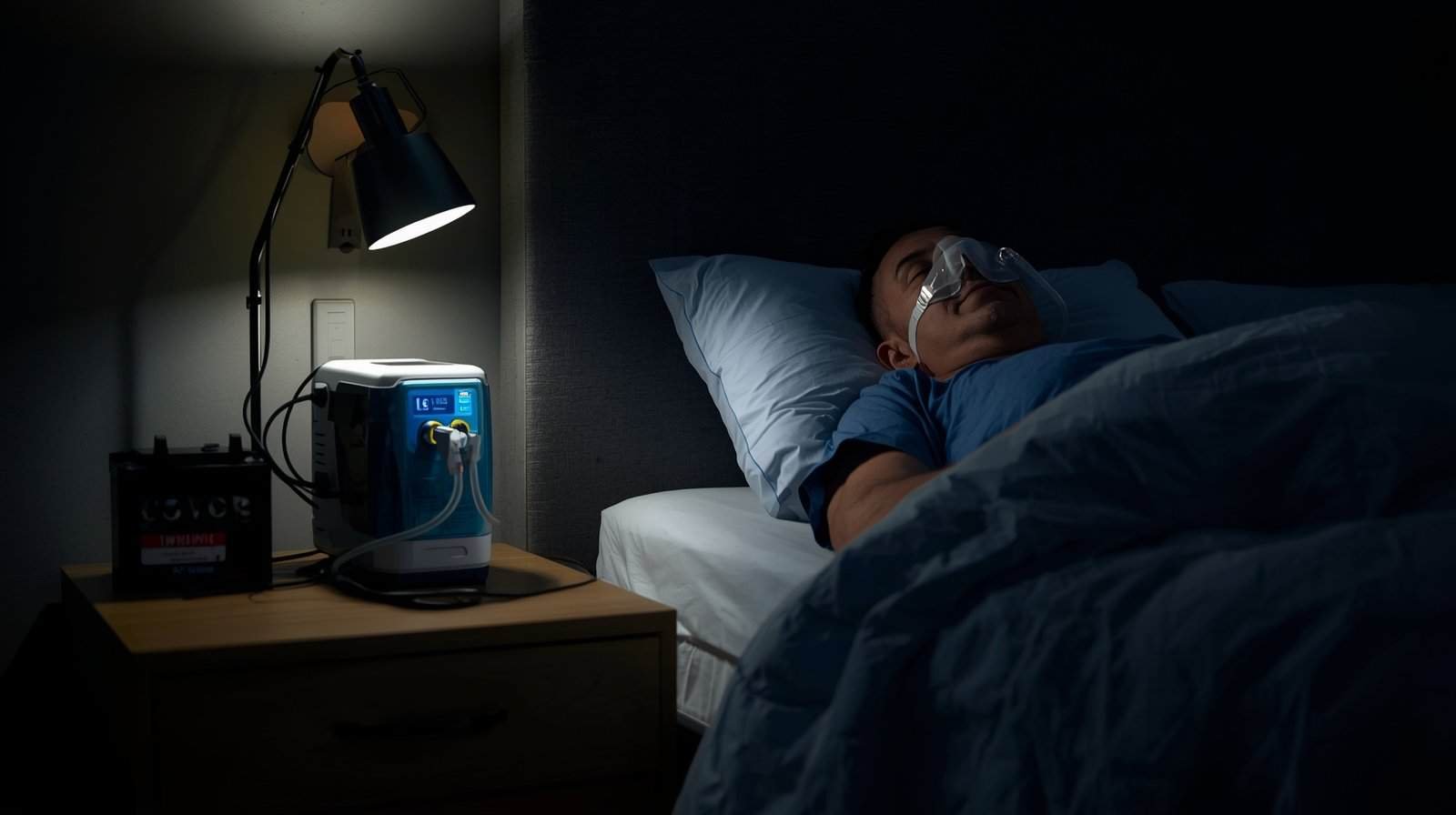
For people who rely on CPAP machines, a power outage can disrupt sleep and create serious health concerns. Unlike many household devices, CPAP machines are typically used overnight, when outages are most disruptive and options may be limited.
Planning a safe CPAP power outage backup helps ensure continuous therapy without introducing new safety risks.
Why CPAP Backup Power Requires Special Planning
CPAP machines operate for extended periods at night and are often used in enclosed sleeping spaces. Backup power must therefore be reliable, quiet, and safe for indoor use.
Understanding CPAP Power Requirements
Power consumption varies by machine settings and whether heated humidifiers or heated tubing are used. These features significantly increase power draw and shorten battery runtime.
Safe Backup Power Options for CPAP Machines
Battery-based power stations
Battery power stations and solar generators are well-suited for CPAP use because they operate silently and produce no exhaust. They are designed for indoor use and can provide uninterrupted power overnight.
Because CPAP machines are relatively low-wattage devices, many battery-based systems can support them reliably. For device-level expectations beyond medical equipment, see what a solar generator can power.
Dedicated CPAP battery packs
Some users choose batteries designed specifically for CPAP machines. These may be compact and convenient but often offer limited runtime.
Fuel generators (limited use)
Fuel generators should never be operated indoors or near sleeping areas. When used, they must remain outdoors and only supply power indirectly through approved indoor-safe equipment.
Planning Runtime for Overnight Use
Runtime planning is essential for overnight therapy. Reducing non-essential features, conserving battery capacity, and understanding realistic power limits helps ensure uninterrupted use. For broader context, see backup power for medical devices.
Solar Charging Considerations
Solar recharging can extend availability during multi-day outages but should not be relied upon to fully replenish batteries overnight. Solar generators work best when daytime charging supports nighttime use.
What to Avoid
- Running fuel generators indoors or near windows
- Using unapproved extension cords or adapters
- Assuming a single battery will last indefinitely
When to Involve Your Healthcare Provider
Healthcare providers can help determine acceptable interruptions, backup needs, and device settings during outages. Discuss power planning proactively rather than during emergencies.
Conclusion
A reliable CPAP power outage backup prioritizes safety, realistic runtime expectations, and indoor-friendly power sources. With proper planning, CPAP therapy can continue uninterrupted even when grid power fails.